Created by the Kawaii Vibe editorial team. Our named style desks are editorial personas. Product details and availability can change.
Short answer: choose by how many things you carry. Up to about ten items, a soft pouch is the easiest. Around ten to twenty-five, a structured box or a wide zip case keeps them organised. Past that, or when you own long brushes and markers you want to keep flat, a roll gives each tool its own slot. A cute pencil case should suit your supply count first and your taste second.
This guide compares the three formats on capacity, access and protection. It also gives two example kits, one for exam day and one for an art session, so you can count what you own and see which format fits.
One note on facts: sizes and materials below come only from the product details listed in the shop. Where a detail isn't listed, I say so rather than guess, so check each product page before you buy.
The quick answer by supply count
Count your items before you shop. Pens, pencils, an eraser, a sharpener, a ruler, highlighters, correction tape: everything you actually use in one sitting. Most people are surprised. Some find they carry six things, others find they carry thirty because nothing ever gets taken out.
Here is the rough rule I use. One to ten items: a pouch. Eleven to twenty-five: a box or a roomy zip case. Twenty-five and up, or anything long and delicate: a roll. These are guidelines, not laws, because thick gel pens and bulky markers take up far more room than thin pencils.
If you sit right on a boundary, pick the bigger format. A case stuffed so full that the zip strains wears out faster and is annoying to dig through. A little spare room also lets you add a new pen without a reshuffle.
- 1-10 items: pouch
- 11-25 items: box or wide zip case
- 25+ items or long tools: roll
- Between two sizes: go bigger
How a pouch works
A pouch is a soft bag with a zip. It squashes into a tote or a backpack pocket, and it changes shape to fit what is inside. That flexibility is its main strength. You can add an odd item, like a glue stick or a small tape dispenser, and the pouch simply bulges a little.
The tradeoff is access. Everything piles together, so you dig. Pens roll to the bottom, and the one you want is always under the ruler. Protection is also basic: soft sides cushion a bit, but a heavy book on top can bend a mechanical pencil or crack a thin pen.
Pouches suit light kits and people who like grabbing and going. If you choose one, look for a wide opening so you can see inside, and think about whether the lining is easy to wipe, since pen leaks and eraser crumbs collect in the corners.
- Best for: small kits, quick trips, odd-shaped extras
- Weak spot: digging and crushing
How a box works
A box, or any case with firm walls, holds its shape. Open it flat on a desk and the contents stay visible. Many have two levels or a divider, which stops the pile-up problem. Protection is the best of the three for things that snap, such as pencil leads and thin pens, because the walls take the pressure from your bag.
The cost is bulk. A rigid case takes the same room in your bag whether it is full or nearly empty, and it won't squeeze into a tight pocket. It can also be heavier, which you notice if you carry it daily alongside a laptop.
A box is a good fit for the middle range of supplies and for anyone who hates rummaging. Check the inside layout before buying: a single big space only gives you a sturdier pouch, while dividers or trays are where a box really earns its room.
- Best for: mid-size kits, fragile items, desk use
- Weak spot: bulk and weight
How a roll works
A roll is a flat piece of fabric with slots or loops. You lay it out, and every pen, brush or pencil sits in its own space. Nothing rubs against anything else, and you see your whole kit in one glance. For art sessions that is a real time saver, since you pick the exact tool without sifting.
Rolls also protect delicate tips well, because items don't press into each other. The downsides are that a roll takes space to unroll, so it needs a clear desk, and it is less handy for loose items like erasers, sharpeners and clips unless it has a pocket for them.
If you are tempted by a roll, think about whether your items are mostly long and slim. A roll shines with brushes, fineliners and pencils. It frustrates people whose kit is half small gadgets. I don't have a roll listed in the shop at the moment, so a roll here is a format to consider, and a wide zip case from the range below is the nearest alternative.
- Best for: long, slim tools and delicate tips
- Weak spot: needs desk space, poor for loose bits
Comparing capacity, access and protection
Put the three side by side. On capacity, a roll holds the most slim tools per bag volume, a box holds the most mixed items, and a pouch holds the least but stretches. On access, a roll is fastest because nothing is hidden, a box is next, and a pouch is slowest. On protection, a box leads, a roll follows for tips, and a pouch trails.
No format wins everything, which is why the choice depends on your kit. A student with pens, a highlighter and an eraser gains nothing from a roll. An illustrator with twenty fineliners gains a lot.
A simple way to score: rate each of the three qualities from one to three based on how much you care. If you hate digging, weight access. If your bag gets crushed, weight protection. Whichever format scores best for you is your answer, and the looks can break any tie.
- Capacity for slim tools: roll, then box, then pouch
- Speed of access: roll, then box, then pouch
- Crush protection: box, then roll, then pouch

Exam day kit: what to pack and what format
Exam kits are small and predictable. A typical list: two or three pens, two pencils, an eraser, a sharpener, a ruler, and maybe a highlighter and a spare of your main pen. That is about ten items, which sits right in pouch territory. Always check your exam's own rules first, because some require a clear case or limit what you can bring, and those rules beat any style preference.
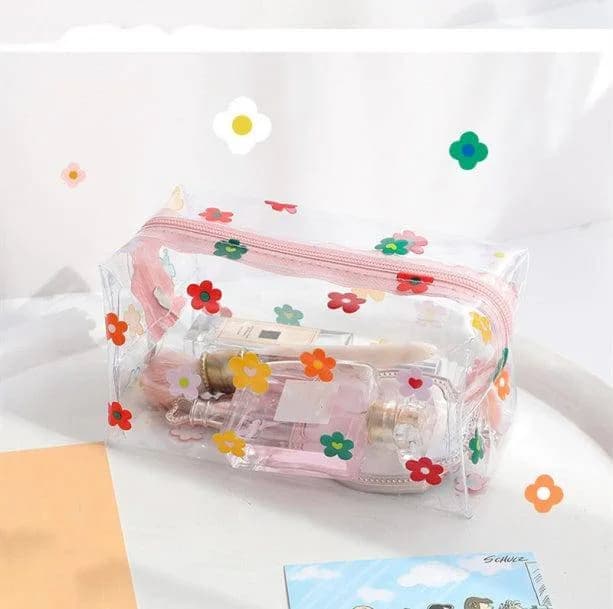
If a see-through case is required, the listed Waterproof Pencil Case is made of plastic according to its details, but I can't say whether it is transparent, so check the product page before relying on it for an exam. Its listing also mentions a delivery window of 15-35 days, so order well ahead of any date you care about.
For exams that allow any case, a simple zip pouch keeps things quick. Pack in the order you use things: pens on one side, pencils and eraser beside them, small items at the bottom. Put a spare pen in too. Run through the kit the night before so you aren't counting at the last minute.
- 2-3 pens, 2 pencils, eraser, sharpener, ruler, spare pen
- Check exam rules on cases before buying
- Order early if delivery time matters
Art session kit: what to pack and what format
Art kits grow quickly. Say six fineliners, four pencils in different grades, two erasers, a blending stump, a few markers, a small ruler and a pair of brushes. That's twenty or more items, and several are fragile. A roll is ideal, or a wide box with a divider.
If you don't have a roll, split the kit. Keep drawing tools in a long zip case and put small gadgets in a pouch. Two cases are often better than one overstuffed one, and each can be pulled out only when needed.
Think about the room, too. If you sketch in cafés or on trains, you need a case that is quick to open on a small table. A long case that opens flat helps. Keep wet media, like brush pens or water brushes, away from paper tools so a leak doesn't spread.
- Fineliners and brushes: keep flat and separate
- Split kits when one case would bulge
- Keep wet tools apart from dry ones
Soft and quirky pouches worth a look
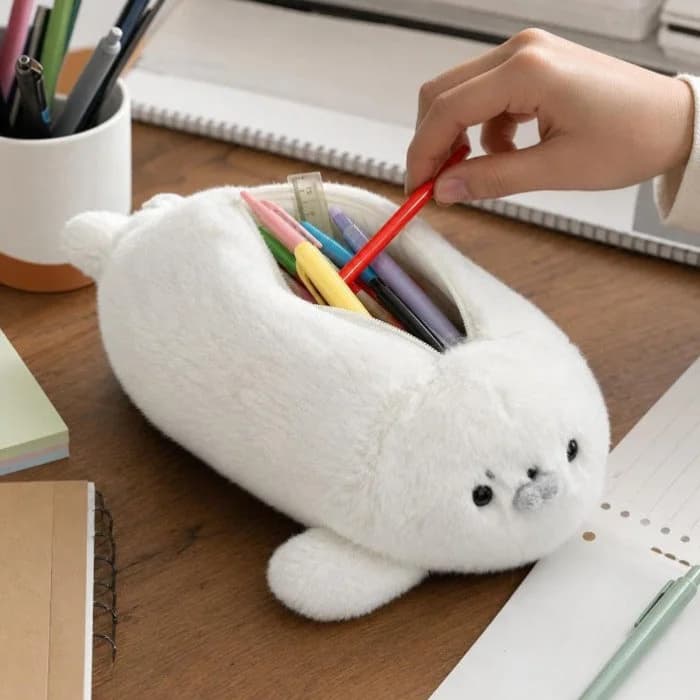
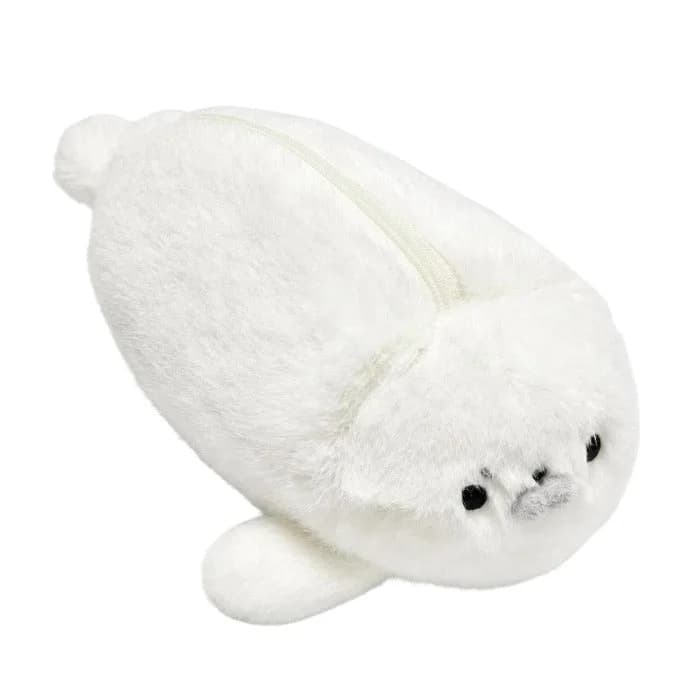
If a pouch fits your count, the shop has several with character. The Kawaii Seal Pencil Case is plush, white, shaped like a seal, with a zipper and a listed size of approximately 22 cm. That length suits standard pens and pencils, and the plush feel means it cushions a little. It is a good exam-day or lecture pouch for around eight to ten items.
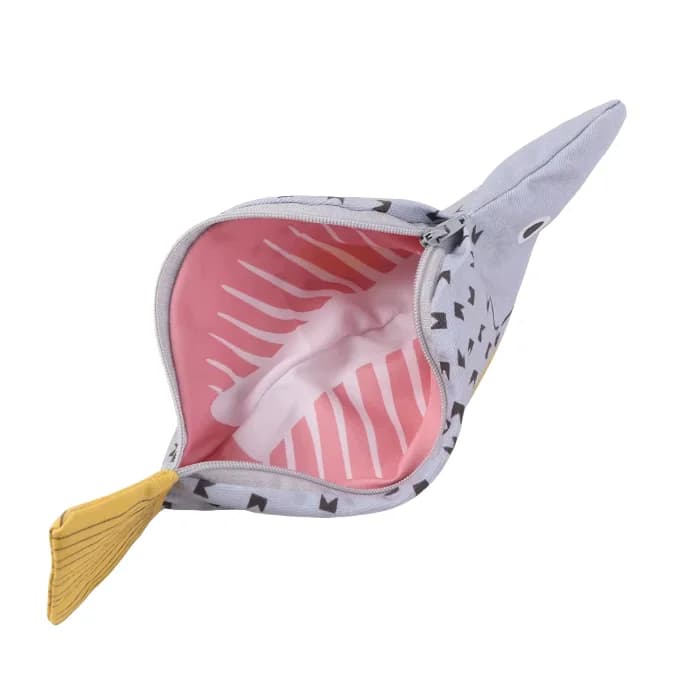
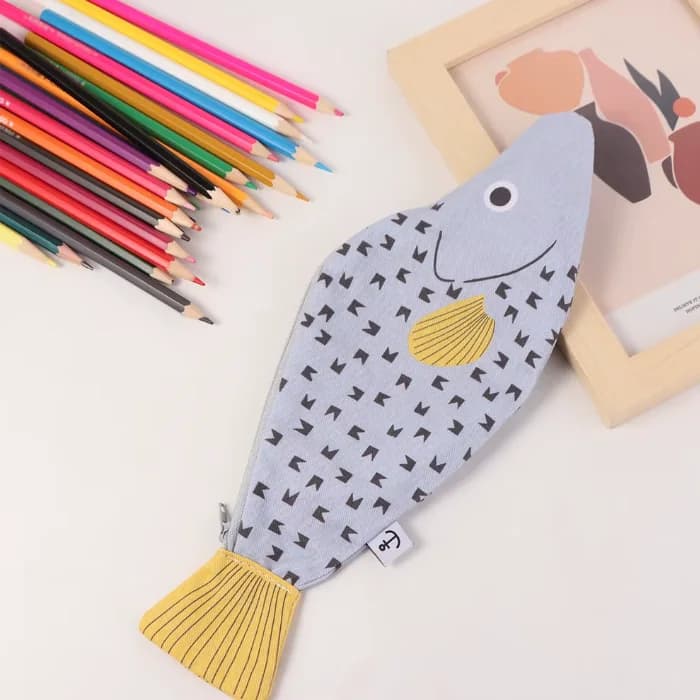
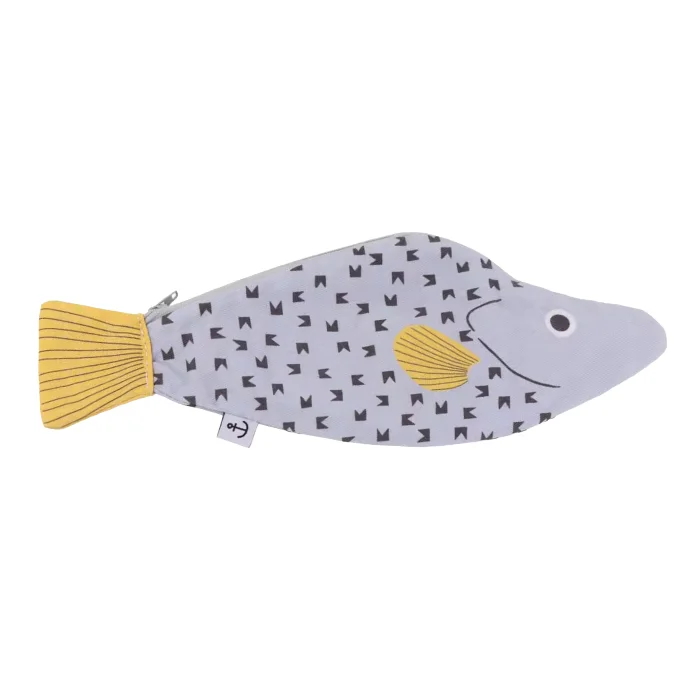
The Fish Pencil Case Pouch is a fish-shaped fabric pouch in light grey with yellow accents and a fish scale-inspired pattern. The listing doesn't give its size, so check the page before assuming it takes long rulers. Its shape suggests a slim, pen-and-pencil carry.
The Novelty Cat Pencil Case is polyester fiber, listed at 22 x 10 cm, with four options (A to D). Treat these as pouch-class choices: fun to pull out, best with a trimmed kit.
- Seal: plush, zipper, about 22 cm
- Fish: fabric, grey with yellow accents
- Cat: polyester fiber, 22 x 10, options A-D
Roomier and sturdier picks
For the middle range of supplies, look at longer or firmer cases. The Cute Toothpaste Pencil Case is vegan leather and listed at 29 x 10 cm. At 29 cm it is long enough for a ruler or long brushes to lie flat, and the smoother material wipes clean more easily than plush. It suits an art kit or a bigger study set.
The Lucky Pencil Case comes in peach, blue, green and yellow. No material or size is listed, so I can't say how much it holds. Check the page for details before counting on it for a large kit, and pick the colour that matches your bag.
The Checkered Pencil Case and Marble Pencil Case also have no material or size details listed. They're good if you like the look, but confirm capacity on the page. A quick test: measure your longest tool, then compare it with the listed length.
- Toothpaste: vegan leather, 29 x 10 cm
- Lucky: peach, blue, green, yellow
- Checkered and Marble: check page for details

Matching the case to your bag
A case lives inside a bag, so think about the pair. A big backpack takes a box without a fuss. A small crossbody or mini tote suits a flat pouch, because rigid corners poke and waste space. If you carry a laptop sleeve, a slim case slides alongside it, while a chunky one forces everything apart.
Measure the pocket or the gap where the case goes. Compare that with the listed case length. Allow a little spare for the zip curve and for the bag's lining, which never has quite as much room as it seems.
If you are choosing both together, browse the Kawaii Bags collection and plan the case around the bag you already like. Colour matching is optional, but a contrasting case is easier to spot when you dig in a dark bag.
- Small bag: soft pouch
- Big backpack: box or long case
- Measure the gap, not just the case
Protection, weather and cleaning
Protection means more than crush resistance. Think spills, rain and grime. A bottle of ink or a leaking marker can ruin a fabric lining. A wipeable material helps. The Waterproof Pencil Case is listed as plastic, and its name suggests wet resistance, but I can't promise how it holds up in a downpour, so keep paper items inside a separate sleeve if rain is likely.
Plush and fabric cases are best kept dry. If a pouch gets damp, empty it and let it air out with the zip open. Check the care label or product page for washing guidance, since I don't have that information.
Whatever the format, a monthly empty-out helps. Shake out crumbs, toss dead pens and wipe the lining. It takes a few minutes and stops grime building. Store pens flat or tip-down if they are gel or ink types that dislike sitting upright for long.
- Wipeable linings handle leaks best
- Air out damp fabric with the zip open
- Empty and wipe monthly

Pitfalls when buying
The most common mistake is buying on looks alone and then finding that the case holds half your things. Photos rarely show scale. Always find the listed size, and if there isn't one, treat capacity as unknown and be ready to return or choose another.
Another trap is buying too small for future you. Supplies creep up. A case that fits today's kit exactly leaves no room for the new set of pens you will inevitably want.
Also watch for delivery times. A listing may state a window, and that matters if you need the case for a start date. Order early, and keep your old case in use until the new one arrives. Finally, avoid cramming: if the zip fights you, the case is too small.
- No listed size means unknown capacity
- Leave room to grow
- Check delivery windows before deadlines
- If the zip fights you, size up
Where to browse and a final checklist
Once you know your format, browse by need. The main Stationery collection covers the pens, erasers and extras to fill your case, and the Aesthetic Stationery collection gives more options in a softer style. For term-time shopping, the Aesthetic Back To School Stationery collection groups items for students.
Before you buy, run this check: count your items, find your longest tool, pick the format that matches, compare the listed size to that tool, think about your bag, and check delivery time. That sequence stops most mistakes.
If you're still torn, go with the pouch for light kits and a longer or sturdier case for anything bigger. You can always add a second small pouch for loose bits later, which keeps the main case tidy.
- Count items and find your longest tool
- Pick pouch, box or roll
- Compare listed size to your tool
- Check bag fit and delivery time
- Leave a little spare room