Created by the Kawaii Vibe editorial team. Our named style desks are editorial personas. Product details and availability can change.
Styling botanical socks is mostly about managing cuff heights, texture balance, and color spacing between your shoes and hemline. When you pull on socks printed with vines, seedlings, or garden motifs, the main challenge is making sure the print actually shows without clashing against your shoe collar or overwhelming the rest of your outfit.
Rather than treating these accessories as an afterthought hidden inside a boot, this guide treats them as the intentional bridge between your footwear and your clothes. Whether you prefer canvas low-tops, retro runners, leather loafers, or garden clogs, small adjustments in sock cuff height and tone will transform simple basics into thoughtful botanical outfits.
1. The Anatomy of Plant Mom Socks and Cuff Heights
Getting the height right determines whether your socks look intentional or accidental. Plant-themed socks generally fall into three height brackets: ankle or low-quarter, classic crew, and slouchy mid-calf. Low-quarter socks peek out just over the rim of low-profile shoes, making them subtle accents for warm weather. Classic crew socks sit four to six inches above the ankle bone, providing enough vertical fabric to display repeating leaf vines, delicate floral sprigs, or micro vegetable illustrations clearly above standard sneaker collars.
Mid-calf designs offer the most versatile canvas for heavier footwear like lace-up work boots or platform clogs. At this height, you can either pull the sock fully smooth to show off a continuous graphic or gently push the ribbing down toward the ankle. Creating a relaxed, scrunched cuff gives texture around the top of your shoe, which helps ground wide-leg trousers and soft silhouetteThe overall shape an outfit creates, from fitted to loose and layered.s. Choosing your height comes down to matching the sock cuff height against the shaft of your shoes, ensuring the artwork clears the shoe collar cleanly.
2. Pairing Botanical Prints with Classic Low-Top Sneakers
Low-top canvas and leather sneakers provide an easy, neutral foundation for botanical socks. Because a low-top sits well below the ankle, you have plenty of visible space to display graphics without anything getting crushed under a collar. Clean white, off-white, or ecru sneakers work especially well because they allow leafy greens, moss tones, and delicate floral accents to stand out without competing for attention.
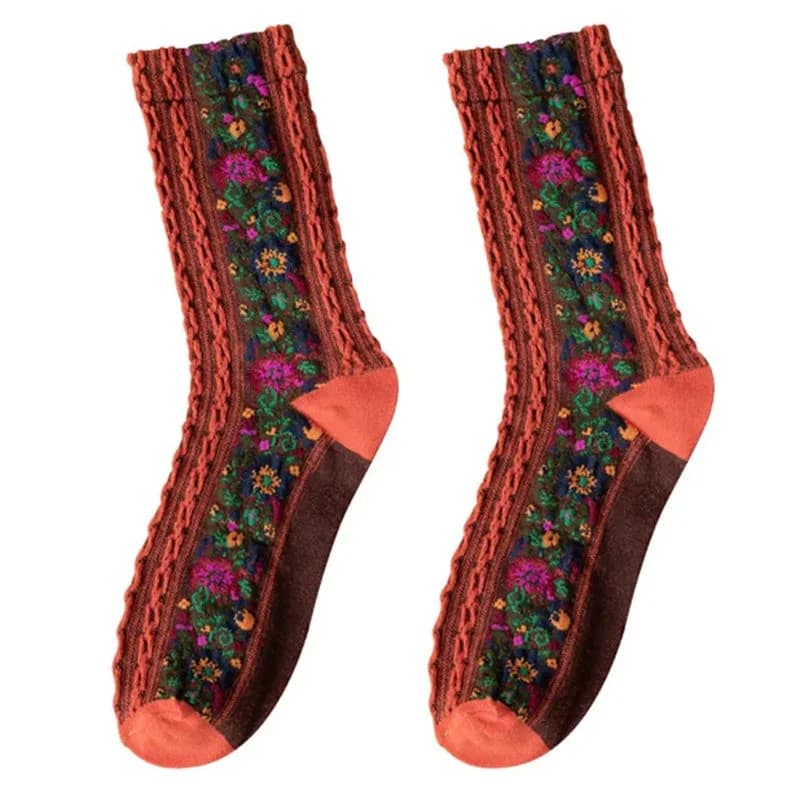
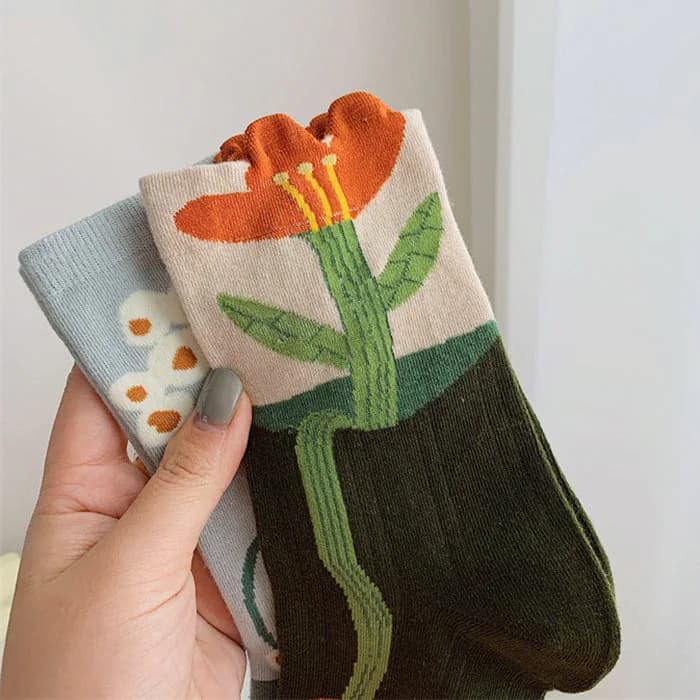
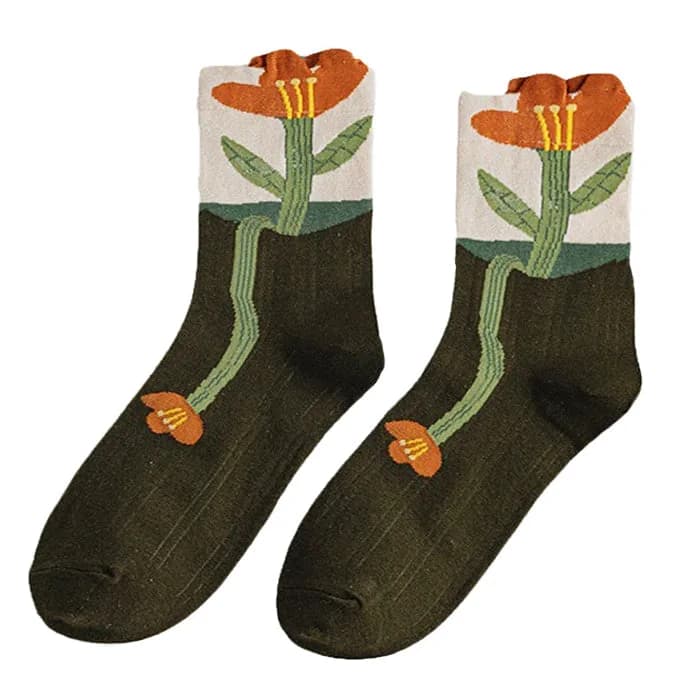
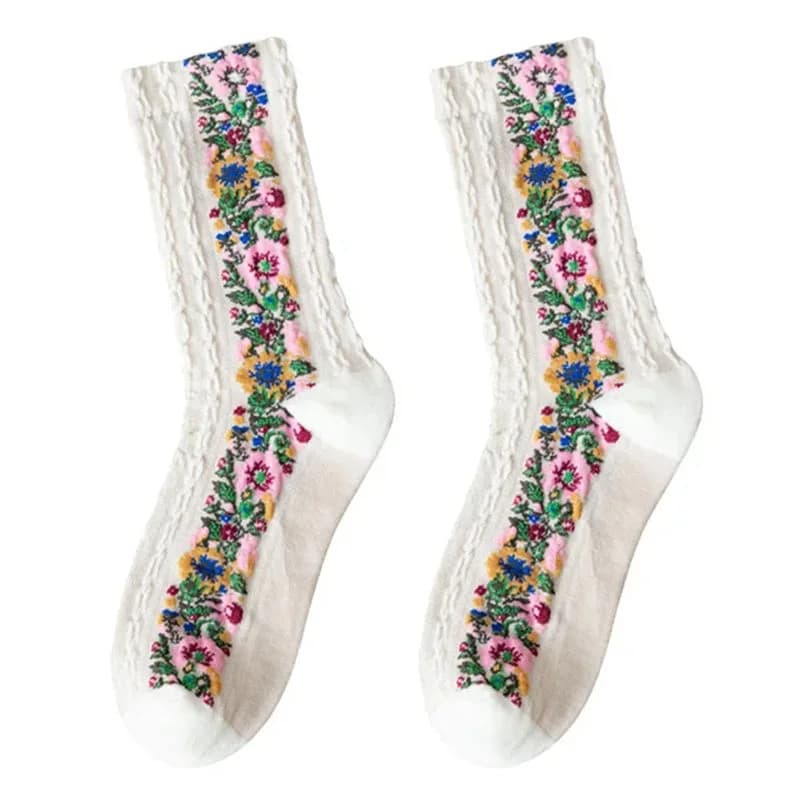
For an easy weekend look, pair crisp white court sneakers with the Aesthetic Flower Socks in Green, made from a cotton and polyester blend. The knit floral pattern sits comfortably above the sneaker line, making a natural transition into cropped denim. You can balance this footwear combination with relaxed tops from our Plant Mom Clothes range, keeping your bottom hem high enough to let the ribbed floral cuff breathe.
3. Styling Chunky Loafers and Tailored Oxford Shoes
Chunky lug-sole loafers and stiff leather oxfords carry visual weight and structured lines. Introducing cozy botanical socks softens the formal, academic feel of heavy black or oxblood leather, pulling the entire outfit into a relaxed, earthy direction. The contrast between rigid shoe leather and soft knitted botanicals creates a grounded aesthetic that suits libraries, offices, and coffee runs alike.
When wearing loafers, smooth crew socks prevent bunching around the instep. You can match dark brown or black leather loafers with soft botanical accents found across our curated Plant Mom Socks collection. The visible leafy motifs soften the sharp profile of polished shoes. For an easy casual workday formula, pair your loafers and socks with relaxed pleated trousers and a tucked-in Herb Bouquet Cottagecore T-Shirt in Green or Grey, keeping your overall look comfortable yet put-together.

4. Slip-On Clogs and Garden Mules: The Natural Companion
Slip-on clogs, cork footbed slides, and suede mules are iconic staples of the botanical lifestyle. Because these shoes feature open backs or slip-on silhouetteThe overall shape an outfit creates, from fitted to loose and layered.s, your socks become an unmistakable centerpiece of your outfit. A thick knit or ribbed crew keeps your heel warm while preventing friction against wooden or molded footbeds, offering practical comfort during all-day wear.
Earth-toned clogs in taupe, tan, or olive pair naturally with light ivory, sage, or cream socks. If your shoes have brass buckles or natural leather textures, botanical socks complete the grounded, rustic look. Combine suede mules with casual bottoms and a relaxed graphic tee like the Amalfi Lemon Graphic T-Shirt, letting the sock cuffs settle into natural folds above the heel strap for an effortless, garden-ready feel.

5. Mastering Split-Toe Tabi Shoes with Novelty Socks
Split-toe tabi boots, flats, and sneakers have become distinct style favorites, but they require purpose-built split-toe socks to wear comfortably. Standard socks bunch painfully between the toes inside tabi footwear, whereas dedicated tabi designs preserve the structural toe separation while offering unique visual charm.
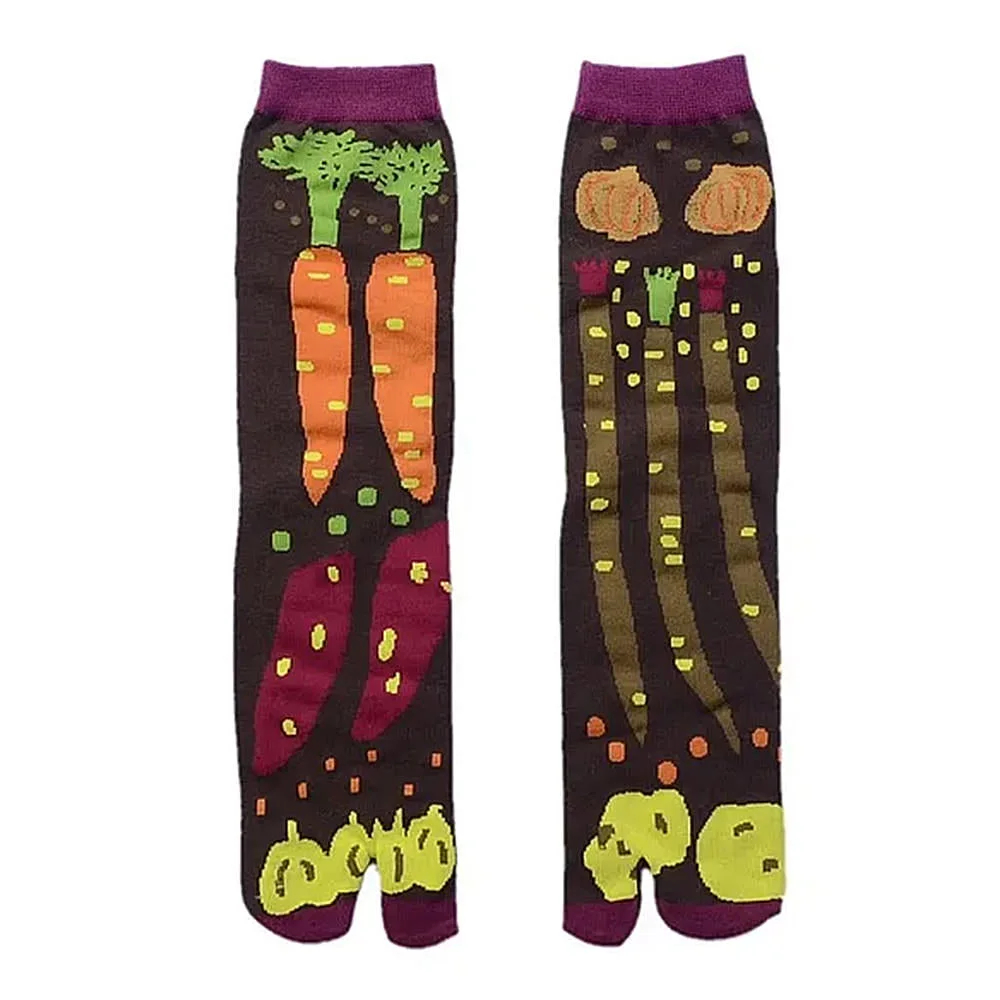
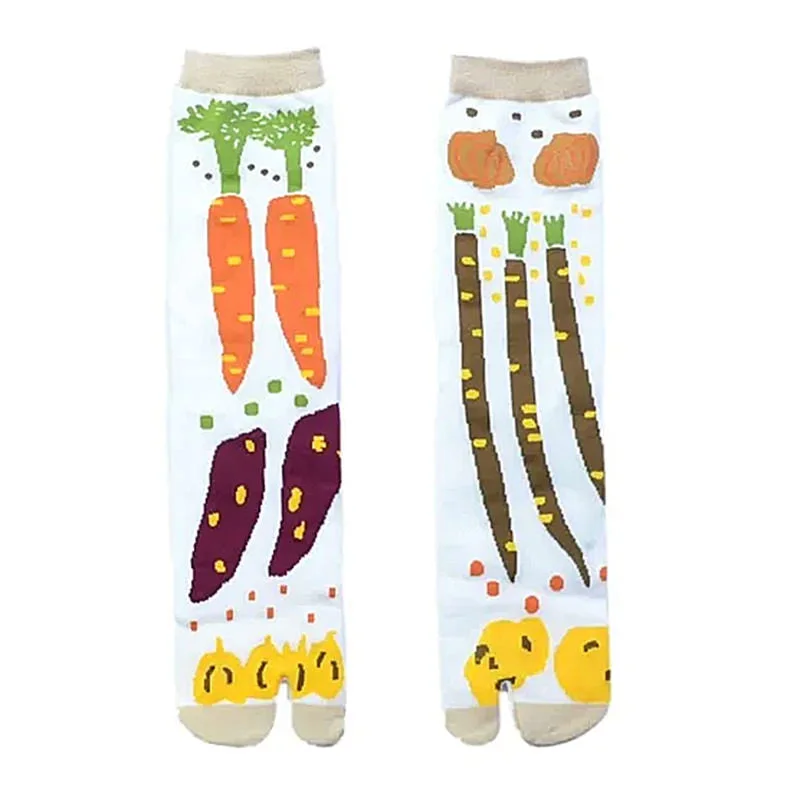
The Vegetable Print Split Toe Tabi Socks, crafted from comfortable cotton and available in Purple and White, feature individual toe compartments along with charming garden graphics. Pairing these with black, tan, or white tabi shoes gives an artistic, functional twist to casual outfits. Because tabi footwear already draws the eye down, wearing a split-toe vegetable sock highlights the shoe design with a playful touch.
6. Lace-Up Ankle Boots and Heavy-Duty Outdoor Footwear
Lace-up leather ankle boots, field boots, and combat boots require socks that can handle friction against high leather shafts. When pairing botanical socks with sturdy boots, look for mid-calf styles that extend at least two to three inches above the boot collar. This allows you to fold or scrunch the top edge over the leather, protecting your calves from chafing while displaying a band of pattern.
Rich forest greens, mustard yellows, and warm clay tones complement the oiled brown or black leather of utility boots. If your boots have thick tread soles, choosing socks with defined ribbed texture keeps proportions balanced. The exposed patterned band breaks up heavy, utilitarian lines, bridging the space between rugged boots and casual rolled trousers or dark leggings.
7. Color Theory: Harmonizing Greens, Earthy Browns, and Florals
Putting together a coherent outfit around botanical socks relies on simple color relationships. You do not need an exact color match between your socks, shoes, and top; in fact, matching every piece too closely can make an outfit look stiff. Instead, aim for tonal harmony by picking shoes that anchor the darkest or most neutral tone present in your socks.
For example, off-white socks with green leaves pair easily with beige canvas shoes, sand suede clogs, or deep brown boots. If your socks introduce subtle pastel floral accents—like soft lilac, blush, or daisy yellow—you can reflect those accent colors through simple hair accessories from our Plant Mom Accessories catalog. Pinning up loose curls with the Plant Mom Crochet Aesthetic Hair Clip creates a subtle visual thread connecting your hairstyle down to your footwear.
8. Balancing Skirts and Dresses with Visible Sock Heights
Wearing botanical socks with skirts or dresses gives the pattern full visibility, making height balance especially important. The key is leaving enough bare leg or solid tight space between the top of the sock and the hemline of the garment to maintain clean visual proportions. When wearing midi skirts, classic crew socks work well because they peek out just below the fabric sweep without cluttering the silhouetteThe overall shape an outfit creates, from fitted to loose and layered..
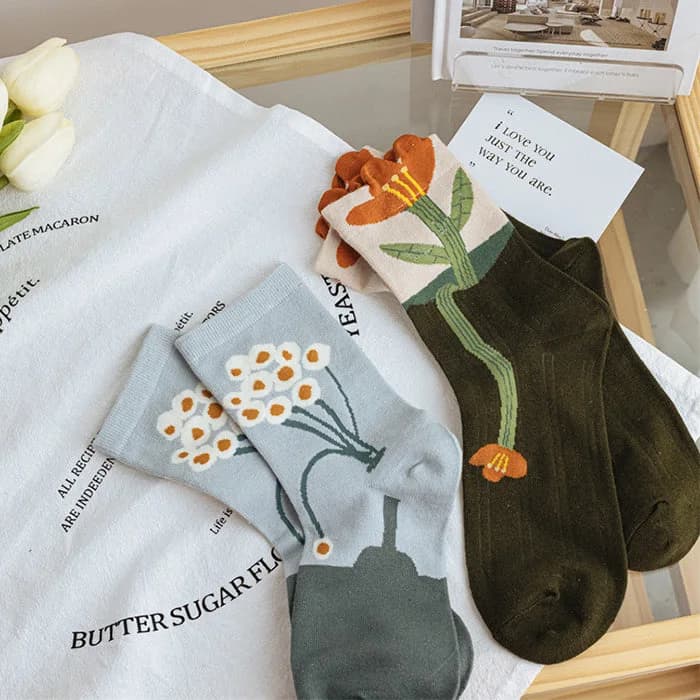
For instance, pairing low-top sneakers or Mary Janes with the Cottagecore Aesthetic Green Floral Skirt creates a light, flowing outfit. Choosing the Aesthetic Flower Socks in Blue introduces a soft, contrasting color pop at your ankles, balancing the green floral drape of the skirt. For cooler days, wear sheer tights underneath the knit socks to add comfortable warmth while preserving clean layeringWearing pieces over or under one another to add depth, warmth or contrast. lines.
9. Styling with Denim: Cropped Pants, Cuffs, and Shorts
Denim is the most practical everyday pairing for botanical socks, but how you hem or cuff your jeans affects how much of the sock pattern actually shows. Full-length wide-leg jeans will cover the sock while you stand, showing the pattern only when you sit down. For constant visibility, opt for straight-leg jeans with a double roll cuff, or choose raw-hem cropped denim that terminates just above the ankle bone.
In warmer weather, swap long jeans for casual denim bottoms. The Indie Aesthetic Crochet Flower Denim Shorts, available in Blue and Black denim, feature floral details that mirror botanical socks naturally. Combine these shorts with crew socks and retro sneakers, completing the outfit with lightweight casual options from our Plant Mom T-Shirts range for a relaxed outdoor outfit.
10. Layering Socks for Texture and Trans-Seasonal Weather
In transitional seasons when the morning starts chilly and the afternoon warms up, socks play a major role in comfortable layeringWearing pieces over or under one another to add depth, warmth or contrast.. You can layer lightweight botanical socks over sheer micro-mesh tights or textured fishnets to add warmth without switching to heavy winter boots. The contrast between translucent tights and opaque cotton-blend socks creates depth around your ankles.
Another practical technique for changing weather is double-socking for shoe comfort. Wearing a thin no-show liner underneath a botanical crew sock reduces internal friction inside stiff leather boots while keeping your printed outer sock clean and sweat-free. This technique lets you enjoy botanical designs during breezy autumn walks or crisp spring market mornings without needing oversized footwear.
11. Casual Top and Footwear Symmetry: Building from the Ground Up
Building an outfit from the ground up means letting your socks and shoes inform what you wear on top. When your socks feature detailed botanical illustrations, keeping your upper half grounded in soft, complementary tones creates visual balance. T-shirts and relaxed knitwear in natural colorways provide clean structure without fighting your footwear accents.
For a clean, weekend-ready outfit, build around the How To Pickle Aesthetic Print Graphic T-Shirt in Beige 100% cotton. Pair this culinary-botanical graphic top with earthy canvas slip-ons and crew socks showing herb or foliage prints. You can browse our wider selection of Plant Mom Tops to find complementary earth-toned layers, corduroy overshirts, and lightweight pullovers that frame your botanical sock choices.
12. Common Sock and Shoe Pairing Mistakes to Avoid
A common styling misstep is pairing socks with shoe collars that cut directly across graphic illustrations. If a high sneaker collar covers the lower half of an embroidered flower or leafy stem, the print looks accidentally cut off rather than framed. Always check where your shoe collar hits relative to the design before heading out, opting for shorter shoes or taller crew socks to give the artwork clear space.
Another frequent pitfall is ignoring shoe volume. Delicate, thin-knit ankle socks often look lost and overwhelmed when paired with very bulky platform boots, while thick, heavyweight ribbed socks can stretch out tight dress flats and pinch your feet. Match the weight of the knit to the bulk of your shoe to keep both your outfit proportions and foot comfort in balance.
13. Washing and Caring for Printed and Knit Botanical Socks
Botanical socks retain their vibrant colors and elastic recovery much longer when washed with care. Friction against the inner lining of shoes, combined with regular machine washing, can cause surface pilling that clouds intricate leaf and flower prints. Turning your socks inside-out before tossing them into the hamper protects the delicate exterior knit from abrasion during the wash cycle.
Use cold water and a mild liquid detergent on a gentle cycle, avoiding harsh bleaches or heavy fabric softeners that break down spandex fibers over time. While tumble drying on high heat might be convenient, air drying on a drying rack or flat surface prevents elastic shrinking and preserves the cuff tension. Good cuff tension ensures your socks stay comfortably perched at your chosen height instead of slumping into your shoes throughout the day.
14. Complete Footwear and Sock Pairing Checklist
To quickly pull together an outfit with botanical socks, run through this simple mental checklist before heading out the door. Start by checking your hemline clearance to ensure your socks have room to be seen. Next, confirm that the fabric weight matches the shoe: light knits for slim shoes, medium crews for sneakers and clogs, and structured ribs for chunky boots.
Finally, ensure that your socks, shoes, and top share a tonal link—whether that is a shared cream undertone, an olive green motif, or an earthy accent color. Keeping these small practical checks in mind helps you pair botanical socks confidently across all your favorite footwear.
- Hemline Check: Ensure pant cuffs or skirts sit 2 to 4 inches above the shoe collar to display sock details.
- Shoe Collar Height: Choose socks tall enough that graphics clear the collar without awkward cutting.
- Footwear SilhouetteThe overall shape an outfit creates, from fitted to loose and layered.: Pair slim canvas shoes with lightweight knits; pair lug soles and boots with textured, ribbed ribs.
- Toe Separation: Use purpose-built split-toe tabi socks for split-toe shoes to prevent bunched fabric.
- Tonal Balance: Connect sock accents to tops or hair accessories using shared earthy or floral tones.
- Fabric Care: Turn socks inside-out and wash in cold water to keep botanical prints crisp and elastic firm.
Choosing Between Ribbed Textures and Flat Knits by Shoe Type
A practical choice when styling botanical footwear is deciding whether a flat graphic knit or a vertical ribbed texture best suits your shoe. Flat-knit socks feature a smooth, uniform surface that presents detailed illustrations—such as intricate foliage, micro vegetables, or delicate floral stems—without distortion. In contrast, textured ribbing adds vertical dimension and cushion, which visually breaks up smooth shoe leather but can compress wider prints.
For slim footwear like low-profile canvas sneakers, tailored penny loafers, and ballet-style slip-ons, flat-knit designs like the Vegetable Print Split Toe Tabi Socks or graphic cotton crews offer clean lines without pushing against the shoe's inner volume. Because low-profile footwear lacks bulky hardware, a smooth sock surface keeps your ankles looking streamlined and avoids unwanted interior friction around narrow toe boxes.
When wearing structured footwear like lug-sole oxfords, wooden clogs, or combat boots, opt for ribbed textures or substantial knit styles from the Plant Mom Socks collection. The vertical channels of a rib knit naturally complement heavy soles, preventing chunky shoes from appearing bottom-heavy. Selecting a smooth knit for sleek footwear and a textured rib for hefty silhouetteThe overall shape an outfit creates, from fitted to loose and layered.s ensures both balanced visual weight and comfortable instep room.