Created by the Kawaii Vibe editorial team. Our named style desks are editorial personas. Product details and availability can change.
Short answer: a platform boot works best when you size for your sock, break it in with short wears, and let your trousers either cover the sole's front edge or stop clearly above it. Most of the frustration with platform boots outfits comes from three things: a size that's slightly off, a hem that's slightly wrong, and a first wear that lasts all day.
This guide goes through each of those in order. We'll look at how a thick sole changes the way you walk, how to choose socks, how to read a size chart, and how to handle jeans, cargos, skirts and tights over a chunky boot. Along the way there are a few specific boots from our range as optional ideas.
Nothing here is medical advice, and we haven't tested the boots listed. Where we mention sizing, we point back to the product page, because that's where the real details live.
What a platform sole actually changes
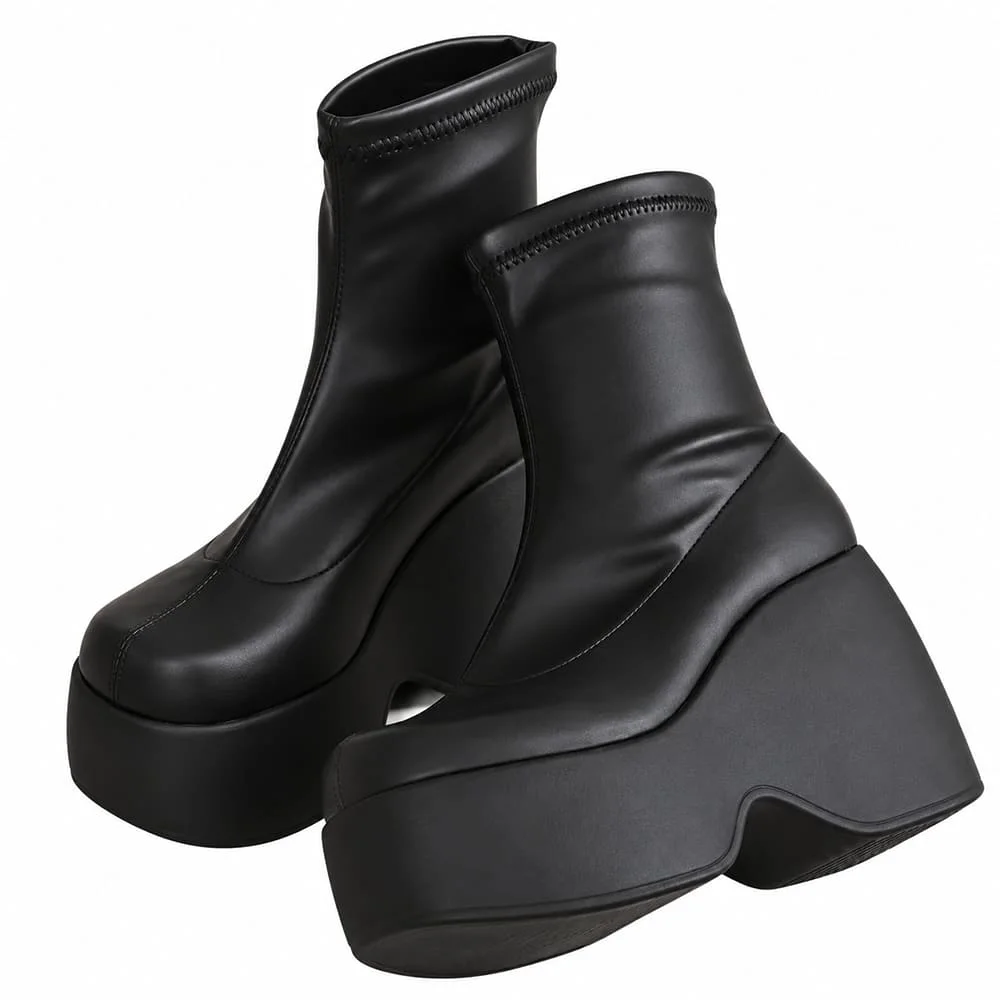
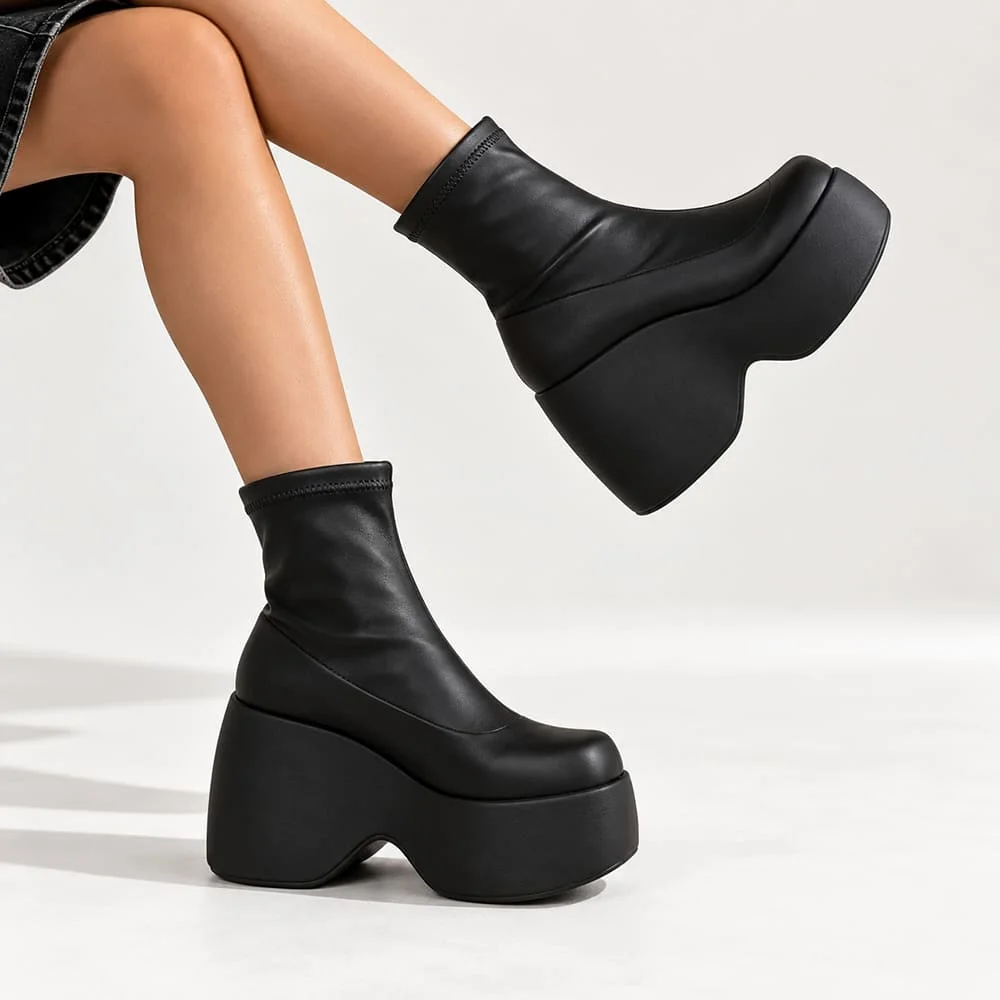
A platform lifts you and also stiffens the step. A thick sole doesn't bend the way a trainer does, so your stride gets a little more rolling and a little less springy. That's normal, and it's the reason a boot can feel odd for the first few wears even when the size is right.
Height matters less than you'd think, because a chunky sole usually keeps the heel and the front fairly level. That's why many people find a flat platform easier than a thin heel. Still, you're carrying more weight on each foot, so stairs, kerbs and wet pavement deserve a slower pace until you've got the feel of it.
Before buying, think about your day. Mostly sitting, a bit of commuting, a night out? Or hours of walking? A platform suits the first group easily. If you're on your feet all day, plan to wear them for shorter stretches first and carry flats if you're unsure.
Browse the full range in the platform boots collection and picture where you'd actually wear them. A boot that fits your week gets worn. One bought only for a single outfit often sits at the back of the wardrobe.

Sizing: read the page, then decide
Several of our platform boots are marked as running small, and the product pages say to review the sizing information. Take that seriously. If you sit between sizes, or you're wearing thick socks, going up is the safer direction for most of the boots flagged this way.
Use the EU and US pairs shown on each page. For example, the No Apologies Chunky Platform Boots are listed from EU35 (US4.0) to EU43 (US10.5), while the Walk The Moon Chunky Platform Boots run EU35 (US4.0) to EU40 (US8.5) and aren't flagged as running small. The size ranges differ, so don't assume one chart fits every pair.
If you're in the UK, Canada, Australia or New Zealand, convert from your own measured foot rather than guessing from a trainer size, since labels vary by brand. Measure your foot length at the end of the day, when feet are at their largest, and compare your measurements with the listed size options on the page since individual product listings do not feature a size chart.
A quick rule: if your toes touch the end while standing, size up. If your heel lifts a lot but the toes are comfortable, try a thicker sock or an insole before changing size.
- Check whether the page says the style runs small
- Measure your foot in the evening
- Decide your sock thickness before choosing size
- Keep the listed size options open while ordering
Sock thickness and why it decides everything
Sock choice changes the fit more than people expect. A thin sock and a chunky wool sock can feel like a full size apart in a closed boot, so settle on the sock you'll wear most before you commit to a size.
For everyday wear, a mid-weight cotton or blend sock is a sensible baseline. If you're buying for winter and plan on thicker socks, size for those, but remember that a boot that's roomy in thin socks may let your heel slide in warmer weather. Hot climates and summer wear in the southern hemisphere or the north both raise the same issue, so think about your warmest wear too.
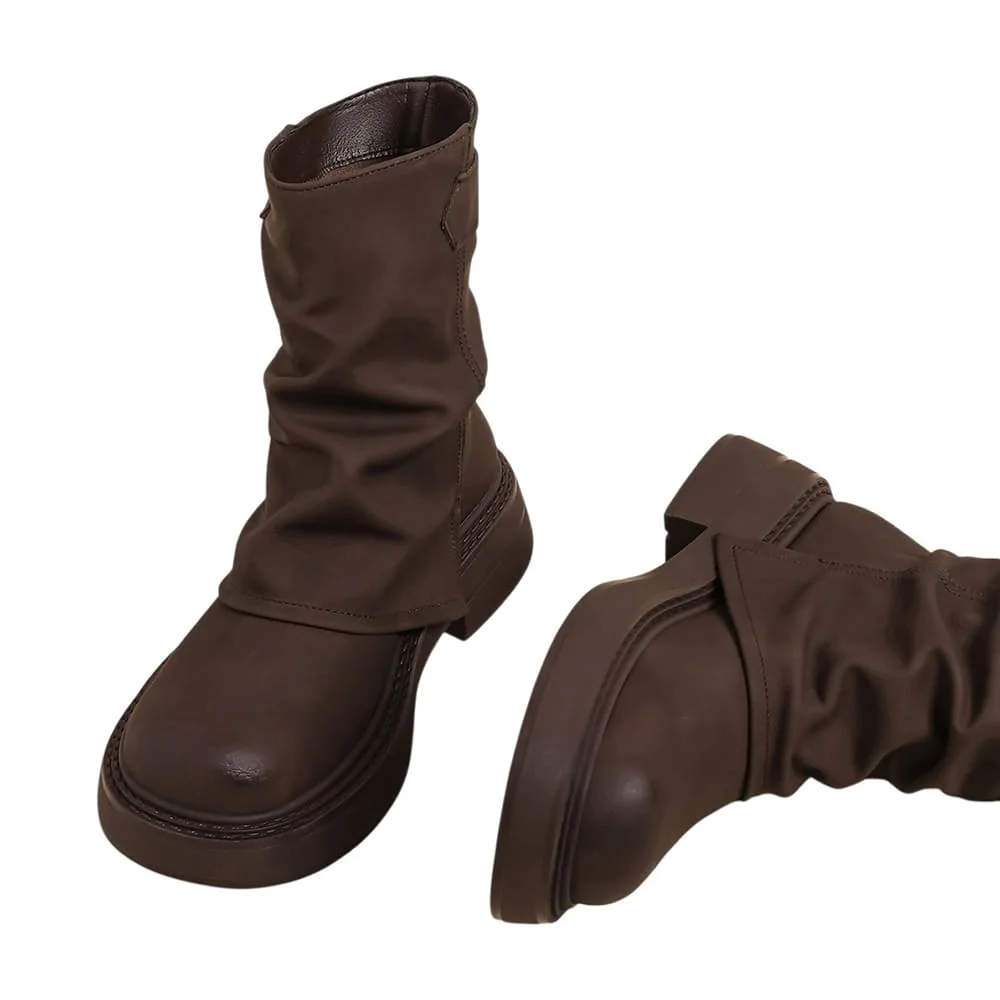
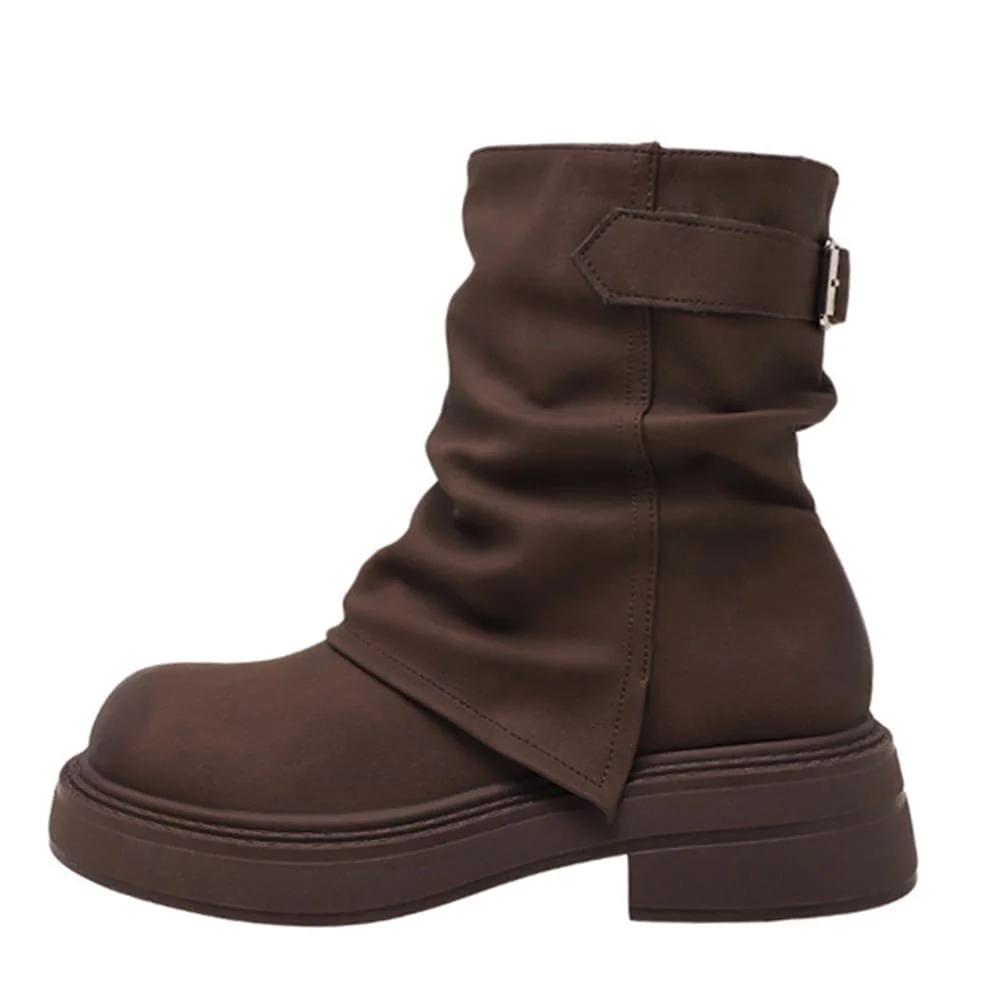
Taller boots, like the Normandy Countryside Brown Platform Calf Boots, show the sock at the top only if you want it to. Tucking a ruffle or lace-trim sock under a pant leg can add a small detail without adding bulk at the ankle.
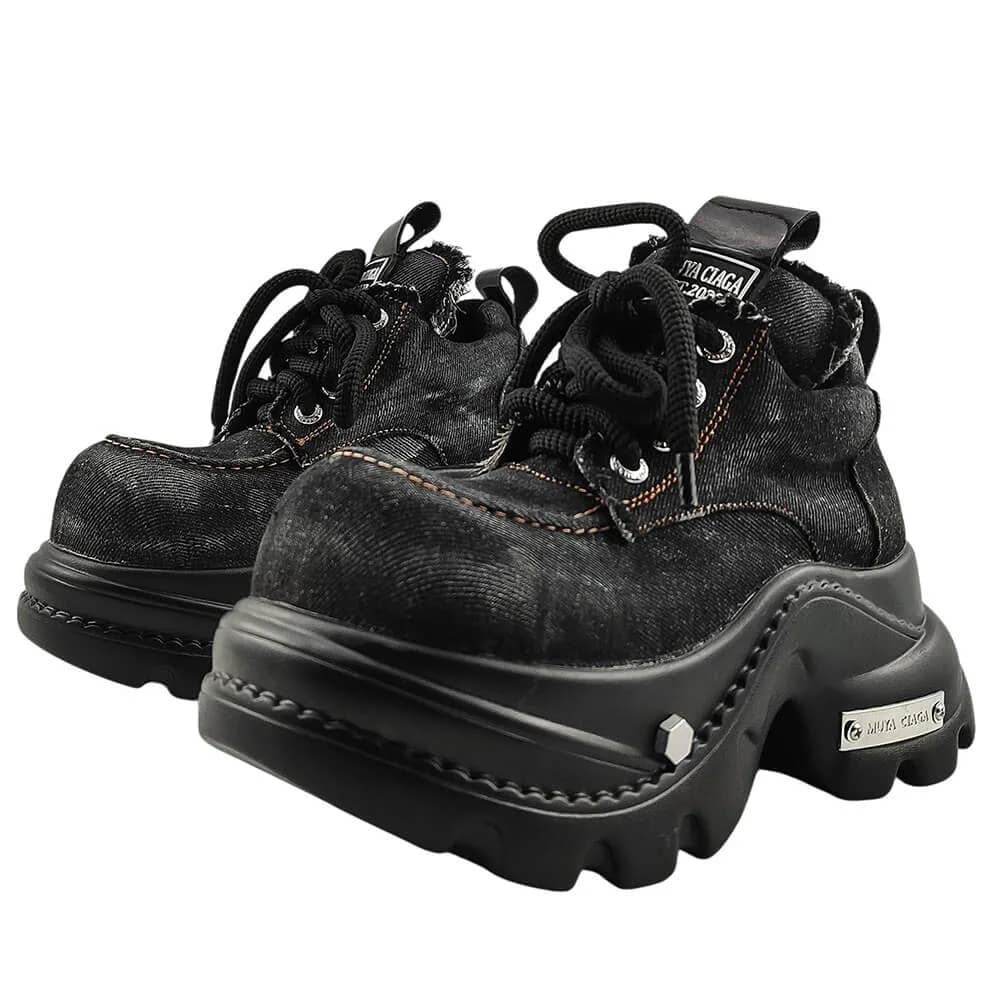
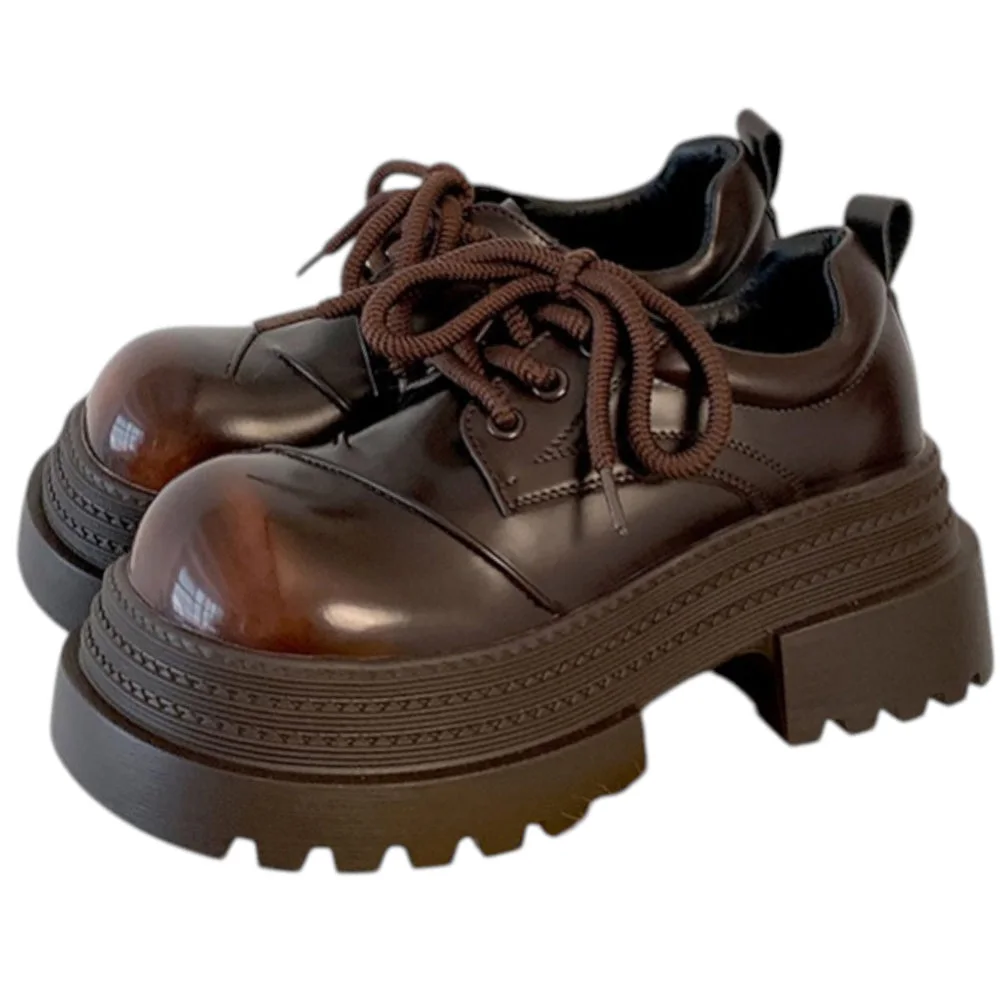
Avoid very thick socks with a narrow oxford-style shoe. Lace-ups like the Teen Craft Platform Oxford Boots have a defined shape, and cramming in a bulky sock can pinch across the top of the foot.
Breaking in without a blister marathon
Vegan leather and faux suede can feel firm at first. The simplest break-in plan is dull but works: wear the boots at home for an hour with the socks you'll use, then for a short errand, then for a longer outing. Spread this over a week or so rather than a single night.
Pay attention to where you feel pressure. A rub at the back of the heel often means a sock that's too thin or a lace that's too loose. Pressure over the toes can mean the size is short. Try re-lacing before deciding the boot is wrong, because lacing tighter around the ankle and looser over the toes changes a lot.
Plasters, blister patches or a soft heel grip are cheap insurance for the first outings. We aren't making health claims here; it's just ordinary practical padding that many people carry.
Never debut a new pair on a day with a long walk and no escape plan. If the first big wear is a festival, a graduation or a trip, you've set yourself up for a bad time. Practise first, and keep the receipt and return terms in mind while you're still trying them indoors.
- Wear indoors first, with your real socks
- Build up from short outings to longer ones
- Adjust lacing before blaming the size
- Carry plasters on early wears
Walking comfort: gait, grip and surfaces
Take slightly shorter steps in a new platform. Because the sole is stiff, landing flat through the foot feels better than striking hard on the heel. After a day or two your body adjusts and it feels natural.
Surfaces matter. Smooth wet tiles, metal grates and loose gravel are where a chunky sole can feel unpredictable, so slow down there. We don't make grip claims for any individual pair, so judge the tread you see in the product photos and go carefully if the weather is bad.
Stairs deserve a note. The sole's front edge is thick, so your toe can catch on a step if you don't lift. Look at the stair, lift a touch higher, and use the rail until it's automatic.
For longer days, consider an insole that fits your boot. Check it doesn't push your heel up out of the back, and remember it takes up room, which affects sizing. Add it before you settle on whether a pair is a keeper.
Hems over chunky soles: the main rule
Here's the core of platform boots outfits: decide whether the hem covers the boot or shows it. The awkward middle, where the hem lands on the top edge of the sole and bunches, is what makes outfits look off.
If you want the boot visible, the hem should stop at or just above the ankle, or sit over the shaft with a slight stack. If you want a clean line, the hem should fall to the top of the sole at the front and a touch lower at the back, without dragging on the ground.
Because the sole adds height, trousers hemmed for trainers will often be too short, and trousers hemmed for flat shoes can look too long. A hem that skims the floor in bare feet may sit nicely when you wear the boots, so always check in the boots, standing, with your normal posture.
Pin before you cut. Fold the hem up, wear the boots, and look in a mirror from the side as well as the front. Walk a few steps and see where the fabric lands.
- Pin and check in the boots, standing
- Check the back of the hem as well as the front
- Leave extra length if unsure; you can always cut more
Which pants to pair: jeans, cargos and wide legs
Straight and slightly wide leg jeans are the easiest match. They sit over the boot's top without fighting the sole's volume. A flared leg looks good when the hem reaches just above the ground, covering most of the boot but leaving the platform's edge peeking out.
Cargos and baggy trousers can pool at the ankle. Fine, if that's the look, but add a small cuff or a hem tape so they don't drag and get wet. A tapered or elasticated ankle can also work, tucking just into the shaft of a taller boot.
Skinny jeans suit a tucked-in style over a calf boot, since the line stays tidy. For a slouchier look, try straight jeans with a single cuff, which shows the sole while keeping fabric off the floor.
Browse the aesthetic pants collection for shapes that suit your height and boot choice, and compare the leg opening across items rather than just the name. A wider opening gives you room to cover or reveal the boot as you like.
Hemming it yourself or taking it to a tailor
For a simple hem, a tailor is quick for most trousers and worth it if the fabric is thick or the leg is tapered. Bring the boots with you and wear the socks you'll use. That single step prevents most hem mistakes.
If you're doing it yourself, hem tape or a no-sew fusible strip handles basic jeans and cotton pants. Keep the original hem on denim if you can; a tailor can reattach it so the worn edge stays intact. That keeps the frayed, lived-in look intact, which pairs nicely with chunky boots.
Don't cut the first time. Try folding, pinning or cuffing first and live with it for a day. Cuffs are reversible, which is handy when you're still deciding between the boot hem and sneaker hem.
If you own both flat shoes and platforms, hem to the boots and use a cuff or a roll for the flats. That's easier than the other way round because you can't add length back.
Skirts, dresses and tights
A platform boot works beautifully with a short or midi skirt because the chunky shape balances the volume. The proportion question becomes where the hem hits your leg: above the knee shows the boot clearly, while a midi can look good if it ends mid-calf above a tall shaft.
Tights add smoothness. Opaque black tights and a black boot give a long line, while patterned tights or ribbed socks give the leg more texture. Slouchy socks over tights can pad a boot that's slightly loose, as long as you size with them in mind.
For a sweeter look, the Ribbon-Laced Chunky Platform Boots carry a ribbon detail that suits a pleated skirt or a soft knit dress. Keep everything else simple so the laces stay the focal point.
In wet weather, a longer skirt can pick up splashes. A hem that sits above the ankle is more practical, and tights in a dark colour hide the odd splash better than light ones.
Outfit formulas by boot style
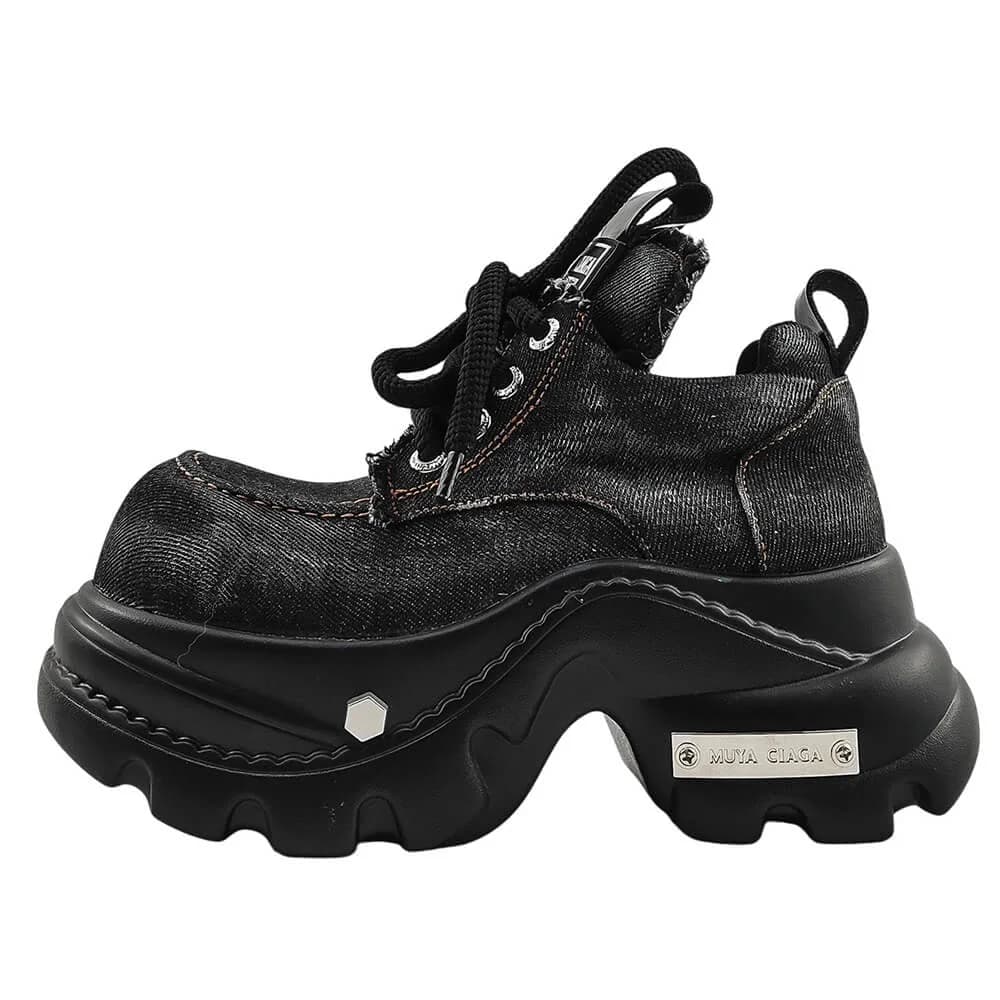
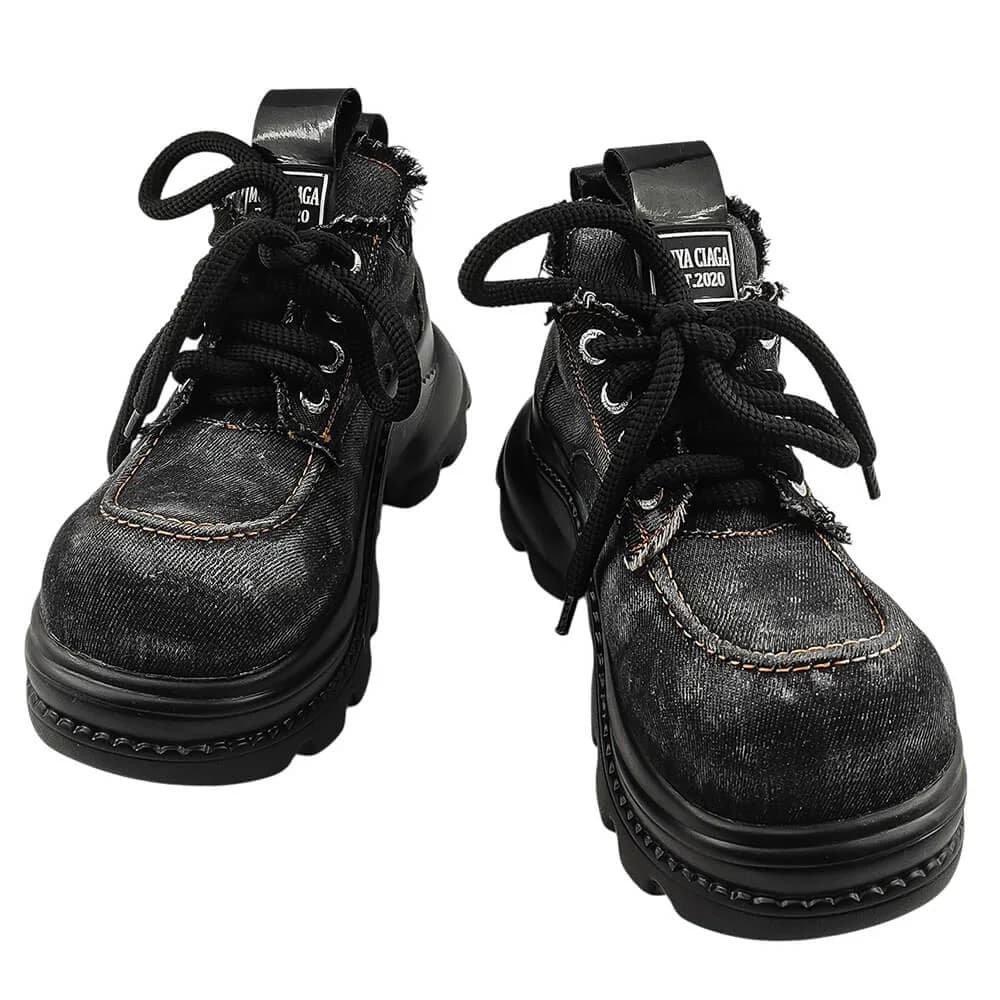
Different boots suit different outfits, so match the shape. For a grungy, layered look, the Contrast-Laced Chunky Platform Boots go with a loose tee, ripped straight jeans and an oversized shirt tied at the waist. The laces make the boot the centre of the outfit, so keep the jeans plain.
For a school-library feel, the Dark Academia Chunky Platform Boots sit well under pleated trousers or a plaid skirt with a knit and collared shirt. For a softer, suede-style outfit, the Star Cut-Out Platform Boots come in Beige, Brown and Black in faux suede, so match the colour to your trousers: beige with cream, brown with olive, black with everything.
Pair a structured oxford boot with cropped straight trousers and a fitted knit, showing a small strip of sock between hem and boot.
If grunge is your direction, the grunge clothes collection has layers to build around any of these boots, and the wider boots collection is useful if you want to compare platforms to lower-profile styles.
Proportions and balance with chunky soles
A heavy boot needs a counterweight higher up. Oversized jackets, a slouchy knit or wide trousers help the outfit feel balanced. If you wear a tiny top with a tiny skirt, a big boot can look like it's carrying the whole outfit, which is fine if intentional.
Think in thirds. If the boot takes up the bottom third, the middle should be quieter and the top can be where you add interest, such as a scarf, a statement collar or a good bag. If the trousers are very wide, a fitted top keeps the outline clear.
Colour helps. A black boot with black trousers makes the leg look continuous, while a contrasting boot such as brown against black breaks the line and draws the eye down. Neither is wrong, but pick on purpose.
Height can be a factor too. If you're petite, matching the trousers to the boot colour stretches the line. If you're tall, a visible sole with a cuffed hem adds interest without making you feel top-heavy.
Weather, care and storage
Vegan leather and faux suede react differently to water. Faux suede in particular can mark more easily, so we'd save it for dry days and check the care notes on the product page. We can't promise water resistance for any boot, so carry an umbrella and wipe off splashes.
Wipe vegan leather with a soft damp cloth and let it dry away from direct heat. Keep boots stuffed with paper or shoe trees to hold the shape, particularly taller calf boots that can slump and crease at the ankle.
Weather matters for trousers too. In rain, a hem that touches the ground will soak up water, and wet denim around chunky boots is heavy and cold. Cuff or choose ankle-length in poor weather. In hot weather, thinner socks and a breathable trouser will make a closed boot more bearable.
None of this depends on hemisphere or month; just look at the forecast and choose the hem and the sock to match.
How to compare pairs before you buy
Line up two or three boots and compare the same things: shaft height, lacing style, material, colour options, whether the page says it runs small, and the size range. The Normandy Countryside Brown Platform Calf Boots and the Teen Craft oxfords both come in Brown and Black, so colour can be the tiebreaker.
Ask what you'll wear them with. If your wardrobe is mostly black, a black pair gets the most wear. If you wear lots of earthy tones, brown adds variety. If you're not sure, black is the flexible choice.
Check the sizing information on each page rather than assuming. The size range may not include your size, and the available EU sizes differ pair to pair.
Then consider the cost per wear. A pair you can walk in and style five ways is better value than one that's lovely but stays in the box.
- Shaft height and lacing style
- Material and care needs
- Size range and run-small notes
- Colour versus your existing wardrobe
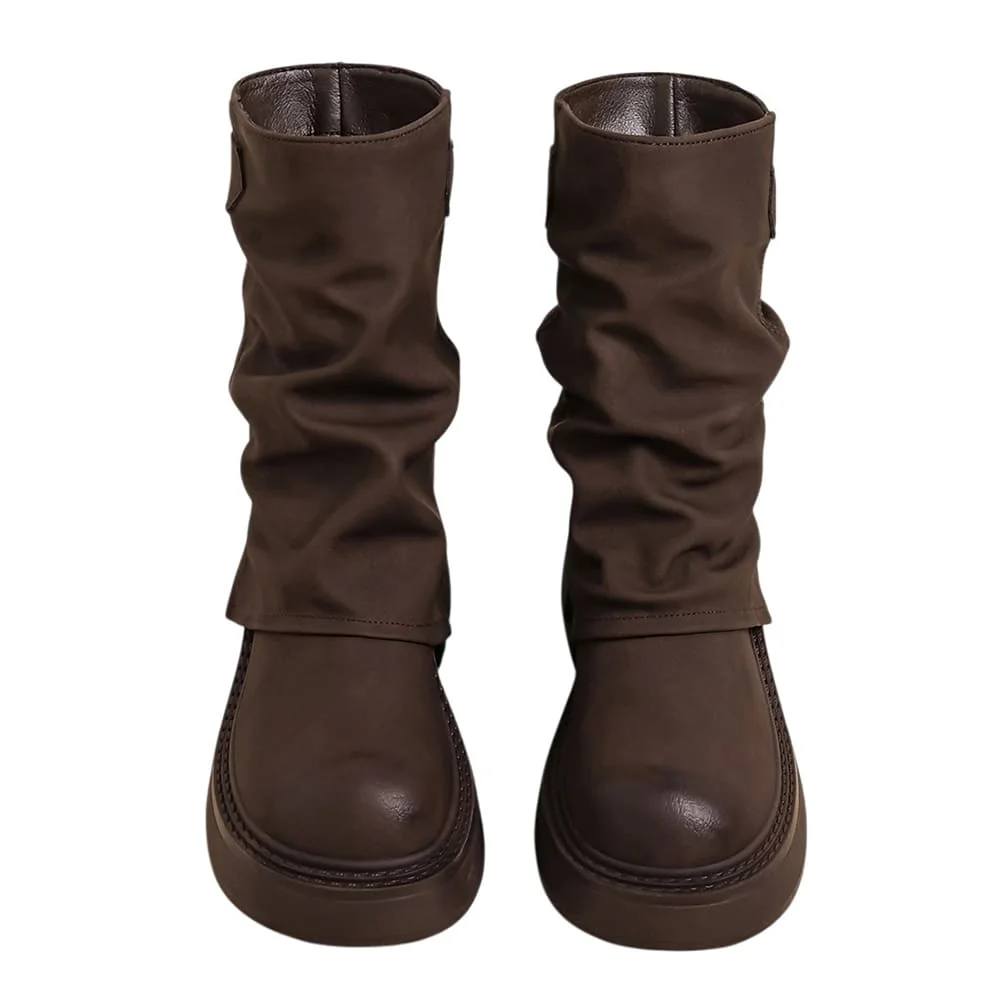
Final checklist before you wear them out
Run through this list the day before your first proper outing. It takes five minutes and prevents most of the common problems.
If everything checks out, you're ready. If one thing is off, fix it first, whether that's a hem, a lace, or a sock swap. And if the size is wrong, check the return terms before wearing them outdoors.
Once the basics are sorted, platform boots outfits get easy. Pick a hem plan, pick a sock, build the outfit around the boot, and let your feet get used to the sole. From there it's just a matter of enjoying the extra height.
- Sock chosen and size checked with it
- Boots worn indoors for at least a short session
- Hem pinned and checked while standing in the boots
- Laces adjusted: snug at the ankle, easier over the toes
- Plasters or a heel grip in your bag
- Weather checked and hem length adjusted
- Return terms known if the fit is off