Created by the Kawaii Vibe editorial team. Our named style desks are editorial personas. Product details and availability can change.
The quick answer: plus size grunge works best when you pick one thing to be loose and one thing to be fitted, then add structure in two or three spots. Oversized flannel over a shaped bottom half, or a slouchy sweatshirt over denim that actually sits right at your waist. Grunge is meant to look a bit careless, but the careless part only reads as a choice when the proportions are doing quiet work underneath.
This guide is about fit and fabric more than trends. We cover when oversized beats tailored, what to look for in stretch denim, how to stack layers without bulk at the hips, and where a belt, jacket or tights can give an outfit a backbone. It's written by Alex, the editorial persona of The Alternative Desk, so there are no personal try-on stories here, just practical logic you can check against your own wardrobe.
Everything is adaptable. Swap colours, drop a layer in warm weather, add one in cold. Product mentions are optional ideas from our range, and we only state what's on the listing: materials, colours and sizes.
Oversized or Tailored: Choose Which Half Gets the Room
Most grunge looks go wrong in one of two ways: everything is huge and the outfit becomes a shape with no edges, or everything is fitted and the slouch disappears. The fix is to split the outfit. Let one half be roomy and the other half be defined.
Roomy top, defined bottom is the easiest start. A big sweatshirt or shirt hangs from the shoulders, and jeans or a skirt that sits cleanly at the waist show where your body is. Reverse it with a fitted tee or bodysuit under a long open layer, and baggy jeans with a belt.
If you love full-oversized, give the eye a landmark. A visible waistband, a belt over a shirt, or a jacket cropped at the hip all do it. Without one, a long top plus long jacket plus straight jeans can flatten into a column.
A simple test: stand in front of a mirror and squint. If you can still spot shoulders, waist or hem as separate points, the outfit has structure. If it is one blur, change one piece.
Start With Shoulders, Not the Size Label
For oversized pieces, shoulder fit decides everything. A dropped shoulder seam is part of the look, but if the seam lands halfway down your upper arm and the sleeve covers your knuckles, the whole garment sags. Aim for a seam that drops a little, not a lot.
Size up for oversized only if the cut is already boxy. If a piece is marked oversized, your usual size often gives the intended slouch, and going up two sizes may just add length and sleeve you have to fight. Check each listing's size range and any chart before deciding.
The Oversized Checkered Button-Up Shirt is a useful example because it runs XS to 5XL in polyester, with Black/white, Pink/black, Orange/blue, White/black and Black/red options. Wearing it open over a tee gives you a shoulder line, and rolling the cuffs once or twice solves sleeve overflow.

Stretch Denim: What to Look For and What to Skip
Denim is the backbone of grunge, and on larger bodies the details matter more than the wash. Look at the rise first. A mid to high rise stays put when you sit, and avoids the constant tug-up that low rises cause. Then check the thigh and knee, since that is where rips either sit nicely or pull open.
Our listings only tell us the material is denim, so check each page for any stretch details before assuming. If it isn't stated, treat it as non-stretch and compare the size range and chart to your own measurements. Rigid denim can look great and hold its shape, but it needs to fit at the widest point, usually hip or thigh, with the waist adjusted by a belt.
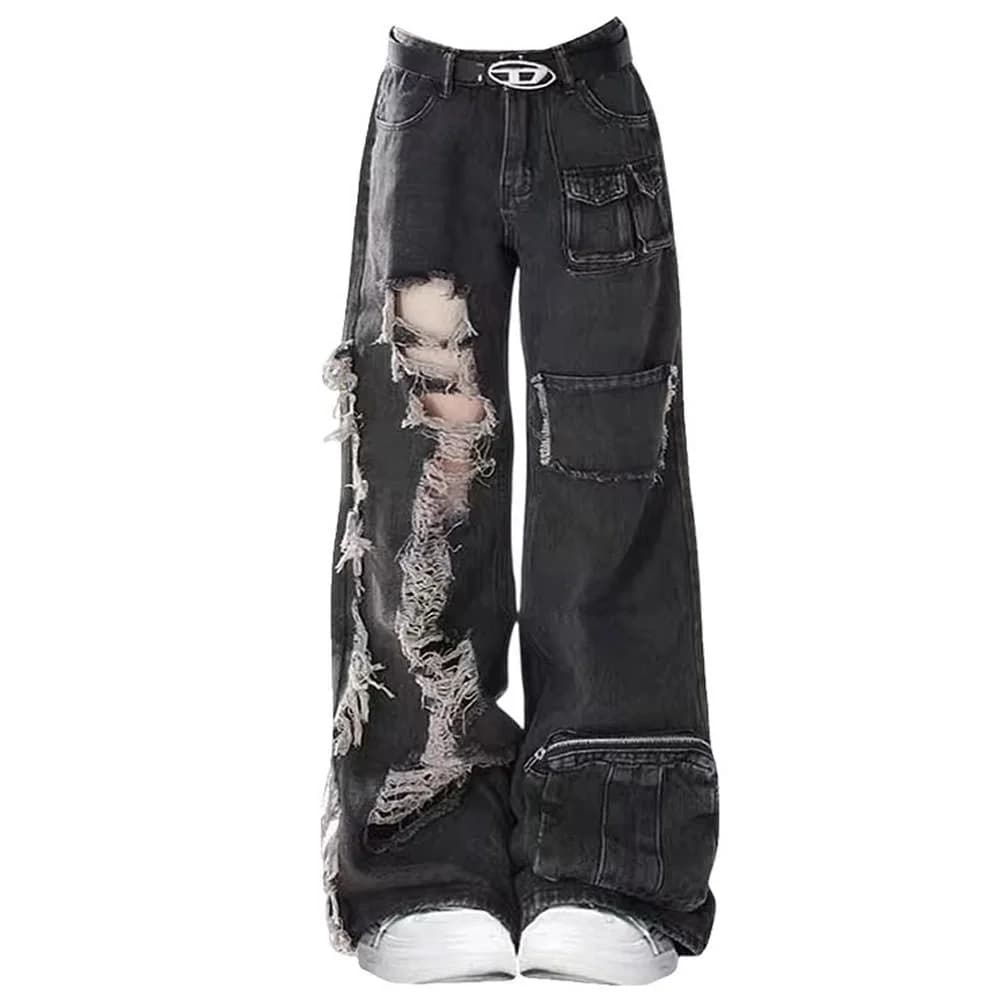
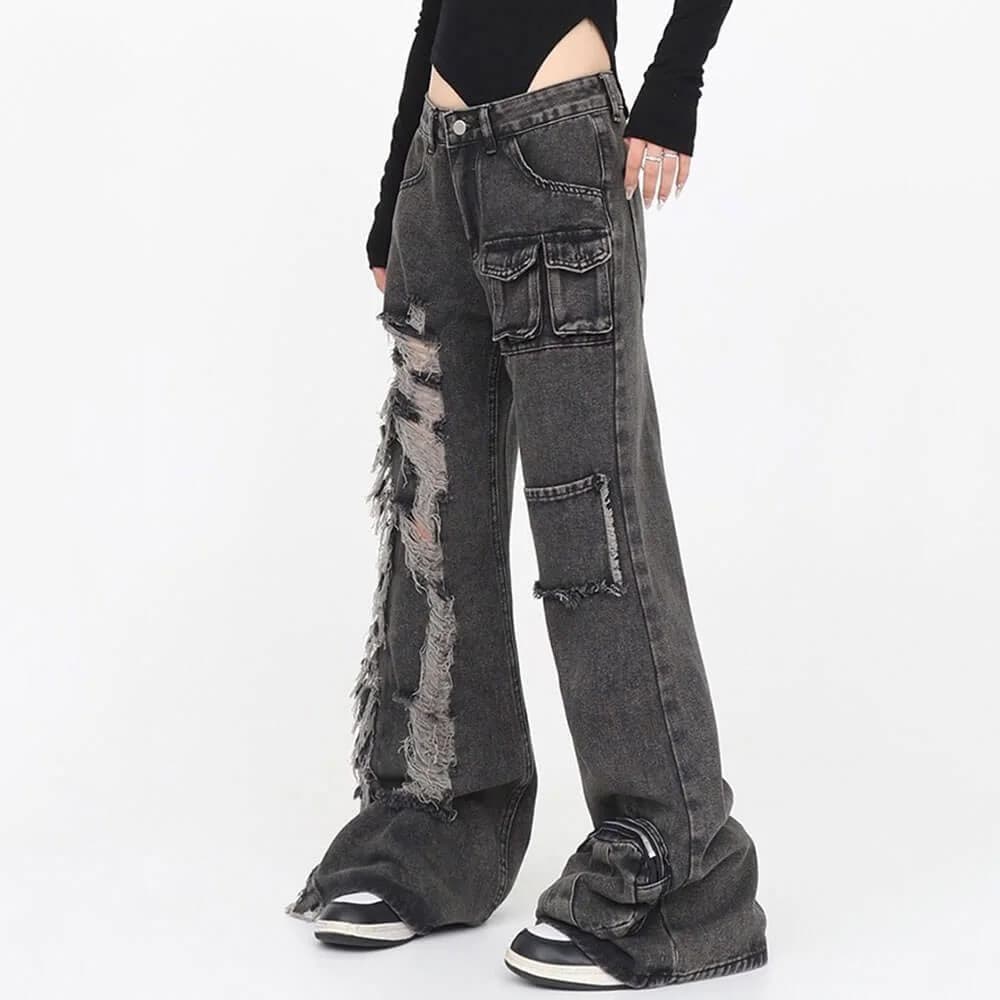
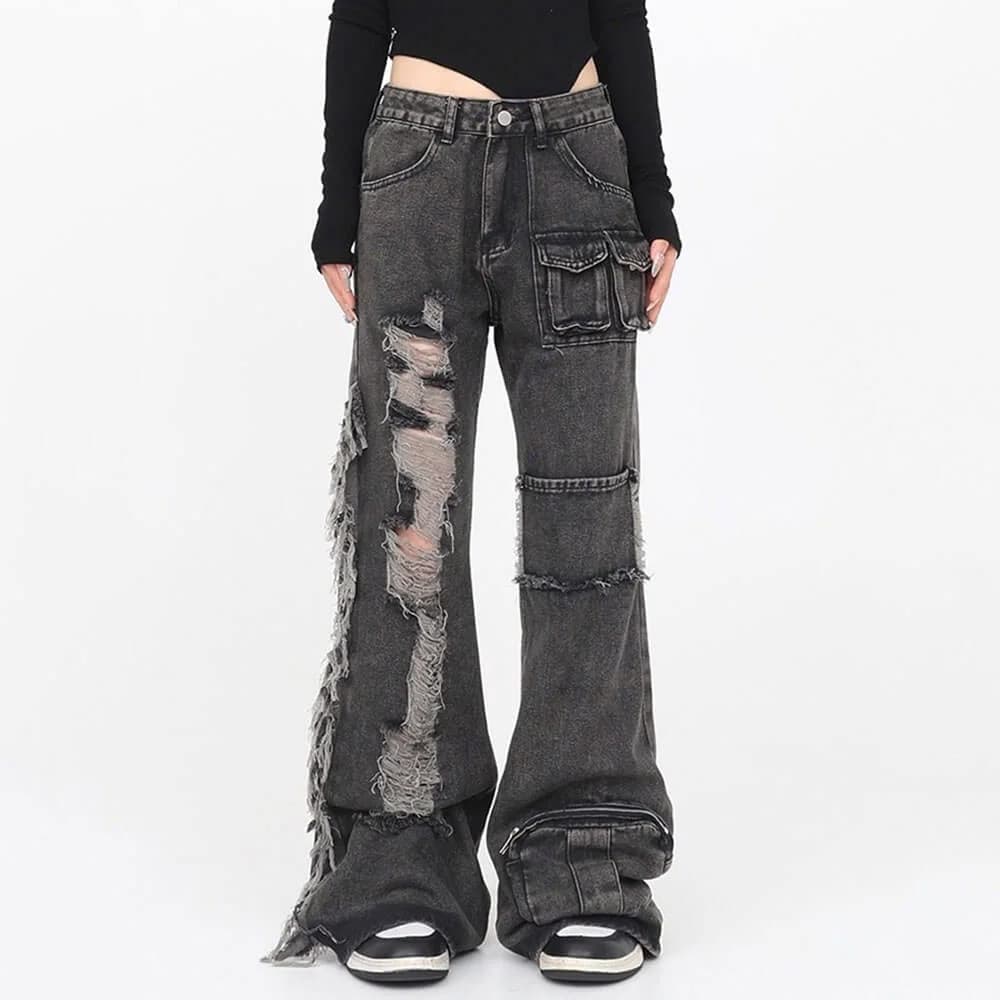
Ripped styles need extra thought. Big rips across the thigh get wider as you move and can show more than you planned. Small to medium distressing near the knee is easier to live with, and wearing black tights underneath keeps things comfortable and gives a layered look.
For a starting point, Grunge Ripped Jeans in Black come in S to 4XL in black denim. Black is forgiving across layers because it ties together mixed tops. Browse the wider jeans collection if you prefer a different wash or cut.
Layering Lengths: Staggering Hems
The most useful layeringWearing pieces over or under one another to add depth, warmth or contrast. rule is to stagger hems rather than match them. When a shirt, a tee and a jacket all end at the same spot, they create a hard horizontal line, often across the widest part of the hips. Different lengths give the eye a vertical path instead.
A reliable stack: tee at hip length, open shirt a couple of inches longer, jacket shorter than both. Or reverse it, with a long cardigan or shirt as the outermost layer and a shorter tee peeking from underneath. Either way, you want a visible difference of a few inches between layers, so it looks deliberate.
Avoid ending a layer exactly at the fullest part of your hips or thighs if you want to minimise attention there. That is a preference, not a rule. Plenty of people like the full-hip hem for its slouchy feel. Just choose it on purpose.
Sleeves work the same way. A thermal or mesh long sleeve under a short sleeve tee adds a second texture at the wrist, and pushing the outer sleeve up gives definition at the forearm.
Where to Add Structure
Structure means any element that holds a shape: a belt, a collar, a seam, a stiffer fabric, a jacket with a defined hem. Grunge is soft by nature, so it helps to place two or three of these on purpose.
Waist: a belt over an open shirt or over a loose dress creates a mid-point without squeezing. Wear it at your natural waist or slightly lower, on the hip bone, depending on what feels comfortable.
Shoulders and collar: a jacket with a firm collar frames the face and keeps oversized layers from collapsing inward. Our outerwear collection is the place to compare these.
Hem: boots with some weight balance a big top. Chunky soles also stop long jeans from pooling.
Pick two. More than that and the outfit starts to feel styled to death, which is the opposite of grunge.
The Jacket Layer: Oversized Without Drowning
A jacket is the quickest way to add edge, but oversized ones need a plan. The goal is room across the chest and upper arms, with the hem landing at hip or just below.
The No Apologies Oversized Grommet Jacket is listed in black polyester, in sizes S, M and L. Because that range is limited, it suits people who want the oversized drape from a smaller size, so read the listing details and any size information before ordering. Wear it open over a fitted tee and straight jeans, letting the grommet detail be the one loud thing.
If a jacket feels tight across the back when you reach forward, it will feel worse once you add a sweatshirt under it. Plan your layers first, then pick the outer piece to suit them.
Keep colours quiet around a detailed jacket: black, grey, washed denim. Let it carry the attention.

Skirts and Dresses: Grunge Without Jeans
Not everyone wants denim legs, and grunge has plenty of room for skirts. The trick is balancing volume. A long skirt pairs with a fitted or cropped top, and a short skirt with a bigger top and sturdy shoes.
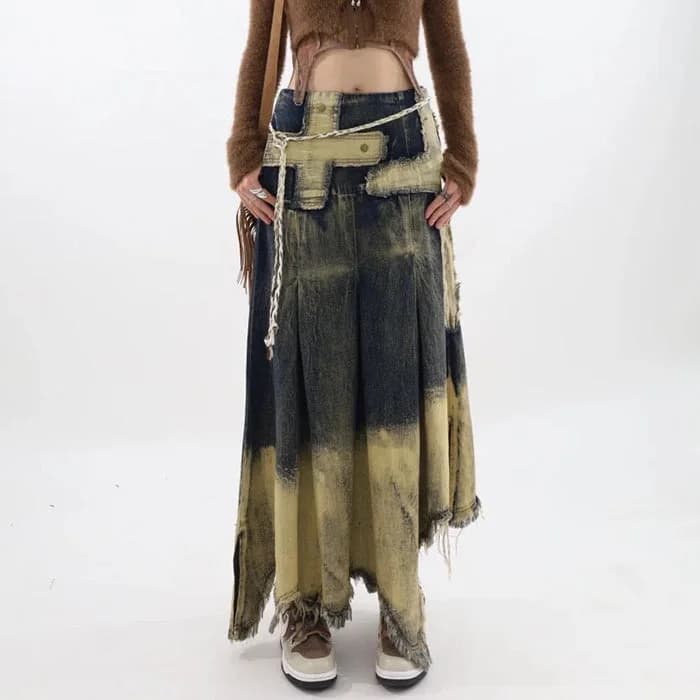
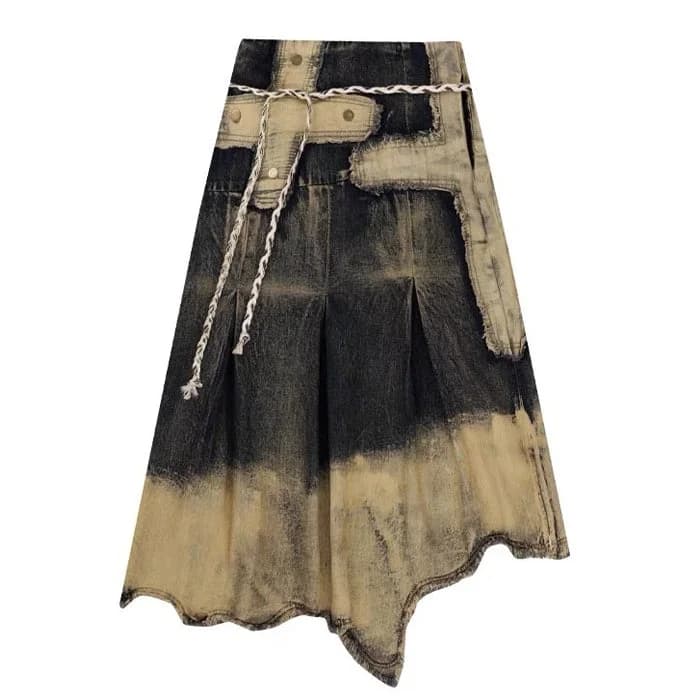
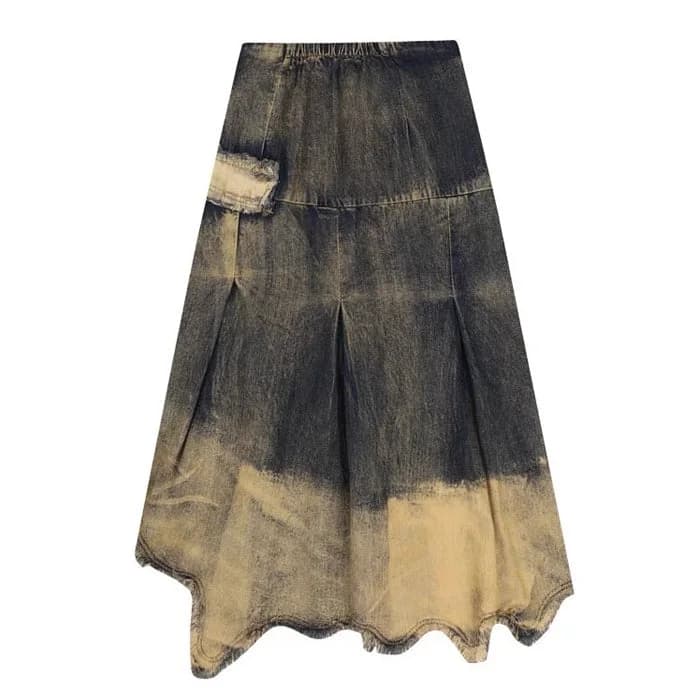
The Fairy Grunge Washed Long Denim Skirt comes in brown/grey denim, S to 4XL. A long, washed skirt gives movement, so try a plain fitted tee tucked in, a loose cardigan, and boots. The tuck shows the waist, and the skirt does the slouching.
For a shorter option, the Grunge Patchwork Plaid Denim Skirt is blue denim in S to 4XL. Patchwork adds visual interest, so keep the top plain. Black tights underneath add coverage and a clean line.
If you want a dress, the Grunge Sleaze Distressed Kiss Dress is white polyester, available in S, M and L. Check the size information carefully, since the range is narrower. LayeringWearing pieces over or under one another to add depth, warmth or contrast. it over a fitted black top or under a big open shirt changes the mood.
Tights, Fishnets and Texture Underneath
Tights are structure you can't see from far away. They unify the leg, add coverage under rips and shorter hems, and let you wear skirts with more confidence in cooler weather.
The Grunge Skull Fishnet Tights are black nylon, listed as free size with a single standard option. Since it is one size, check the listing details and think about how much stretch you need before buying. Fishnets suit being worn under ripped jeans, where the pattern shows through the tears, or under a skirt with boots.
LayeringWearing pieces over or under one another to add depth, warmth or contrast. tip: wear an opaque pair of tights under fishnets if you want more coverage or less contrast. Two thin layers also add a little warmth without bulk.
If you aren't sure about the fit of fishnets, try them under rips first. The pattern is only partly visible, so it is a lower-stakes way to test the look.
Sweatshirts, Flannels and the Fabric Question
Fabric changes how oversized pieces behave. Heavier knits hold their shape and hang straight. Thinner polyester drapes and clings differently, and can move more with you. Neither is wrong, but you should know which you are choosing.
The Face Print Grunge Oversized Sweatshirt is polyester in grey/green, sizes M to 3XL. It works as the roomy half of a split outfit: pair it with black jeans and boots, and put a shirt collar or an open flannel at the neck for another layer.
Checked shirts are polyester here too, so they will behave a certain way: usually lighter and quicker to move than cotton flannel. Tie one around the waist only if you like the extra bulk there. Otherwise wear it open or tucked at the front.
Always check the listing for fabric weight or stretch information. If it isn't listed, don't assume.
Three Outfit Formulas to Adapt
Formula one, everyday: oversized sweatshirt, black ripped jeans, boots, and a belt looped at the hip. Add a shirt tied or worn open for a cooler day. Why it works: the loose top is balanced by defined legs.
Formula two, skirt version: long denim skirt, fitted tee tucked in, open checkered shirt as a jacket, and tights if it's cold. Why it works: three different lengths, plus a visible waist.
Formula three, evening: the white distressed dress over opaque tights, the grommet jacket open, chunky boots. Why it works: a light piece against dark layers creates contrast, and the jacket gives shoulders.
For all three, swap the colours to what you own. The logic is what matters: one roomy piece, one defined piece, and two points of structure.
Weather and Climate Adjustments
LayeringWearing pieces over or under one another to add depth, warmth or contrast. shifts depending on where you live and the time of year, so think in temperature rather than months. In heat, use thin layers you can remove, like an open shirt over a tee, and skip heavy denim if it feels stifling. A skirt with bare legs and boots can work, though polyester can feel warm, so choose breathable underlayers.
In cool weather, add tights, a thermal base layer and a jacket. Keep the base layer slim so the outer pieces don't bunch. In wet weather, long hems can drag, so a cropped leg or a rolled cuff is useful.
Our listings don't make claims about waterproofing or insulation, so treat these as style layers and add suitable practical outerwear if you need real protection.
Pitfalls and a Quick Checklist
Common mistakes: buying oversized in a size far above your own, wearing every layer at the same length, ignoring rise on jeans, and skipping tights where rips or short hems rub. Another is not reading the size range. Some items stop at L or 3XL, so check before falling in love with a colour.
Before you buy or head out, run through this list. You can also browse the plus size collection, the grunge clothes collection and the wider grunge range for more options.
- Is one half of the outfit roomy and the other defined?
- Do shoulder seams land close to your shoulder, not halfway down your arm?
- Does the jean rise stay put when you sit?
- Are your hems at different lengths?
- Have you added two points of structure, such as a belt, collar or boots?
- Have you checked fabric details and the size range on each listing?
- Can you move, reach and sit comfortably in all layers together?