Created by the Kawaii Vibe editorial team. Our named style desks are editorial personas. Product details and availability can change.
Rainbow knitwear brings instant joy to any wardrobe, but wearing multi-colored stripes or gradients presents real daily styling puzzles. When your top layer features red, yellow, green, violet, and blue all at once, deciding how many buttons to fasten, which inner shirts prevent visual clashes, and what trousers keep the outfit grounded can feel overwhelming. Balancing vibrant shades without looking chaotic simply comes down to understanding lines, drape, and visual weight.
In this styling guide, we break down concrete formulas for wearing bright knit layers without second-guessing your outfit. We look at neckline geometry, button placement, hem proportions, and contrast management so you can build balanced looks using items already in your closet. Whether you want a relaxed weekend outfit, a clean campus look, or a creative layered work ensemble, mastering a few core rules turns expressive knitwear into an effortless staple.
1. The Geometry of Buttoning: Open, Half-Buttoned, and Closed
How you fasten your knitwear completely changes the shape of your torso and determines what your base layers can do. Leaving a cardigan fully unbuttoned creates two strong vertical lines down the center of your body. This elongates your silhouetteThe overall shape an outfit creates, from fitted to loose and layered. and gives bright horizontal stripes or chunky intarsia patterns room to breathe, exposing whatever neutral top or high-waisted bottom you wear beneath. It is the most forgiving configuration for casual days and works reliably with mid-rise denim or pleated skirts.
Fastening only the middle buttons—usually the second and third down on a standard five-button front—produces an inverted-V opening at the waist and a soft V-neck at the chest. This technique highlights your natural waistline while letting the lower hem drape naturally over your hips without bunching or pulling across pockets. It prevents thicker knitwear from looking boxy and box-like.
Securing every button turns the piece into a standalone sweater, which works cleanly when the knit has a shallower neckline or when you tuck the front hem into rigid trousers. However, buttoning every closure on a chunky rib knit can stretch the placket horizontally, creating puckers between buttonholes. If your goal is a tidy, seamless look, check that the knit lies flat against your chest without pulling against the buttons before choosing a fully closed configuration.
- Fully open: Maximizes vertical drape, breaks up loud horizontal stripes, and showcases base tops.
- Middle buttons only: Forms an hourglass shape at the waist and prevents fabric pooling over wider hips.
- Fully buttoned: Reads like a crew or V-neck jumper, best paired with clean waistbands or neat front tucks.

2. Finding the Right Base Layer: Collars, Necks, and Textures
A vibrant outer layer needs an intentional foundation so necklines do not compete for space. If your cardigan has a deep V-neck, a smooth scoop-neck inner shirt stays discreetly out of the way, keeping the focus squarely on the colorful knit. For example, pairing a deep front with the Rainbow Striped Tank Top gives you a cohesive color tie-in while the slim fit and scooped neckline keep the under-layer smooth and bunch-free.
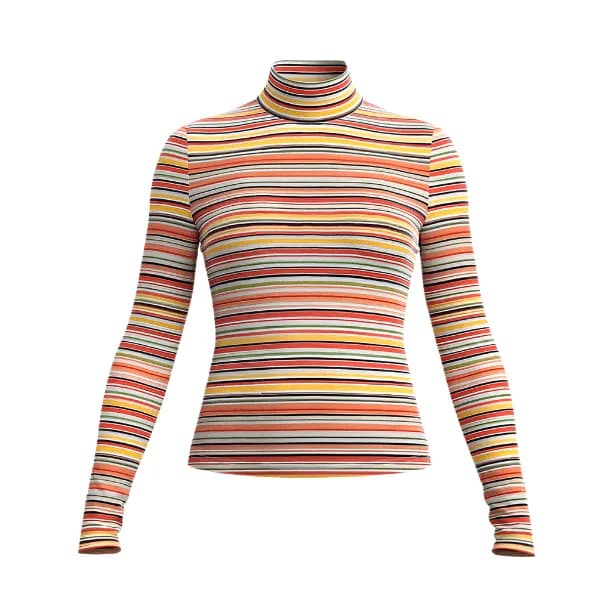
When you prefer a high-contrast structural look, structured collars add crisp definition above soft knitwear. A fitted turtleneck or a mock-neck top frames your jawline and protects your neck from scratchy yarns. Choosing an option like the Rainbow Muse High Neck Top provides a snug polyester collar that anchors the upper body while echoing color motifs from your outer layer.
Avoid bulky base garments that fight the drape of your knit. Heavy fleece hoodies, oversized thick flannel shirts, or tops with prominent chest pockets create awkward bumps under fine-gauge knits and strain the armholes. Stick to lightweight jerseys, combed cotton tees, or rib-knit tanks that hug the torso so your outer knit can move freely.
- Scoop and crew necks: Sit quietly beneath deep V-plackets for clean everyday layeringWearing pieces over or under one another to add depth, warmth or contrast..
- Mock and turtlenecks: Add height and structure, ideal for cooler days or transitional weather.
- Fitted profiles: Prevent bunching around armpits and eliminate bulging beneath fine-gauge knits.

3. Bottom Silhouettes: Balancing Volume and Hemlines
Proportion is the secret to making multi-colored knitwear look deliberate rather than accidental. Because multi-colored stripes and bright checkerboard motifs naturally draw the eye first, your bottoms should provide structural balance. If you are wearing a long, oversized cardigan that hits past the mid-thigh, pairing it with wide-leg trousers can drown your frame in excess fabric. Instead, anchor long silhouetteThe overall shape an outfit creates, from fitted to loose and layered.s with straight-leg denim, tapered trousers, or bike shorts to maintain clear lower-leg definition.
Cropped cardigans that hit right at the natural waistline call for the opposite approach. They pair seamlessly with wide-leg culottes, relaxed cargo pants, and structured A-line skirts. A cropped cut establishes a high waistline, giving you room to wear voluminous silhouetteThe overall shape an outfit creates, from fitted to loose and layered.s on the lower half without sacrificing your overall shape. High-rise denim with a wide flare creates a flattering 1970s balance against short, punchy stripes.
Mid-length cardigans that end at the hip require careful hemline management. If the cardigan hem sits directly across the widest point of your hips, leaving the bottom two buttons undone lets the fabric flare outward naturally. This prevents the band from clinging tightly across pockets and rear seams, allowing trousers with pleats or pockets to hang straight.
- Oversized, long knits: Pair with straight-leg jeans, fitted trousers, or mini hemlines to avoid visual clutter.
- Cropped cuts: Pair with high-waisted wide-leg trousers, barrel pants, or midi skirts to emphasize waist height.
- Hip-length cardigans: Unfasten the bottom buttons to avoid clinging across your hips and rear pockets.
4. Neutral Anchoring: Taming Multi-Color Knits for Daily Wear
When an outer layer contains four to seven contrasting pigments, the quickest way to assemble an outfit is through neutral anchoring. Rather than introducing additional colors in your trousers, shoes, or undershirts, rely on solid neutrals like optic white, heather grey, jet black, camel, or washed indigo. These foundation tones act as a visual resting place, preventing your ensemble from feeling chaotic.
Black creates high-contrast drama that sharpens candy-colored pastels or deep jewel-toned stripes, making the knit look punchy and modern. Crisp white base layers, on the other hand, bring out sunny retro undertones and keep pastel cardigans feeling fresh and light. Charcoal and slate grey offer a softer, urban alternative that tones down bright neon shades without the stark division that pure black can create.
Consider your denim washes as functional neutrals. A mid-wash vintage blue acts almost like a blank canvas, pairing naturally with rainbow palettes because blue is already present in standard color spectrums. Raw denim provides dark, rigid structure for boxy knits, while ecru and cream jeans soften bold primary stripes for weekend brunches or library sessions.
Anchor a bright cardigan with black trousers and a plain white tee, then repeat one cardigan shade in your bag. If you want a stronger print-and-accessory contrast, Ganguro Clothes offers that as a separate styling direction; changing skin tone is not part of the outfit decision.
- Jet black: Sharpens bright accents and provides high-contrast definition.
- Crisp white: Enhances pastel stripes and creates a bright, retro-leaning mood.
- Heather grey: Moderates saturated brights with a relaxed, low-contrast transition.
- Mid-wash indigo: Functions as a universally flattering base that softens bold knit patterns.
5. Monochrome and Single-Color Pulling
If solid neutrals feel too basic, use the single-color extraction technique. Look closely at the multi-colored cardigan you want to wear and pick out exactly one secondary or accent shade from its pattern—such as lilac, mustard, sage green, or sky blue. Build the rest of your outfit around that single extracted tone rather than trying to match the entire spectrum at once.
For example, if your knit features a thin line of warm amber among broader stripes, choosing amber corduroys or a mustard shoulder bag makes the entire outfit feel deliberate and curated. This method bridges the gap between chaotic multi-color styling and plain neutral dressing. It demonstrates styling intentionality without demanding excessive accessories.
When pulling a single color, vary the texture between your garments to keep the outfit multidimensional. If you pull a lavender stripe from a fuzzy, brushed-mohair cardigan, wear smooth cotton chinos or a satin slip skirt in that same lavender hue. Pairing contrasting textures keeps single-color styling looking thoughtful rather than like an exact uniform match.
After choosing one shade from the cardigan, repeat it in a small accessory rather than matching the whole spectrum. A bright patterned bag inspired by oshare-kei clothes can add playful contrast; choose one that includes your selected accent color and keep the trousers simple. This gives the outfit another point of interest without displacing the cardigan as its main color source.
- Select an accent: Pick a minor stripe or motif color rather than the dominant background tone.
- Match base or bottom: Use the extracted shade for your trousers, undershirt, or primary bag.
- Vary textures: Combine fluffy knits with smooth twill, denim, or silk in the selected tone.
6. Navigating Weather Transitions: Warm, Cool, and Wet Days
Knitwear adapts remarkably well across fluctuating weather conditions when you adjust your base layers and button closures. On warm spring afternoons, a light cardigan acts as portable outerwear over a breathable cotton tee. Leaving it completely open catches the breeze, and if the temperature climbs, you can easily drape it over your shoulders and knot the sleeves across your chest.
During colder autumn and winter months, your cardigan transforms into an intermediate mid-layer. Wear it closed over a thin thermal vest or a lightweight base, then slip a structured wool overcoat or an oversized trench over the top. The colorful placket peeking out from beneath a dark charcoal or camel tailored coat adds a pop of personality to heavy winter outwear without exposing you to the cold.
On damp or rainy days, pay attention to yarn fiber and overall length. Floor-sweeping or longline cardigans will soak up water from wet sidewalks and puddle splashes around the hem. Choose cropped or waist-length silhouetteThe overall shape an outfit creates, from fitted to loose and layered.s on wet days and layer them beneath a waterproof shell. This keeps your colorful knit clean and dry while brightening up overcast commutes.
- Warm days: Wear unbuttoned over light tanks; tie around shoulders when sun peaks.
- Cold weather: Fasten fully as an intermediate layer beneath heavy wool coats and trenches.
- Wet conditions: Stick to waist-length cuts under water-resistant outerwear to avoid soaked hems.
7. Exploring the Rainbow Spectrum: Exploring Sweaters vs. Cardigans
When deciding how to introduce colorful knitwear into your rotation, choosing between buttoned fronts and solid pullovers shapes how versatile your wardrobe will be. Our broader Rainbow Clothes category showcases how dynamic these pigments can be, but cardigans offer on-the-fly ventilation and layeringWearing pieces over or under one another to add depth, warmth or contrast. flexibility that fixed pullovers cannot match. You can change your silhouetteThe overall shape an outfit creates, from fitted to loose and layered. instantly simply by adjusting buttons.
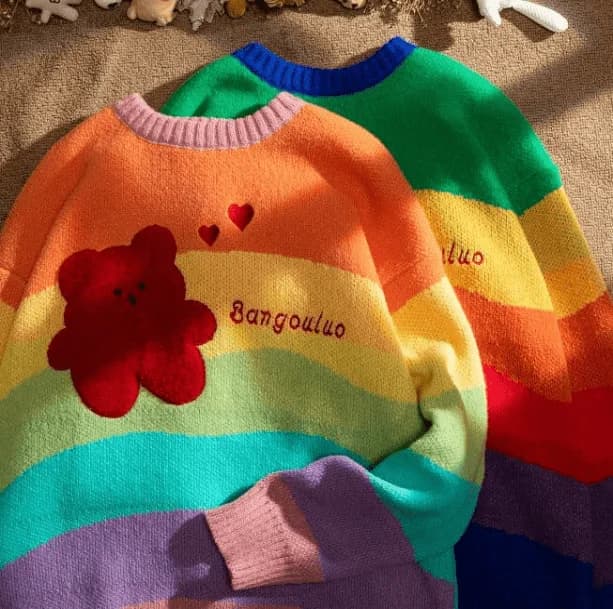
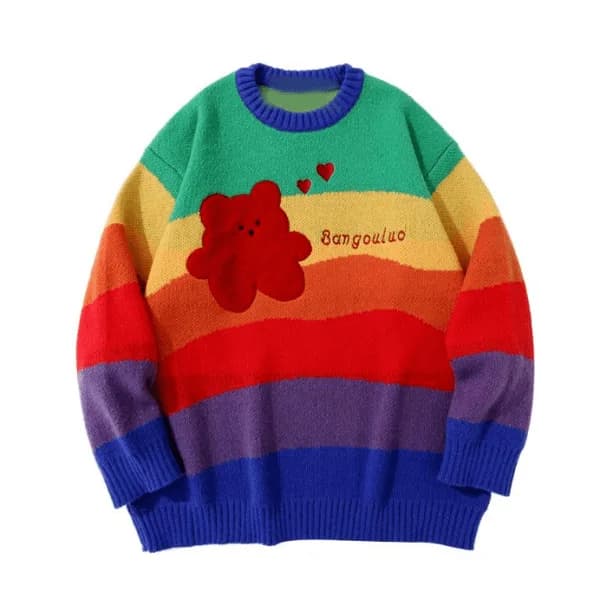
However, pullovers offer reliable structural simplicity. If you prefer a clean graphic front without plackets breaking up the artwork, exploring dedicated Rainbow Sweaters gives you continuous pattern coverage. For instance, the Rainbow Bear Sweater features a blended polyester, cotton, and acrylic construction with options A and B that showcases an uninterrupted central graphic that would be sliced in two by a button placket.
Similarly, the cotton Rainbow Stripes Sweater offers classic horizontal blocking across the entire chest without the fuss of aligning button bands. Use cardigans when you want to show off interesting inner layers or frequently move between heated indoor spaces and cold outdoors. Turn to pullovers when you want a straightforward, one-step top layer that requires zero fiddling with closures.
- Cardigans: Offer flexible button configurations, easy temperature control, and show off inner layers.
- Pullovers: Deliver unbroken graphic prints, continuous stripe lines, and require zero placket management.
- Selection tip: Choose cardigans for active layeringWearing pieces over or under one another to add depth, warmth or contrast.; choose pullovers for quick, standalone styling.

8. Comparing Specific Cardigans: Cuts, Plackets, and Gauges
Before picking a specific piece, evaluate the physical knit construction to see how it fits your routine. Exploring our curated Rainbow Cardigans collection reveals a wide range of silhouetteThe overall shape an outfit creates, from fitted to loose and layered.s, from tightly knit cropped cuts to slouchy, oversized boyfriend fits. A fine-gauge knit sits close to your skin and tucks easily into high-waisted bottoms, whereas a chunky cable or shaker knit acts like a piece of light outerwear.
Examine the front placket and button construction closely. Ribbed plackets with reinforced backing hold their shape when buttoned, whereas lightweight unreinforced plackets may sag or ripple if the buttons are too heavy for the yarn. If you prefer wearing your knit open, look for wide ribbed trims along the hem and collar, as these details help the garment hang straight without curling inward at the edges.
Sleeve construction also dictates comfort. Drop-shoulder sleeves lend an effortless, relaxed drape that fits comfortably over shirts with wider sleeves. Fitted set-in sleeves look sharper and slide easily under tailored jackets, but they restrict what kind of inner shirts you can wear underneath without squeezing your arms.
- Fine-gauge knits: Best for tucking, layeringWearing pieces over or under one another to add depth, warmth or contrast. under blazers, and clean lines.
- Chunky gauges: Function as outerwear, provide tactile warmth, and suit relaxed silhouetteThe overall shape an outfit creates, from fitted to loose and layered.s.
- Drop shoulders: Offer a relaxed look and accommodate thicker base tops.
- Set-in sleeves: Deliver tailored structure that fits neatly beneath winter coats.
9. Pattern Mixing: Stripes, Plaids, and Graphic Accents
Pairing multi-colored knitwear with other patterned garments can feel intimidating, but following a scale-contrast rule keeps the look sharp. When your cardigan has wide, bold horizontal stripes, pair it with small-scale patterns like micro-gingham, pin-dots, or fine houndstooth. The distinct difference in scale prevents the patterns from clashing or confusing the eye.
You can also pair a vibrant knit with geometric bottoms if you maintain a shared base tone. Wearing a colorful knit alongside the Midi Plaid Rainbow Skirt, made of durable polyester, works well when you anchor the look with a solid black camisole and neutral combat boots. The shared color thread between the skirt and the knit creates artistic cohesion rather than visual noise.
If you enjoy casual streetwear elements, you can even style an open cardigan over a graphic tee. Pairing a relaxed, unbuttoned knit over the Everything Sucks Rainbow T-Shirt, cut from a polyester-spandex blend, grounds playful bright colors with cheeky, everyday attitude. Keep your bottoms simple—such as classic straight-leg denim—so the front graphic and outer stripes remain the focal points.
- Scale contrast: Pair broad knit stripes with small-scale patterns like fine checks or micro-florals.
- Color commonality: Ensure mixed patterns share at least one prominent base hue to look cohesive.
- Graphic tees: Wear under an open cardigan, grounding the look with understated, neutral trousers.
10. Selecting the Inner Layer: Exploring Rainbow Tops
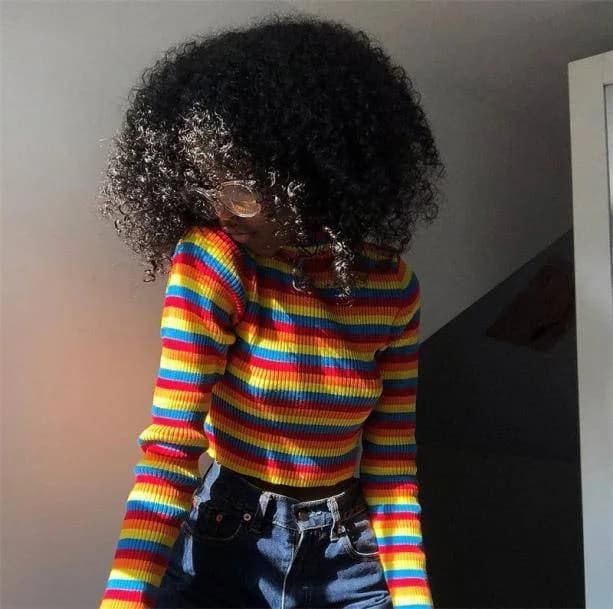
When you want double the color impact, wearing a bright inner layer under your cardigan requires deliberate contrast in neckline and closure style. Browsing through Rainbow Tops highlights just how many silhouetteThe overall shape an outfit creates, from fitted to loose and layered.s are available to build creative layered outfits. The golden rule for pairing two colorful garments together is to vary the pattern types.
Avoid wearing two identical horizontal stripes directly on top of each other, as misaligned bands can look messy. Instead, pair a linear-striped cardigan with an organic, swirling base layer such as the cotton-spandex Psychedelic Rainbow Top. The wavy lines of the top provide an eye-catching contrast against structured outer knit lines.
Alternatively, combine different textures and closures. If your cardigan has traditional buttons, layer it over a sporty piece like the Rainbow Zipper Up Top left partially unzipped at the neck. The sleek metallic zip adds an unexpected hardware element against soft yarn, balancing cozy knitwear with energetic, contemporary streetwear.
- Vary the pattern style: Pair linear stripes with psychedelic swirls, florals, or solid panels.
- Mix closures: Pair classic button fronts with half-zip collars or scoop necks for visual depth.
- Avoid matching stripe widths: Differing pattern scales keep base and outer layers visually distinct.
11. Accessorizing Without Clashing: Jewelry, Bags, and Shoes
Because multi-colored knitwear already supplies plenty of visual interest, accessories should support your outfit rather than compete with it. Minimalist metal jewelry—such as clean silver huggies, thin gold chains, or simple rings—adds quiet shine without fighting the knit’s colorful spectrum. Solid leather bags in black, tan, or off-white provide a grounded, practical counterweight to rainbow yarns.
If you enjoy a fully coordinated statement look, choose accessories designed around color spectrums. Adding playful pieces from our Rainbow Earrings collection can tie the upper half of your outfit together, especially if you wear your hair up. The key to making colorful jewelry work with a rainbow sweater is keeping the earrings petite or clean-lined so they complement rather than crowd your neckline.
Footwear choices dictate the overall vibe of your outfit. White canvas sneakers or retro athletic trainers keep vibrant knits feeling casual and approachable. Chunky black loafers or lug-sole combat boots introduce weight and edge, balancing soft knit textures with practical street-ready durability. Avoid multi-colored novelty shoes that match the knit too precisely, as this can make your outfit look overly styled.
- Jewelry: Opt for clean metallic bands or deliberate, petite rainbow accents.
- Bags: Choose solid neutrals in structured leather or canvas to anchor bright colors.
- Shoes: Wear crisp white trainers for a casual feel, or chunky black boots to add grounded edge.
12. Styling Pitfalls: Five Common Mistakes to Avoid
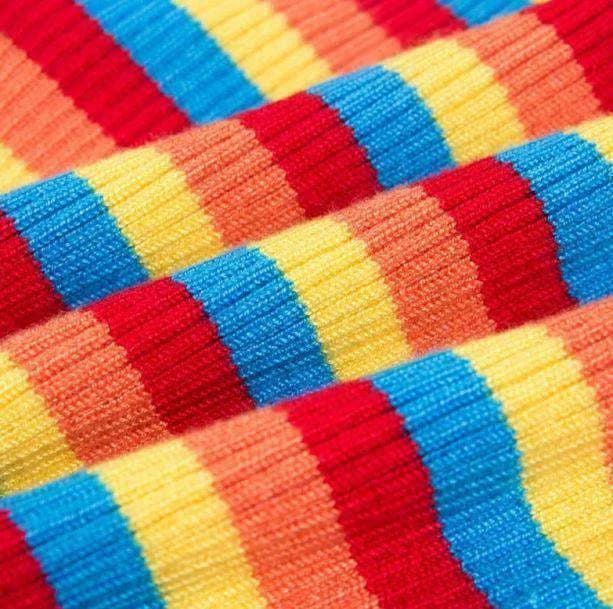
One common mistake when styling rainbow knitwear is wearing matching accessories in every single shade of the pattern. Adding red shoes, a yellow bag, green clips, and blue socks alongside a rainbow cardigan creates visual exhaustion. Let the cardigan serve as your main focal point and keep peripheral accessories neutral and streamlined.
Another frequent issue is ignoring fabric tension across the placket. When a cardigan is slightly too small or buttoned tightly over thick layers, the buttonholes stretch horizontally, exposing your inner shirt in small gaps. If you notice pulling across the chest, leave the top two buttons undone, switch to a thinner base shirt, or wear the cardigan fully open.
Finally, neglecting fabric care can quickly spoil a great outfit. Multi-colored knits show fabric pilling and fuzz quickly when fibers rub together, particularly along the inner arms and side seams. Regularly using a fabric comb or gentle depiller keeps stripe boundaries looking sharp and prevents your favorite knitwear from looking tired and worn.
- Over-accessorizing: Avoid matching every single accessory to a different stripe in the knit.
- Placket pulling: Do not force buttons closed if the knit puckers or pulls across your chest.
- Ignoring texture care: Regularly remove pills along high-friction areas to keep colors looking crisp.
- Clashing volume: Avoid pairing oversized, longline knits with floor-length, billowy palazzo pants.
13. Six Concrete Outfit Formulas for Every Day
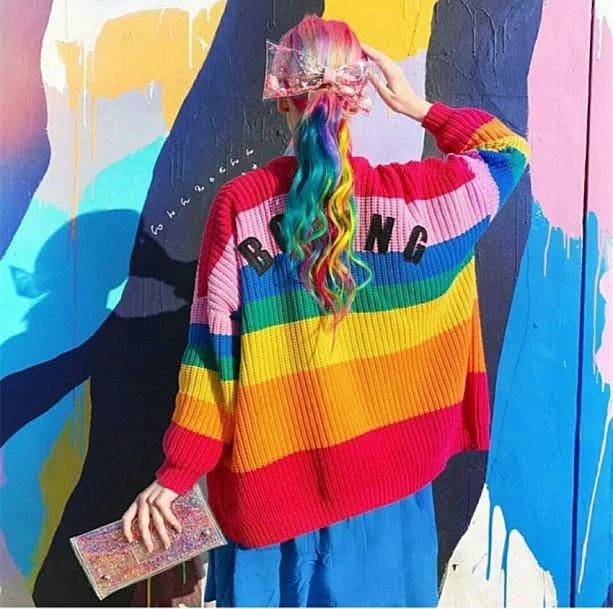
Here are six ready-to-wear outfit blueprints built around multi-colored cardigans that you can easily assemble with standard wardrobe staples. For a weekend coffee run, wear an oversized rainbow cardigan fully open over a plain white ribbed tank, relaxed mid-wash straight-leg jeans, and clean white court sneakers. This look keeps things effortless, comfortable, and classic.
For a sharp campus or casual work look, choose a fine-gauge V-neck rainbow cardigan buttoned through the middle, paired with high-waisted black tailored trousers, a structured black leather belt, and chunky loafers. The tailored dark pants ground the colorful knitwear, making it feel polished and creative.
If you prefer a playful 1990s street look, style a cropped rainbow cardigan over high-rise wide-leg skater jeans, securing only the top button to create an inverted-V opening. Finish with a canvas shoulder bag and retro canvas sneakers for a balanced, laid-back silhouetteThe overall shape an outfit creates, from fitted to loose and layered..
- Formula 1: Open oversized cardigan + white ribbed tank + straight jeans + white sneakers.
- Formula 2: Middle-buttoned cardigan + high-waist black trousers + leather belt + lug-sole loafers.
- Formula 3: Top-buttoned cropped knit + high-rise wide-leg skater pants + canvas shoulder bag.
- Formula 4: Open knit + fitted black turtleneck + A-line mini skirt + sheer tights + ankle boots.
- Formula 5: Fully closed fine knit (tucked) + vintage ecru denim + camel coat + brown boots.
- Formula 6: Slouchy cardigan + slip dress + leather jacket (draped) + platform oxfords.
14. The Rainbow Cardigan Decision Checklist
Before buying or styling your next colorful cardigan, run through this practical checklist to ensure it fits your lifestyle and wardrobe. First, check the yarn gauge: will this piece function primarily as lightweight indoor knitwear or heavy outdoor outerwear? Knowing this helps you choose the right base layers and ensures it will fit under your winter coats without tight sleeves.
Second, inspect the placket and button construction. Ensure the buttonholes are neatly stitched and reinforced so they will not stretch out of shape after repeated use. Look at the stripe alignment at the side seams—well-placed color bands indicate attentive construction that will hang cleanly on your body.
Finally, make sure you own at least three reliable bottoms that balance the cardigan's colors and proportions. If you already have great straight denim, reliable black trousers, or a favorite neutral skirt, your new colorful knit will slip into your regular rotation seamlessly, giving you effortless outfits all year round.
- Gauge check: Match yarn weight to your indoor heating and coat-layeringWearing pieces over or under one another to add depth, warmth or contrast. needs.
- Button review: Ensure plackets hold flat without pulling, rippling, or stretching buttonholes.
- Wardrobe audit: Confirm you have at least three neutral bottoms ready to pair with the knit.
- Proportion match: Balance oversized fits with straight legs, and cropped lengths with wide hems.