Created by the Kawaii Vibe editorial team. Our named style desks are editorial personas. Product details and availability can change.
Balancing an outfit built around bright outerwear starts with understanding where your eye lands first. When you add bold spectrum coloring over shoulders, sleeves, and torso, that outer layer instantly commands attention. Without intentional shapes underneath, the overall silhouetteThe overall shape an outfit creates, from fitted to loose and layered. can feel boxy, cluttered, or weighed down by competing focal points.
The practical solution is balancing volume against fitted planes, selecting base garments that do not fight with outer hems, and organizing color density so each piece supports the next. Whether your outerwear is an oversized windbreaker, a bomber, or a pastel zip layer, keeping visual weight in check creates an outfit that feels clean, wearable, and structured.
This guide outlines exact proportion strategies for styling vibrant outer pieces. We look at hem drops, trouser cuts, base-layer textures, print scales, and balance points, helping you choose and wear pieces from our Rainbow Jackets range alongside everyday essentials.
1. The Golden Rule of Upper Volume and Lower Tapering
Outerwear built with multi-color blocks or rainbow detailing adds noticeable visual width to your upper body. When you introduce horizontal bands of red, yellow, green, and violet across the chest and upper arms, the eye tracks side-to-side rather than up-and-down. To prevent this volume from dominating your frame, your bottom layer should generally offer a steady, tapered, or straight counterweight.
If your jacket has a boxy cut or drop-shoulder construction, pairing it with wide, unstructured sweatpants often creates a completely rectangular outline that loses all definition. A better baseline choice is a pair of tailored straight-leg jeans, slim cargo trousers, or bicycle shorts. By letting the lower half taper slightly toward the ankles or display clean vertical lines, the breadth of your outerwear reads as an intentional style choice rather than poor sizing.
When testing this balance in the mirror, check your side profile as well as the front. An oversized outer shell requires clean ankles or structured footwear like flat-sole skate shoes or low-profile platform trainers to anchor the silhouetteThe overall shape an outfit creates, from fitted to loose and layered. against the sidewalk.

2. Calculating Hem Drops and Leg Lines
Where your outerwear hem ends dictates how long your legs appear. When wearing vivid spectrum pieces, this boundary line is accented by bright color blocks, drawing immediate focus to your hip or thigh level. If a cropped zip jacket ends precisely at your natural waist, it naturally elongates your lower body, making high-rise denim or pleated tennis skirts look balanced and proportionate.
Conversely, mid-hip lengths cut directly across the widest point of the pelvis. If you wear an untucked, longline t-shirt underneath that drops lower than the jacket hem, you create three disjointed horizontal stripes: the base hem, the jacket hem, and the waistband of your trousers. This stacking shortens your visual height and divides your torso into choppy segments.
To keep proportions crisp, align your base hem either cleanly tucked into your trousers or kept two to three inches higher than the jacket's lower ribbing. When wearing relaxed longer jackets, keeping your trousers high-waisted and tucking your top provides an uninterrupted vertical line down the legs, stabilizing the overall composition.
3. Grounding Multi-Color Shells With Solid Bases
A vibrant shell needs a calm baseline to keep the multi-colored palette from vibrating excessively. Solid base layers act as a canvas, allowing the distinct color transitions along the sleeves or front placket of your outer piece to stand out without competing against complex patterns underneath.
For casual daywear, a neutral cotton tee or ribbed crew neck in optic white, soft heather grey, or deep charcoal works best. White reflects ambient light and brightens the colors of your jacket, creating a crisp, sporty appearance. Deep slate or washed black grounds saturated tones, giving the outfit a streetwear slant while dialing back midday brightness.
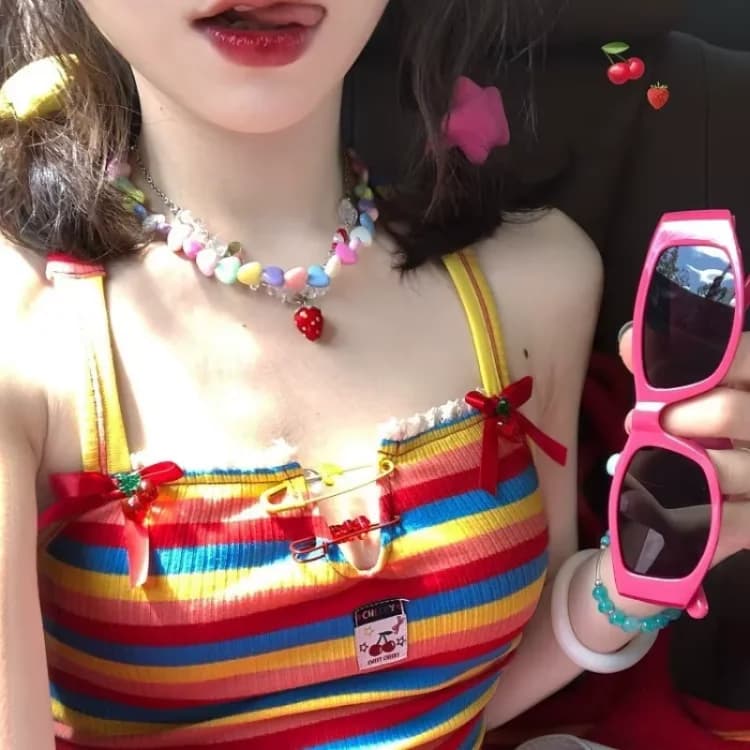
If you prefer a closer fit beneath an open windbreaker or track jacket, the Rainbow Striped Tank Top offers a slim-fit cut listed in polyester with a scoop neckline. Because it hugs the torso closely, it leaves ample physical room inside the jacket sleeves without bunching fabric under the armpits, while keeping the chest profile sleek.

4. Pairing Rainbow Jackets With Skirts and Dresses
Wearing bold outerwear over skirts requires deliberate balance between structural stiffness and skirt flow. If you toss an oversized sporty windbreaker over a floaty, unstructured circle skirt, the contrasting weights can cause the fabric of the skirt to collapse inward, making the midsection look bulky.
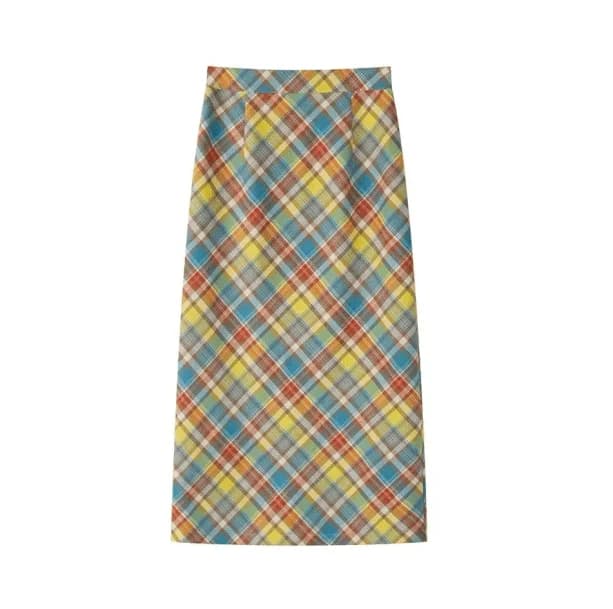
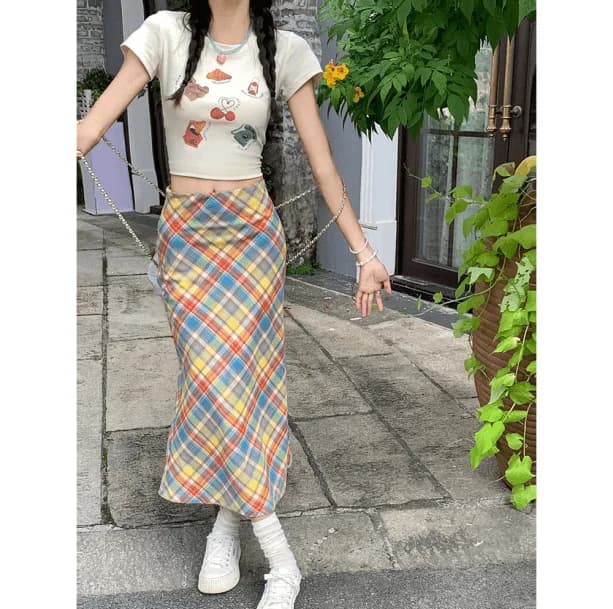
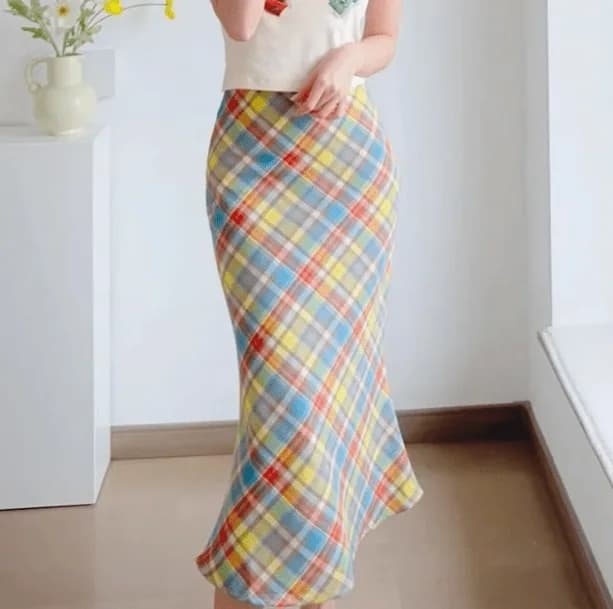
A structured A-line mini skirt or a pleated tennis skirt provides crisp geometric contrast against rounded jacket shoulders. The rigid pleats establish repeating vertical folds that lead downward, countering the horizontal color bars running across your outer layer. If you enjoy matched grid aesthetics, you can introduce check patterns like the Midi Plaid Rainbow Skirt, which is cataloged in polyester and features a longer hem drop.
When pairing a midi skirt with colorful outerwear, keep the jacket fitted or cropped near the upper hip. A long jacket over a long midi skirt produces two heavy blocks of fabric that can dwarf your footwear. Keeping the jacket short leaves two-thirds of the total outfit visible as skirt and leg, which preserves standard aesthetic proportions.
5. High-Rise Bottoms and Cropped Outer Proportions
Cropped jackets are one of the most reliable options for colorful styling because their condensed surface area prevents color saturation from overwhelming a daily outfit. By stopping between the ribcage and the waist, a cropped piece confines the bright rainbow hues to the upper quadrant of your torso.
Pairing high-rise trousers with a cropped cut shifts the perceived waistline upward, helping create a balanced, lengthened profile even in completely flat shoes. Rigid denim, worker pants, or heavy cotton twill trousers provide enough fabric density to hold their own against the synthetic sheen or padded textures often found on outer layers.
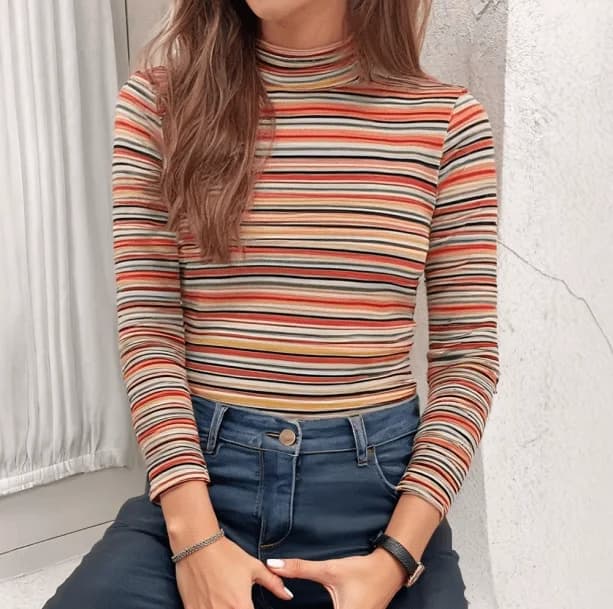
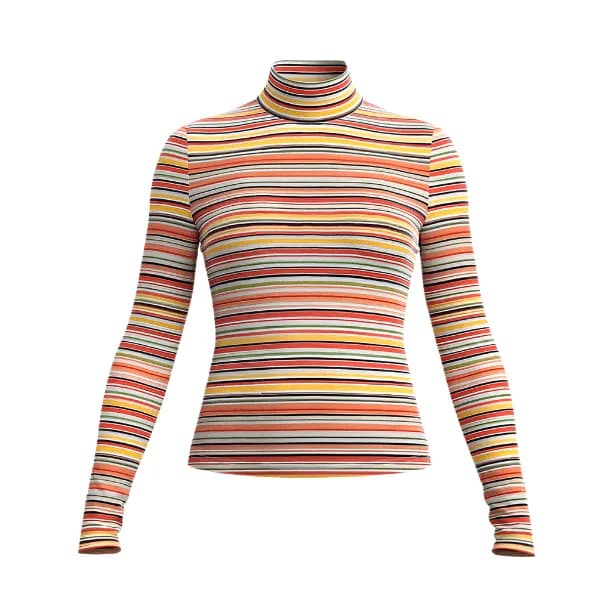
If your jacket hem hits above your hip bones, you can play with layeringWearing pieces over or under one another to add depth, warmth or contrast. depths by sliding a form-fitting base beneath it. Tucking a fitted piece like the Rainbow Muse High Neck Top, which is made from smooth polyester, into high-waist jeans ensures that when you raise your arms or unzip the jacket, you maintain a streamlined silhouetteThe overall shape an outfit creates, from fitted to loose and layered. that avoids bunching.
6. Managing Bulk: Knitwear Versus Technical Shells
Not every rainbow outer piece behaves the same way in motion. A thin nylon windbreaker has zero natural drape; it floats over your frame, ballooning in breezy weather and requiring fitted anchor pieces underneath. In contrast, heavy knit pieces or loopback cotton fleece drape downward with their own gravitational weight.
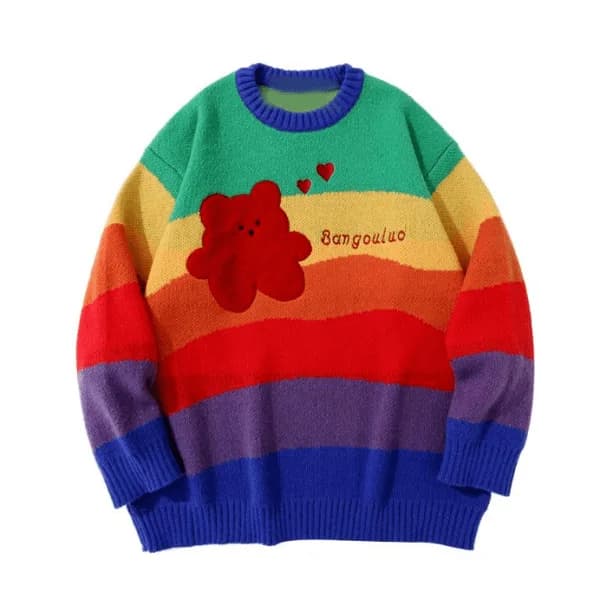
When considering layers from the broader Rainbow Sweaters section, keep gauge in mind. A dense knit such as the Rainbow Bear Sweater, listed in an acrylic, cotton, and polyester blend, delivers built-in thickness. LayeringWearing pieces over or under one another to add depth, warmth or contrast. that beneath a fitted rainbow jacket creates uncomfortable restriction through the biceps and upper back, forcing the jacket seams to pull sideways.
For chilly mornings, decide whether the jacket or the knitwear serves as the true outer boundary. If the jacket is the hero piece, layer thin base shirts underneath. If you want substantial knit texture instead, let a piece like the Rainbow Stripes Sweater, crafted from pure cotton, act as your outermost statement layer, keeping your lower half clean with simple black denim or leggings.
7. Color Echoing: When and How to Match Accents
Color echoing is the practice of repeating one specific hue from your multi-color jacket elsewhere in your outfit to create visual cohesion. When done thoughtfully, it connects your head, waist, and feet into a single deliberate ensemble. When overdone, it looks like a costume.
The simplest approach is identifying the dominant accent stripe on your outerwear—such as sky blue or sunshine yellow—and matching only your socks, shoe laces, or hair ribbons to that single hue. Avoid wearing shoes that match every single color on the jacket simultaneously. That level of symmetry looks chaotic and draws the eye directly to the pavement.
For a subtle finish, accessories from the Rainbow Earrings collection can tie the look together at face level without adding visual bulk. A small spectrum drop or stud earring mirrors the jacket's palette near your hairline, providing a tidy focal frame without competing against the jacket’s collar or shoulder construction.
A single echoed hue keeps a rainbow jacket composed; another option is to let contrast lead with one bright accessory instead. Try a vivid hair clip with a plain tee, leaving the jacket’s other shades to stand on their own. Yamanba Clothes brings together high-contrast color, tropical motifs and playful accessories for a distinct color direction.
Echo just one jacket stripe with a small hair accent, leaving the rest of your accessories neutral so the jacket stays the main statement. For example, with a coral panel, try one coral clip rather than matching several pieces to the stripe. Colorful clips and playful charms can build a more layered decora look; browse Decora Accessories for that direction.
8. Navigating Bold Underlayers Without Clashing
While neutral underlayers are the safest styling route, you can pair a rainbow outer layer with a printed or graphic top if you vary the visual scale of the graphics. Two patterns of identical width, spacing, and density placed directly on top of each other create immediate visual friction that tires the eye.
If your jacket features wide, chunky color blocks, select an underlayer with a tight, fine-line motif or a centered micro-graphic. Consider the Everything Sucks Rainbow T-Shirt, cataloged in a polyester and spandex blend with a regular casual fit. Its graphic is localized to the chest area, leaving clear negative spaceAn uncluttered area that gives the rest of a design room to stand out. across the shoulders that lets an unzipped jacket frame the print rather than fight it.
Alternatively, tops with fluid, non-linear shapes, like the Psychedelic Rainbow Top built from cotton and spandex, introduce organic curves. When placed beneath a structured, straight-zip bomber, those wavy lines provide geometric contrast against the rigid vertical zip line, softening the overall aesthetic.
9. Selecting Footwear to Anchor Colorful Outfits
Footwear serves as the counterweight for any outfit topped with bright outer layers. If your shoes are too delicate—such as ultra-thin strappy sandals or minimal ballet flats—the vivid bulk of your jacket makes the outfit appear top-heavy, as though your lower half lacks structural support.
Chunky sole trainers, classic retro tennis shoes with thick rubber midsoles, or lug-sole combat boots provide the visual heft required to anchor intense colors. A classic white leather trainer with a platform bottom reflects street-style sensibilities while keeping the focus centered upward where the colors live.
If your climate is warmer and you prefer open shoes, opt for utility sandals with wide webbing straps or flatform slip-ons. The wider surface area of the footbed grounds the lower leg line, creating a clean vertical balance against the horizontal volume of a jacket.
10. Seasonal Temperature Transitions and Layering
Outerwear needs to respond realistically to climate shifts without compromising proportions. In transitional spring or autumn weather, temperatures fluctuate rapidly between morning commutes and late afternoons, making interior layers critical.
In cool, windy conditions, an unzipped windbreaker allows cold drafts inside, while zipping it up completely conceals whatever base styling you prepared. The middle path is utilizing mid-layers with their own closures, such as the Rainbow Zipper Up Top, which features a center zip that can be adjusted alongside your coat to regulate airflow while maintaining a visible color cascade.
For hotter climates, select unlined, ultralight nylon or breathable poplin outer layers. Wear them pushed up at the forearms to expose your wrists. Showing skin at the wrists, collarbones, or ankles breaks up extensive fabric blocks, immediately making multi-toned layers feel lighter and seasonally appropriate for warmer afternoons.
11. Comparing Rainbow Jackets to Sweaters and Tops
When building your personal wardrobe, it helps to distinguish when a rainbow jacket is the right tool versus an alternative category from the broader Rainbow Clothes family. Each category solves a distinct functional and proportional problem.
Outerwear jackets provide physical structure: collars, storm flaps, welt pockets, and heavy-duty front zips. These details give your frame crisp angular lines that naturally offset casual lounge clothes. In contrast, layeringWearing pieces over or under one another to add depth, warmth or contrast. directly with pieces from the Rainbow Tops section provides a streamlined fit meant to sit directly against your skin, eliminating external pocket bulk and allowing seamless pairing with heavy overcoats.
Knitwear, meanwhile, provides soft edges and casual slouch. If your goal is cozy indoor relaxation where a structured zip placket would feel rigid or get in the way, a soft knit sweater is the better choice. Reserve the rainbow jacket for outfits that require wind protection, adjustable front opening options, and definite outer boundaries.
12. Styling Pitfalls: What to Avoid With Spectrum Outerwear
The most frequent misstep when styling vivid spectrum jackets is trying to balance the upper body's intensity by adding equally busy patterned bottoms. Wearing tartan pants, leopard-print leggings, or multi-colored patch jeans directly below a rainbow jacket scatters visual focus and exhausts the viewer's eye.
Another common problem is ignoring internal jacket linings. Many colorful windbreakers have bright white or contrasting neon inner meshes. If you wear an open jacket, that lining becomes part of your outfit's color scheme. If your shirt underneath clashes directly with the exposed lining hue, the center fold looks messy whenever the jacket shifts as you walk.
Finally, watch sleeve bunching. Squeezing heavy, wide-sleeved knitwear into slim-cut jacket sleeves causes bunching around the elbows and underarms. This fabric buildup restricts joint movement and creates lumpy, misshapen arm silhouetteThe overall shape an outfit creates, from fitted to loose and layered.s that ruin the clean lines of your outer layer.
- Wearing high-saturation patterned pants that fight your jacket's color blocks for visual priority.
- Forgetting to account for contrasting inner lining colors that show when the jacket is worn open.
- Stuffing thick knitted sleeves into narrow jacket armholes, creating bulky, pinched shoulders.
- Choosing flimsy, wafer-thin shoes that fail to anchor the visual weight of wide-cut outerwear.
- Letting base-layer t-shirts hang awkwardly three inches below a cropped jacket's waistline.
13. The Pre-Styling Proportion Checklist
Before stepping out the door in your rainbow jacket, running through a quick physical evaluation ensures your outfit proportions are tuned and functional. This brief assessment catches awkward hem overlaps, fabric bunching, and color overload before you leave home.
First, check your waist definition. If your jacket is oversized, can you still see where your legs meet your torso when you walk? Tucking your top or choosing mid-to-high rise bottoms provides this reference point, keeping your legs looking proportionate against the coat's volume.
Second, verify the mobility of your upper body. Extend both arms straight out in front of you and hug your shoulders. If your base layer pulls tightly across your back seams or bunches uncomfortably in the armpits, swap that base layer for a sleeker cut with smoother stretch before heading out.
- Check hem drops: Is your undershirt cleanly tucked or shorter than your jacket's bottom seam?
- Confirm leg line: Do your trousers provide clean, structured lines to balance upper-body width?
- Audit color count: Are your pants, shoes, and bag neutral enough to let the rainbow shell lead?
- Test movement: Can you lift your arms and turn your neck comfortably without fabric pulling?
- Check shoe heft: Does your footwear have enough sole thickness to visually support the jacket?
14. Building a Long-Term Rainbow Outerwear Capsule
A statement jacket should integrate naturally into a versatile, long-term capsule wardrobe rather than being worn once and forgotten. The key to everyday wearability is maintaining a core foundation of versatile basics that balance your outer layer's spectrum palette.
Keep three reliable bottoms ready: straight-leg medium-wash blue denim, wide-leg off-white canvas worker trousers, and relaxed-taper black chinos. These three solid foundations can be worn with any rainbow jacket style, whether it is a pastel gradient bomber, a primary-color retro sports windbreaker, or a detailed graphic shell.
For base layers, rotate between crisp crew neck t-shirts, ribbed tanks, and smooth turtlenecks in monochrome tones. By treating your rainbow jacket as the rotating highlight of an otherwise composed, functional wardrobe, you can wear it routinely without ever feeling overstyled or repetitive.