

Created by the Kawaii Vibe editorial team. Our named style desks are editorial personas. Product details and availability can change.
The short answer: for most rented rooms, the safest way to decorate walls is to start with the lightest item and the gentlest method. Fabric tapestries and paper posters can go up with removable options, while mirrors are heavy and need a more careful plan. Read your lease first, test any adhesive somewhere hidden, and keep a way to take everything down cleanly.
This guide compares the common hanging methods, shows how to style a wall so it looks planned rather than patched together, and gives you a checklist for move-out day. We are a retailer, so we point to a few things from our shop where they fit, but every method here works with whatever you already own.
One honest note: we can't tell you what your landlord allows or how your paint will react. Walls, paints and adhesives vary a lot. Treat everything below as a way to lower the risk, not remove it, and always follow the instructions on any hanging product you buy.
Start With Your Lease, Not Your Cart
Before you buy anything, find the part of your lease or tenancy agreement that mentions walls, nails, adhesives or alterations. Wording varies a lot. Some agreements ban any fixings at all, some allow small picture hooks, and some say nothing specific, which usually means you should ask. Look for words like decoration, damage, fair wear and tear, and deposit deductions.
If it is unclear, send a short message to your landlord or agent and keep their reply. Something simple works: you would like to hang lightweight art with removable adhesive hooks, and want to confirm that is fine. A written yes, even a text or email, is far better than a memory of a chat in the hallway.
Rules differ by country and even by state or province, so don't assume. Tenant protections and what counts as normal wear are not the same everywhere in the US, UK, Canada, Australia and New Zealand. If you want the details, your local tenant advice service or housing authority is the right place to check, not a decor blog.
Also take dated photos of every wall before you start. Wide shots plus close-ups of existing nail holes, scuffs and marks. It takes five minutes and gives you a record of the starting condition if there is a dispute later.
- Search the lease for walls, fixings, alterations and deposit wording
- Ask in writing if anything is unclear
- Photograph each wall before decorating
- Keep any reply from your landlord or agent

Know Your Wall Surface Before Choosing a Method
The wall matters as much as the product. Smooth, well-cured painted walls usually behave differently from textured plaster, brick, wallpaper, wood paneling or freshly painted rooms. Adhesives that hold nicely on one may fail or pull paint on another, so identify what you have first.
Do a simple check. Press your palm flat on the wall: is it smooth, bumpy, dusty or slightly chalky? Dusty or chalky paint is a warning sign, because adhesive may grip the dust rather than the wall, and then lift paint when removed. Textured walls give adhesive less contact area, which often means weaker hold. Wallpaper can tear on removal, so be extra cautious.
If the paint was applied recently, many adhesive makers suggest waiting for it to cure fully. We can't give a safe number of days, so check the instructions on the product you choose. Cleaning the spot lightly and letting it dry completely before sticking is also common advice from hanging-product instructions.
Always test first. Put one hook or a small piece of tape in an out-of-sight spot, such as behind a door or inside a wardrobe, leave it for a few days, then remove it slowly as directed. If paint comes off or a mark remains, you have learned that cheaply.

Comparing the Main Hanging Methods
There are five approaches most renters choose from: removable adhesive strips or hooks, washi or low-tack tape, putty-style tack, tension or over-door systems, and leaning or freestanding display. Each trades off hold, wall risk and look. None is risk-free, and the right pick depends on weight and surface.
Removable adhesive strips and hooks give the strongest hold of the no-nail options, and are made for hanging frames and light objects. They come with a weight rating on the pack; stay well under it. Low-tack tape and putty suit paper and very light items, but can fail in humid rooms or on textured walls. Putty can leave oily marks on some paint, so test it.
To compare, ask four questions: how heavy is the item, how smooth is the wall, how long will it stay up, and how strict is the lease? Heavy plus rough wall plus long duration means you should favour leaning or freestanding. Light plus smooth plus short term opens up tape or putty.
Tension rods and over-door hooks need no wall contact at all, which is the gentlest choice for strict leases. Leaning pieces on a shelf, desk or floor needs no fixing either. The catch is stability and space.
- Adhesive strips and hooks: strongest no-nail hold, follow the weight rating
- Washi or low-tack tape: light paper only, gentle on most surfaces
- Putty tack: quick for posters, test for marks first
- Tension rods and over-door hooks: no wall contact
- Leaning displays: zero wall risk, needs floor or shelf space

Hanging a Tapestry Without Holes
A fabric tapestry is light, which makes it the easiest big statement for a rental. The usual trouble is that big sheets of fabric sag and billow, so the goal is spreading support across the top edge rather than relying on one or two points. Several small adhesive hooks or clips along the top, evenly spaced, usually look cleaner and share the load.
One neat approach is a lightweight dowel or slim rod threaded through the top hem or attached with clips, then hung from two adhesive hooks. That keeps the top edge straight and means you only stick two things to the wall. Another is hanging the tapestry from a curtain rod or ceiling-mounted track you already have, if your lease allows it.
Keep the bottom edge loose or lightly anchored with a couple of small pieces of low-tack tape, unless the fabric is heavy. Fully pinning every edge can strain adhesive and make removal harder. Think about where heat and moisture sit too: avoid putting a tapestry directly over a radiator or heater, and watch for damp or condensation behind it in cold months or humid climates.
For a size-and-placement rule, leave a hand's width between the tapestry and the ceiling or nearest furniture, and center it over a bed or sofa rather than pushing it to one side. A tapestry that is about two-thirds the width of the furniture beneath it tends to look balanced.
Tapestry Ideas to Match Different Rooms
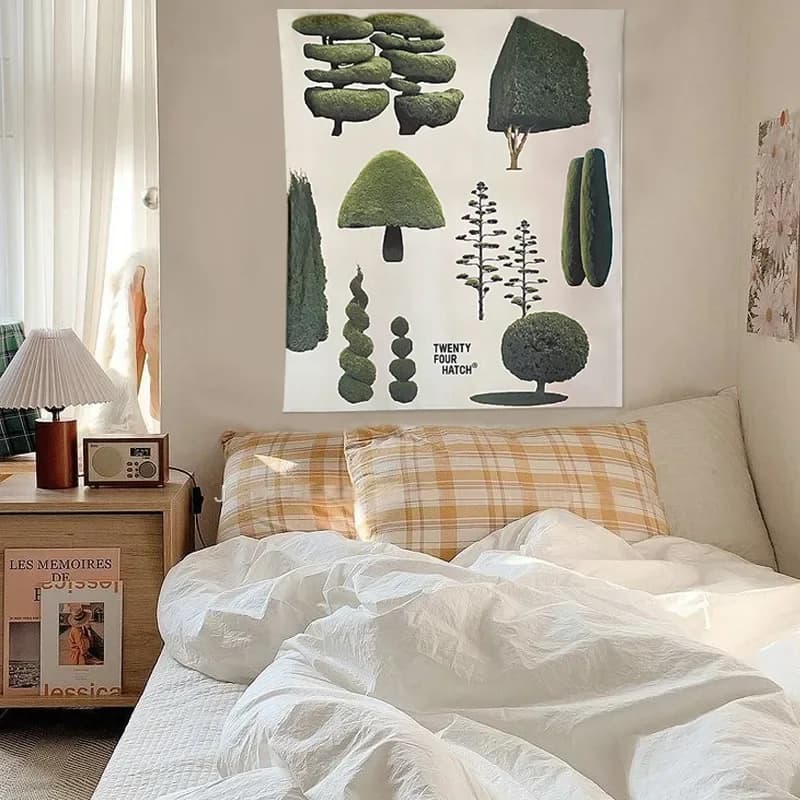
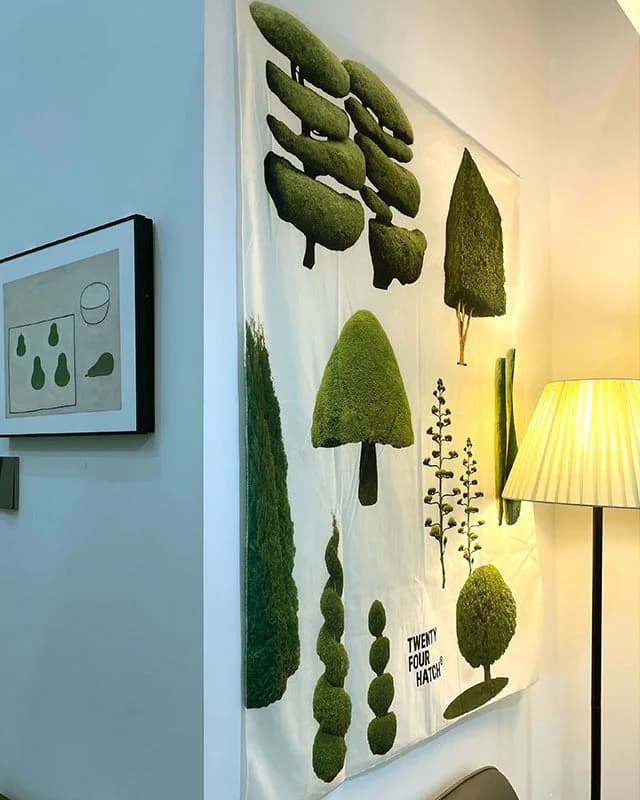
Pick a tapestry by the mood you want, then make the rest of the room support it. The Plant Mom Aesthetic Trees Wall Tapestry suits a calm, leafy corner: pair it with a real plant on a stool, warm lamp light and a woven throw. It comes as pictured in one size, so measure your wall space first.
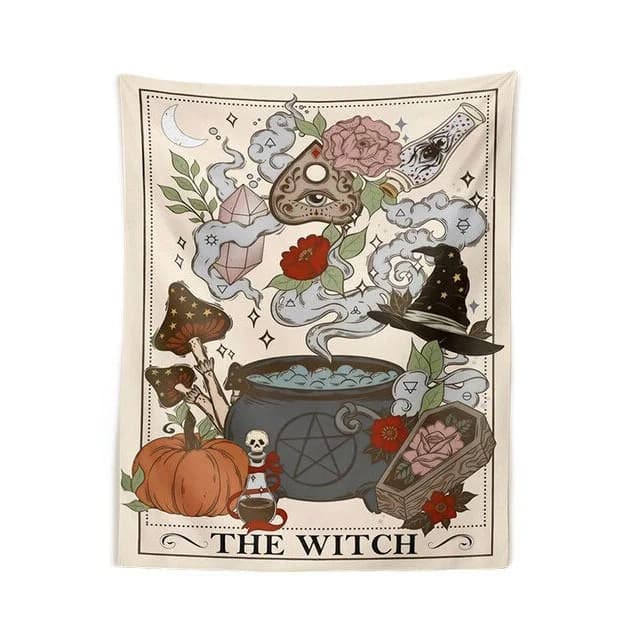
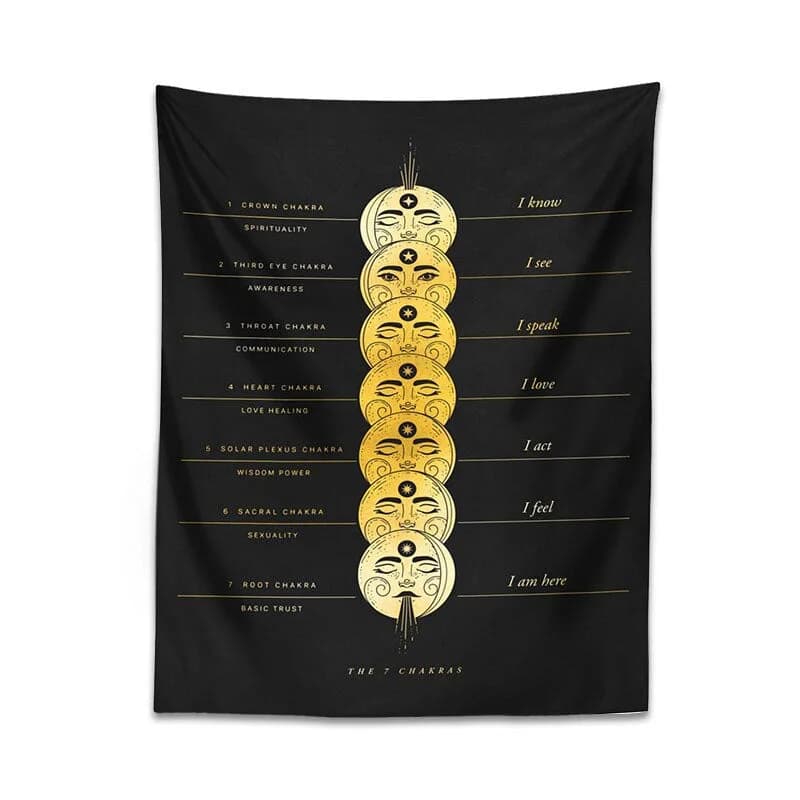
If you like something more playful, the Trust Me Frog Wall Tapestry works as a funny focal point above a desk or bed, with plain bedding so it doesn't compete. For a moodier look, The Witch Wall Tapestry or the black Chakra Wall Tapestry pair well with candles-style LED lights and darker textiles.
The Golden Teacher Wall Tapestry 🍄 is listed at 95*73 cm/ 37.4*28.7 in, a modest size that fits above a desk, a dresser or a bedside area rather than covering a whole wall. That makes it a good choice if you want impact without a huge hanging job.
If you want more choices, browse the full Wall Tapestry & Posters collection. Whatever you choose, keep one tapestry as the star and let other wall items stay smaller, so the room doesn't feel busy.

Posters: Tape, Putty, Frames and Alternatives
Posters are the most common renter casualty, because tape can tear paper and pull paint. The gentlest route is a poster frame or a clip-style hanger that holds the paper without any adhesive on the artwork. Magnetic poster hangers and wooden clip frames let you swap prints without re-sticking anything.
If you go with putty or tape, use small amounts at the corners and a little in the middle of long edges so paper doesn't curl. Press gently rather than hard, since firm pressure makes removal harder. Remove slowly, pulling the adhesive parallel to the wall rather than straight out, which is the usual guidance on removable strips.
For a no-contact alternative, lean a few framed posters on a shelf, dresser or the floor against the wall, overlapping slightly at different heights. This gallery-ledge look is easy to rearrange and costs your deposit nothing.
Size guidance: one large poster reads as a statement, while several small ones need a shared rule such as matching margins or one color. Keep a consistent gap, around a hand's width between pieces, and align either the tops or the centers so the group looks deliberate.
Collage Kits for a Patchwork Wall
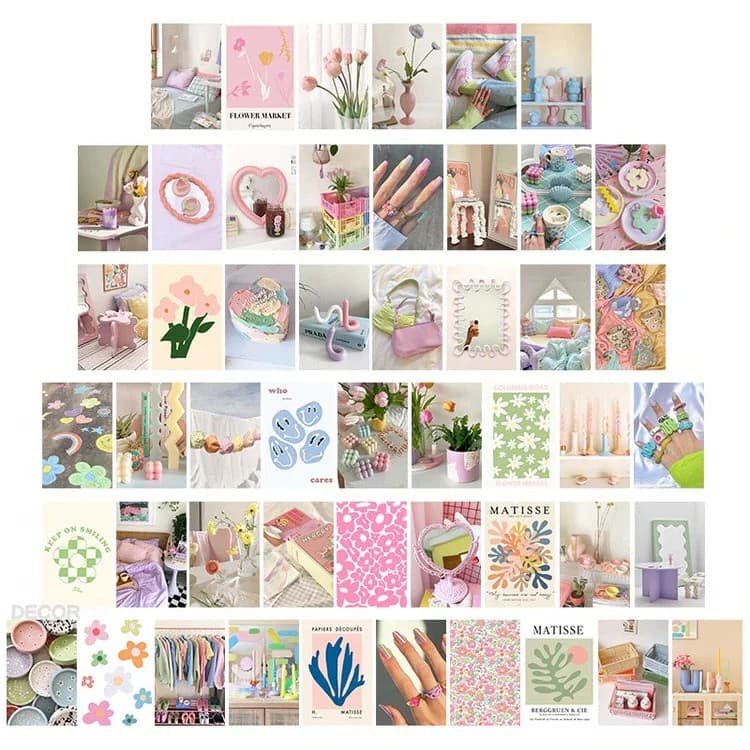
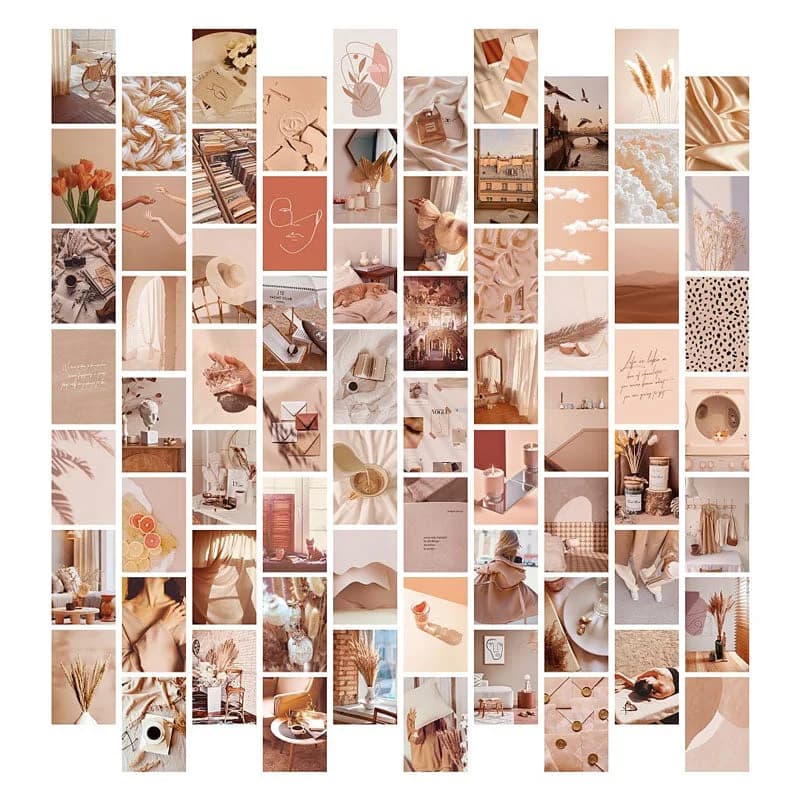
A collage wall is a great way to fill space with small, light pieces, which suits low-damage hanging. Our Danish Pastel Wall Collage Kit and Parisian Aesthetic Wall Collage Kit each come as a 50-piece standard set, as pictured. That is a lot of small prints, so plan the layout before sticking anything.
Lay the pieces out on the floor or on a bed first, in the rough shape of the area you want to cover. Photograph it, then transfer it to the wall one piece at a time, starting from the center and working outward. This avoids lopsided spacing and wasted adhesive.
Choose low-tack tape or putty for each print, and test on a hidden spot because many small contact points add up. Use fewer anchors per piece: small prints often only need a dot at each top corner. If your lease is strict, stick them on a pinboard, a large board leaned against the wall, or the inside of a wardrobe door instead.
Decide on a footprint before you start. A rectangle about the width of a desk or headboard looks tidy, whereas scattering across a whole wall can feel chaotic. You don't need to use all 50 pieces if the wall looks full sooner.
Mirrors: The Heavy Item Needs a Real Plan
Mirrors are the one thing in this guide where shortcuts can be risky, because they are heavy and glass can break. Don't trust a hook to hold a wall mirror unless its rating clearly covers the weight, and don't guess. If you can't confirm the weight and the hanging system, lean the mirror instead.
The safest renter approach is a floor-standing or leaning mirror placed against a wall on a non-slip surface, ideally with a rug or felt pad underneath and a small stopper at the base. Place it away from doorways and busy walkways so it can't be knocked, and keep it out of reach of anything that might tip it.
If you do want a mirror on the wall, ask your landlord about a proper fixing. Some will allow one or two screws into studs or suitable anchors, which is much more secure than adhesive for heavy glass. Over-door mirrors and ones that hook onto the top of a door are another no-hole choice.
Browse the range in our Aesthetic Mirrors collection and check each listing's details before deciding how to display it. Placement-wise, a mirror opposite a window bounces light around, and one near a lamp makes a dim corner feel larger.
Styling Without Nails: Layers, Levels and Lighting
A rental wall looks best when it isn't relying on flat art alone. Mix levels: a tapestry on the wall, a leaning mirror at floor height, a small shelf or side table with objects, and a plant. Different heights make the room feel designed, and none of it needs a drill.
Lighting changes the effect of everything. Warm lamps and string lights, plugged in and placed on furniture or draped on a tension rod, add atmosphere without fixings. Check that cables don't trap against fabric and keep lights from touching tapestries for long periods, following the maker's instructions for the lights you own.
The SoftGirl Room Rainbow Wall Decor comes in options 1, 2 and 3, so choose the one that fits your palette and check the listing for how it is meant to be displayed. A light, colorful piece like this can sit above a desk or headboard as a soft accent against neutral bedding.
For more ideas on filling shelves and corners, the Aesthetic Room Decor collection and the wider Home Decor collection are good starting points. Keep a limit of three main colors so a mix of items still feels coherent.
Three Room Setups You Can Copy
Small bedroom, strict lease: lean one mirror in a corner, hang a tapestry from two adhesive hooks above the bed, and add string lights on a nightstand. Why it works: only two wall contacts, a clear focal point, and a mirror that adds light. Keep the tapestry about two-thirds the width of the bed.
Studio apartment, desk wall: use a pinboard leaned against the wall with a collage kit pinned or taped on it, a small tapestry like the Golden Teacher size above the desk, and a plant on the desk. Why it works: the board takes most of the sticking, and the fabric adds softness behind screens.
Shared living room: frame two or three posters in clip frames and lean them on a console table, with a floor mirror beside them. Why it works: nothing is stuck, and your housemates can move things around without arguments. Swap prints when you fancy a change.
Adapt each plan to your budget by starting with one piece and adding more over time. If a setup feels cluttered, remove one item rather than adding another, since empty wall space helps the pieces you keep stand out.
Common Mistakes and How to Avoid Them
The biggest mistake is trusting adhesive past its limit. Weight ratings are maximums under ideal conditions, so go well below them, and don't use strips on dusty, textured or damp surfaces. If a hook slips even slightly during a test, switch method.
The second is rushing removal. Ripping off tape or strips quickly is how paint comes off. Follow the instructions, which usually involve pulling slowly and parallel to the wall, and take your time. A hairdryer on low is sometimes suggested for stubborn tape, but check the product's guidance and your wall type first.
Other pitfalls include hanging fabric near heat sources, covering the whole wall so nothing can breathe, placing mirrors where they can fall on people, and forgetting to log the starting condition of the room. Overbuying before a test is another: try one hook before ordering twenty.
Finally, don't hang anything above a bed or sofa that could hurt someone if it fell. Lightweight fabric is fine, but heavy frames or glass belong lower down or on the floor.
- Stay well under stated weight limits
- Test adhesives on a hidden spot first
- Remove slowly, following product instructions
- Keep fabric away from heaters
- Don't hang heavy glass over beds
Comparing Options Before You Buy
When choosing between items, compare four things: size, weight, how it hangs, and what room it will live in. Check the listing for dimensions where they are given; for example, the Golden Teacher tapestry lists 95 x 73 cm, while others are marked one size or as pictured, so measure your space and compare against what you know.
Think about longevity too. A bold graphic print may feel exciting now but busy later. Neutral or softly colored pieces, like pastel collage prints, tend to work across moves, while a strong statement piece can be your one loud item. Decide what role each piece plays before adding more.
Consider portability. If you move often, favor items that roll or fold flat, and hanging systems you can reuse. A rod, clips and a couple of hooks travel easily, and a leaning mirror only needs a new corner.
If a listing doesn't tell you something, such as exact weight or fabric content, don't assume. Contact us or the seller details provided and ask before purchase, particularly for anything you plan to hang with a weight-rated adhesive.
Move-Out Day: Taking Everything Down Cleanly
Plan your removal a few days before the end of the tenancy, not the last night. Take items down one by one, slowly, and work from the top of each strip or hook as directed by its instructions. Keep a small kit: a soft cloth, a little mild cleaner, and spare time.
Check each spot afterward against your starting photos. Residue from putty or tape can often be gently wiped, but test on a hidden area, since some cleaners can mark paint. Don't scrub hard, as that can leave shiny or dull patches that are more noticeable than the original mark.
If you do cause a small mark or hole, talk to your landlord early and offer to fix it rather than hoping it goes unnoticed. Many issues are simple to resolve when raised honestly, and a polite note often goes further than silence.
Finish with fresh photos of each wall, dated, to match your move-in set. Then wrap tapestries flat or rolled, protect mirrors with blankets, and keep your hooks and clips together so the next room is easy to set up.
Quick Checklist and Starter Combinations
Use this list before every hanging project. Read the lease, ask if unsure, photograph the walls, identify the surface, test the method, check the weight rating, hang lightest items first, and plan removal. It takes a little longer than just sticking things up, but it protects your deposit and your walls.
If you want a simple starter kit, try one tapestry from the tapestry and poster range, a pack of removable hooks, a leaning mirror and one lamp. That covers color, light and reflection with very little wall contact, and you can build from there.
For a second stage, add a collage kit on a pinboard, a few framed prints leaning on a shelf and a plant. Each addition should earn its spot, so leave breathing room around the pieces you love most.
Renter-friendly decor is mostly patience: test, go light, and keep it reversible. Do that and your room can feel completely yours without costing you a thing when it is time to leave.


