Created by the Kawaii Vibe editorial team. Our named style desks are editorial personas. Product details and availability can change.
Short answer: in a small kawaii bedroom, fix the furniture first, then add cute things in layers. Bed, storage and a clear walking path come before any plush or wall art. Once those work, you can fill the leftover space with display and decor, and it will look planned instead of crowded.
This guide gives you layout plans for narrow rooms, boxy rooms and rooms with awkward corners. It focuses on going upward, choosing fewer but bigger cute pieces, and keeping a few calm gaps so the room doesn't feel loud. Nothing here needs a renovation.
We're a retailer, not a manufacturer, so where we mention products it's as optional ideas for a specific job in the room. Measure your own space before buying anything, because we won't guess your dimensions for you.
Grab a tape measure, a notepad and a pen. Ten minutes of measuring will save you more than any decor trick.
Start With the Floor Plan, Not the Decor
Before you buy a single cute thing, draw the room. A rough sketch on paper is fine. Mark the door swing, windows, radiators, sockets and any wall you can't block. Then write down the length and width of each wall. This is the boring step that makes every later choice easier, because you'll know what really fits instead of what looks like it fits in a photo.
Next, decide the one thing the room must do besides sleeping. For some people it's a desk for work or study. For others it's a clothes rail, a gaming setup or a craft corner. Give that function its spot first. Kawaii styling is flexible, but a desk squeezed in as an afterthought never feels cute, it just feels cramped.
Finally, keep a walking path. A rough rule many people use is leaving a clear route from the door to the bed and to the window. If you have to turn sideways, something is too big. Cut or move it now, while it's only a pencil mark.
- Sketch door swing, windows, sockets and radiators
- Pick one extra function (desk, rail, craft corner)
- Protect a clear path from the door to the bed and window
- Measure first, shop second

Three Layout Plans for Tight Rooms
Plan one is the long-wall bed. Push the bed along the longest wall, headboard against a short wall if you can. This frees the opposite side for a slim desk or shelving and keeps the middle open. It suits narrow, rectangular rooms, and it makes the bed feel like a daybed, which pairs nicely with a pile of soft toys against the wall.
Plan two is the corner bed. Tuck the bed into a corner so two sides are against walls, then use the wall above for shelves and hooks. You lose access from one side, so it works best for a single sleeper who doesn't mind climbing in. In return you get a larger open square of floor, which is useful for a small rug and a display unit.
Plan three is the window desk. Put the desk under or beside the window and the bed on the facing wall. Natural light makes a small desk area feel bigger, and it stops you putting tall furniture where it blocks the glass. Whatever plan you choose, test it by taping the furniture outline on the floor with masking tape and living with it for a day.
- Long-wall bed: best for narrow rectangles
- Corner bed: best for freeing floor space
- Window desk: best when light is limited
- Use tape on the floor to test before moving anything
Go Vertical: Walls Are Your Extra Room
When floor space runs out, the wall is the only place left to grow. Start at eye level and above, because that's where things stay out of your way. A row of narrow shelves, a pegboard or a few wall hooks can hold bags, headphones, small plush and trinkets without touching the floor.
Think in zones. Low zone: things you use daily, like a basket or shoe rack. Middle zone, roughly arm height: shelves, hooks, a mirror. High zone: lightweight decor, like a banner, fairy lights or a few unframed prints. Keeping heavy items low and light ones high feels steadier and is easier to live with.
Check what your walls allow before you drill or stick. Renters often use removable hooks, but each has its own weight limit printed on the pack, so follow that. If you're unsure about the wall type, ask your landlord or choose freestanding furniture instead. Cute isn't worth a lost deposit.
- Low zone: daily items and baskets
- Middle zone: shelves, hooks, mirror
- High zone: light decor only
- Follow the weight limit on any removable hook
Storage That Looks Like Decor
The easiest way to keep a small room cute is to make the storage part of the look. Open boxes in matching colours, fabric bins under the bed, and a shelf with a tidy row of containers all read as styling, not mess. The trick is choosing a limited palette, perhaps two or three soft colours, so even the practical bits feel intentional.
Hide the ugly stuff and show the lovely stuff. Chargers, spare bedding, seasonal clothes and paperwork go in closed boxes or under the bed. Plush, small figures and favourite books go where you can see them. If everything is on show, nothing stands out, and the room looks busier than it is.
When comparing storage, check three things: does it fit your measured gap, can you reach what's inside without moving other items, and does it match what's already there? A pretty box you can't open without moving the bed won't get used. Browse the Aesthetic Bedroom collection for ideas that fit the sleeping area and the Home Decor range for finishing touches.
- Pick two or three storage colours
- Closed boxes for the dull stuff
- Open display for the favourites
- Check reach and fit before buying
Bed Setups That Save Space
The bed is the biggest item, so it controls everything else. If you can, use under-bed space. Flat boxes or rolling drawers can hold off-season clothes, spare linen or craft supplies. A raised bed frame gives more room underneath, but only if the ceiling height and your comfort allow it. Measure the gap before buying containers.
Think about the headboard wall too. A narrow shelf above the pillow can hold a lamp, a glass of water and one small plush. Keep it light and low enough not to hit your head when you sit up. If shelves feel risky, a fabric organiser that hangs from the side of the bed holds a book and phone without any drilling.
For bedding, fewer layers look cleaner in a tight room. A fitted sheet, a duvet in one colour and two or three cushions is plenty. Then let the plush do the cute work. A bed covered in twenty items looks cosy in photos but is a chore to make every morning, and you'll stop making it.
- Use flat boxes under the bed
- Keep headboard shelves light and low
- Limit bedding to a few layers
- Leave room to make the bed easily

Plush Placement in a Small Room
Plush are the easiest way to add personality, and also the easiest way to take over a room. The fix is choosing size on purpose. One large plush acts like a piece of furniture, a few mid-sized ones make a group, and tiny ones fill gaps on shelves. Mixing all three at once is where rooms start to look crowded.
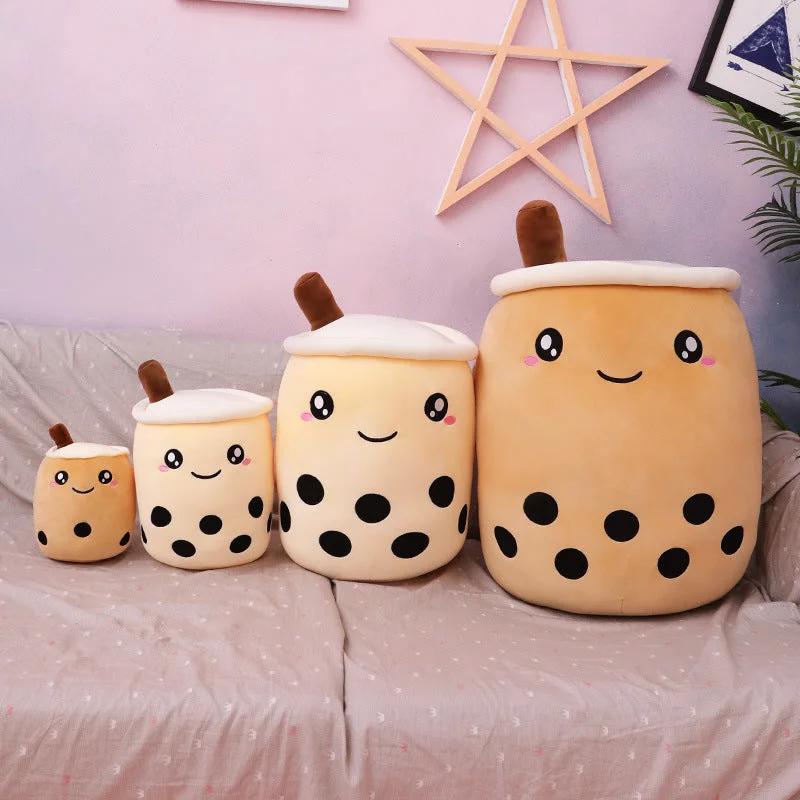
The Kawaii Boba Plush comes in 24 cm, 35 cm, 50 cm and 70 cm, and in Light coffee, Dark coffee, Squinting and White. That range makes it handy for planning: the 24 cm could sit on a shelf, while the 70 cm is more of a floor or bed-corner companion. Check the size against your tape measure first, since 70 cm is a lot in a small room.
The Dressed Kawaii Cat Plush offers 25 cm, 35 cm, 50 cm and 70 cm in Yellow, Pink, Blue and Brown. A 25 cm or 35 cm one suits a desk or shelf. Pick a colour that echoes something you already own, so the room feels collected rather than random.
- One large, a few medium, some small
- Match plush colour to existing decor
- Check the size against your measured space
- Keep big plush off walkways

Display Shelves Without the Clutter
A display shelf works best when it has breathing room. Aim to fill about two thirds of the space and leave the rest empty. That gap is what makes the cute items look chosen. When every inch is full, the eye has nowhere to rest and the whole wall feels busy.
Group by height and colour. Put the tallest item toward one end, then step down. Repeat a colour two or three times across the shelf so it ties together. A Kawaii Whale Plushie, available as Small or Large in Blue or Pink, could sit on a shelf as a soft anchor, with smaller trinkets stepping down beside it. Choose Small for shelves and Large for a bed or chair.
Dust and sun matter too. Shelves in direct light can fade fabrics over time, and open shelves collect dust. Rotate what you show every few weeks, and keep the most precious or delicate items somewhere shaded. A quick wipe on a regular day keeps things looking fresh without a big cleaning session.
- Fill about two thirds, leave the rest open
- Group by height and repeat colours
- Keep delicate items out of direct sun
- Rotate displays now and then


The Desk Corner That Stays Cute and Usable
A small desk needs to work first. Leave enough clear surface for your laptop or notebook, then add cute things around the edges. A good rule is one cute item per side: a small plush at the top corner, a pen pot on the left, a lamp on the right. Anything more and you start moving items every time you sit down.
Go up, not across. A monitor stand with storage underneath, a wall shelf above the desk, or a small pegboard turns empty wall into a place for notes, headphones and trinkets. A Kawaii Cuddle Hamster Plushie, offered in Small or Large and in Grey or Brown, could be a desk companion in the Small size, which suits tight spaces better.
Cable mess ruins a cute desk fast. Use clips or a simple box to keep cords tidy. Choose a chair that tucks fully under the desk so it doesn't block the path. If the chair is bulky, a stool or slim chair frees up room, though comfort matters if you sit there for hours.
- One cute item per desk side
- Use wall space above the desk
- Tame cables with clips or a box
- Choose a chair that tucks in

Soft Corners and Cosy Nooks
Even a tiny room can have a nook. A corner with a small rug, a floor cushion and one big plush is often enough. It gives you somewhere to sit that isn't the bed, which helps the room feel like it has more than one space. Keep it simple, because the nook only works if you can actually sit in it.
Choose one hero item. The Kawaii Sleepy Cat Plushie, in Purple, Cream, Blue or Dark Purple, could play that role as a soft cushion-like presence in a corner or on the bed. Cream blends into pale rooms, while the purples add depth to a darker palette. Check how it looks beside your bedding before deciding.
Lighting finishes the nook. A small lamp or string lights give a warm glow, and they don't take floor space if you hang or clip them up. Keep cords away from walkways and avoid covering lights with fabric. Follow the instructions that come with any electrical item.
- Small rug, cushion and one big plush
- Choose one hero item
- Use lamp or string lights for warmth
- Keep cords and heat sources clear
Colour and Pattern Rules for Small Spaces
Colour decides whether a small room feels dreamy or cramped. A simple approach is the 60-30-10 split: about 60 percent a calm base like white, cream or pale pink, 30 percent a secondary shade, and 10 percent a bold accent. Kawaii often leans pastel, and pastels work well in small rooms because they stay light.
Limit pattern to one or two spots. A patterned duvet and a patterned rug and patterned curtains compete. Pick one star, then keep the rest plain or tone-on-tone. Plush bring plenty of visual interest on their own, so the background can stay quiet.
If you love many colours, repeat them in small doses. A Kawaii Alpaca Plushie in Pink, White or Brown could echo a cushion or print nearby. A Kawaii Duck Plushie in Grey, Yellow, Pink or Blue gives you more colour choices to match, which is useful when you already have a set palette to follow.
- Try 60-30-10: base, secondary, accent
- Limit bold pattern to one or two spots
- Repeat accent colours in small doses
- Let plush supply the colour pops
Small Wall Decor That Doesn't Crowd
Wall decor adds a lot of cute without taking floor space, but the same rule applies: leave blank wall. A cluster of prints in one corner looks better than small frames scattered everywhere. Pick a centre point at about eye level and build outward, keeping gaps between pieces fairly even.
Mix flat and soft. Unframed prints, a small mirror, a fabric banner and a couple of hooks make a layered look without heavy frames. If you rent, use removable options and check the pack for weight limits. Mirrors can make the room feel brighter, but only place them where they reflect something pleasant, like a window or a decorated wall.
For more wall ideas and small accents, look through the Kawaii Decorations collection. If you're pulling together a whole look, the Aesthetic Home page is useful for seeing how pieces sit together across a room.
- Cluster decor, don't scatter
- Leave blank wall around groups
- Mix flat prints with soft pieces
- Use a mirror to reflect light
Sharing a Room or Working With Awkward Shapes
If you share a bedroom, each person needs one zone that is fully theirs, even if it's only a shelf and a hook. Divide the room by function where possible, with sleep on one side and desk or storage on the other. Keep shared items like lighting or a rug neutral, then let each side show personality.
Awkward shapes need practical fixes. Sloped ceilings suit low storage and floor cushions under the slope. Narrow rooms like a long-wall bed and shelves running upward. Alcoves can hold a small desk or a wardrobe. Odd corners often fit a tall, thin shelf, which uses height instead of width.
Large plush can help define zones. A big Kawaii Duck Plush, offered at 40cm or 50cm in Yellow or Blue, could mark a reading corner or sit at the foot of a bed. Choose the size that fits your measured gap, and keep it clear of doors and drawers so it doesn't get squashed every day.
- Give each person a clear zone
- Use low storage under slopes
- Use tall, thin shelves in odd corners
- Keep large plush away from door and drawer paths
Common Mistakes and How to Fix Them
The most common mistake is buying cute things before solving storage. The room fills up, nothing has a home, and the floor ends up as the shelf. Fix it by adding storage first, then deciding what actually deserves display space. If something has no spot, it probably shouldn't come in yet.
Another trap is scale. One oversized piece can swallow a small room, while lots of tiny items create visual noise. Aim for variety in size but restraint in number. If you're torn, hold the item's size out with tape or a cardboard cutout before ordering. Check product sizes and options on the listing so you know what you're getting.
The last mistake is forgetting daily life. Can you open the wardrobe fully? Can you reach the plug? Does the window open? Walk through a normal morning in your head. If any step involves moving a plush or climbing over a box, adjust the layout. Cute only lasts when the room is easy to live in.
- Storage first, display second
- Check scale with tape or cardboard
- Walk through a normal day
- Make sure doors, windows and drawers open

A Checklist Before You Buy or Rearrange
Use this list when you're ready to act. Start with measuring: room, furniture and gaps. Then confirm that the path from door to bed is clear and that doors, drawers and windows all open without a fight. Only then start adding cute pieces, one group at a time.
When comparing options, ask a few simple questions. Does it fit the space I measured? Does it match at least two things I already have? Does it have a home, whether shelf, hook, bed or floor? Does it need cleaning or care I'm happy to do? If the answer to any is no, wait or pick something smaller.
Finally, give the room a week. Live in it, notice what annoys you, and adjust. Small rooms reward patience. You can browse Kawaii Decorations, Home Decor and Aesthetic Bedroom for ideas as you go, but the best small room is the one that works with how you actually live.
- Measure room, furniture and gaps
- Confirm clear paths and opening doors
- Match new pieces to existing colours
- Give each item a home before buying
- Review after a week and adjust