Created by the Kawaii Vibe editorial team. Our named style desks are editorial personas. Product details and availability can change.
Balancing an outer layer within a gentle, casual wardrobe comes down to controlling where fabric stacks and where it falls straight. A great jacket shouldn't bury the rest of your clothes or pull tightly across mid-layers. The goal is an easy, uncluttered silhouetteThe overall shape an outfit creates, from fitted to loose and layered. that feels relaxed around the shoulders while leaving enough visual space for your trousers and inner tops to show.
When people struggle with layeringWearing pieces over or under one another to add depth, warmth or contrast. this look, the issue is almost always a clash of lengths or bulk. A heavy, stiff coat over wide trousers can make your frame look swallowed whole, while an overly tight jacket destroys the soft, breezy drape that defines the style. Getting it right is simply a matter of pairing matching weights, staggering hems, and letting inner collars sit cleanly against outer necklines.
In this guide, we walk through specific outfit formulas, drape mechanics, and styling methods to help you coordinate your wardrobe. We will look at how different jacket cuts interact with bottoms, when to swap between cardigans and sturdy outerwear, and how to shop for pieces that slot effortlessly into your everyday rotation.
The Core Principle of Soft Boy Proportions
Getting the right visual balance starts by understanding how volume travels from your neck down to your footwear. In casual, gentle aesthetics, you are rarely aiming for severe geometric cuts or tight tailoring. Instead, you want soft drop shoulders, generous chest room, and a hemline that harmonizes with your trousers rather than cutting your torso in half awkwardly.
The most reliable balance relies on the rule of contrast: wide-leg trousers generally pair best with outer layers that hit right around the hip bone or upper thigh. If your jacket is cut wide and hangs past your knees, pairing it with voluminous, pooling pants can erase all structure. Conversely, when your outer layer sits slightly cropped or stops cleanly at the hip, your legs retain their vertical line, allowing relaxed fabrics to look intentional rather than sloppy.
If you enjoy wearing looser bottoms like pleated cords or baggy chinos, focus on jackets that allow your waistline or belt line to be hinted at when left unbuttoned. This single styling detail breaks up the visual weight. Exploring our broader range of Soft Boy Clothes can show you how muted color paletteA small group of colors you repeat to make an outfit feel connected.s and gentle cuts naturally complement relaxed bottoms.
- Keep heavy outerwear hems clear of mid-thigh if your trousers have wide leg openings.
- Leave your jacket front open to reveal a tuck line or belt when wearing oversized tops.
- Avoid pairing ultra-tight skinny jeans with massive, boxy jackets to prevent top-heavy imbalance.
Staggering Your Inner Hems and Collars
A jacket never lives in isolation; it interacts directly with whatever top sits underneath it. When your jacket hem and your shirt hem finish at the exact same millimeter, outfits can look strangely blunt and stiff. Creating micro-levels of length adds depth and signals that your clothes were chosen with care.
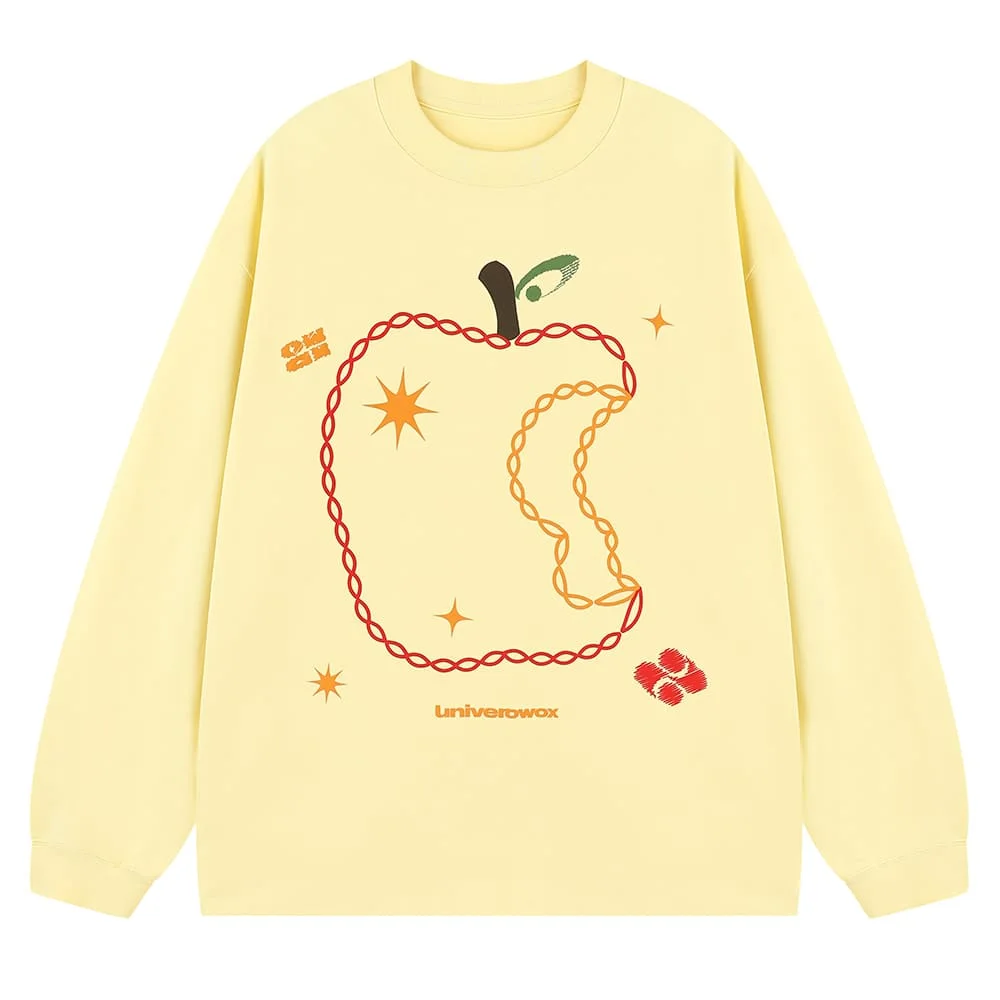
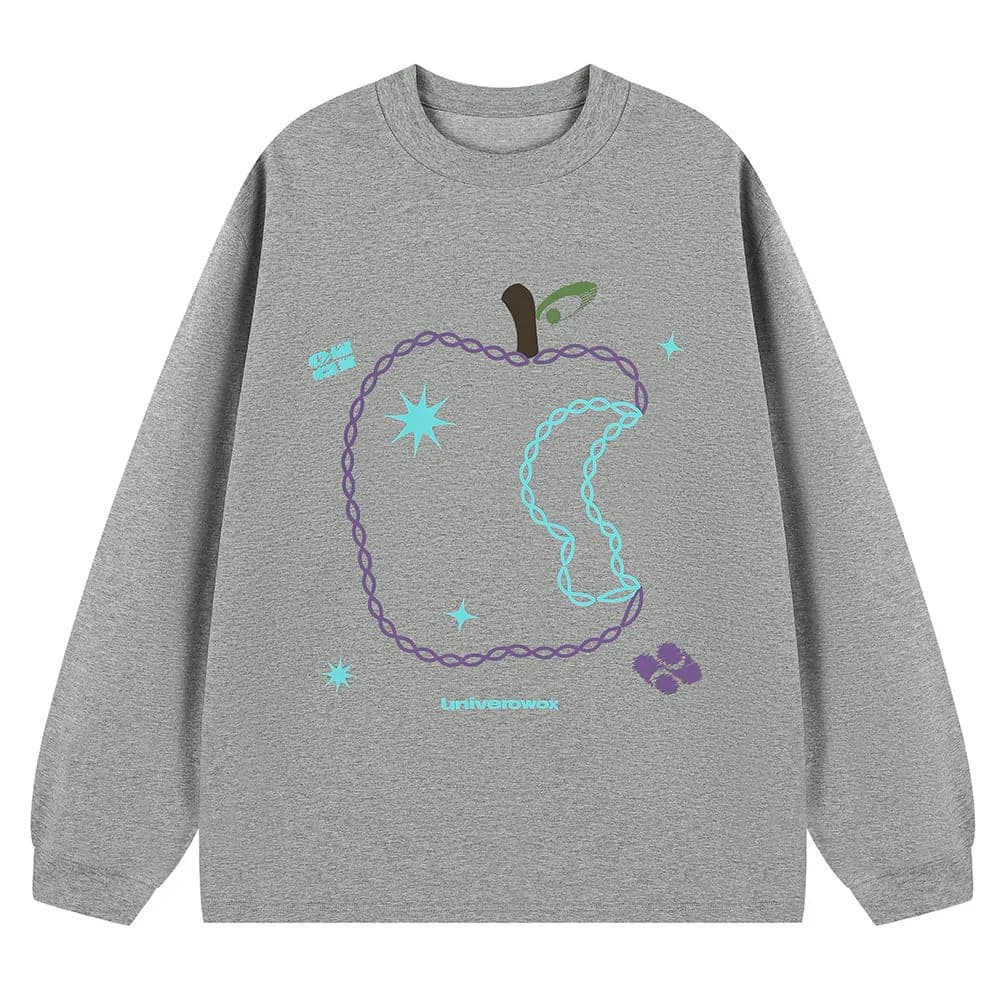
A reliable formula is to have a lighter base layer, like a soft tee, tucked in or hanging one inch lower than your mid-layer, while your jacket frames both from the outside. For instance, pairing a slightly boxy outer layer over a piece like the Big Apple Oversized Sweatshirt, which is made from a cotton and polyester blend, allows the ribbed waistband of the sweatshirt to anchor the torso while a jacket hangs smoothly beside it.
Necklines require equal attention. If your jacket features a soft spread collar or a minimal track collar, keep your under-layer simple with a classic crew neck or a delicate buttoned collar. Avoid stacking multiple thick, competing lapels on top of each other, which adds unnecessary bulk around your throat and distracts from a relaxed posture.
Pairing Boxy Jackets With Wide-Leg Trousers
Wide-leg trousers are a staple of gentle streetwear and vintage-inspired everyday wear, but their sweeping hem can easily make short jackets look truncated if the cut is too sharp. The secret is finding an outer layer with soft, unpadded shoulders that fall naturally rather than sitting rigid.
When wearing wider chinos, tailored slouch trousers, or vintage wash denim, opt for jackets that have a slightly boxy width through the torso. This mirrors the width of your lower half without creating a triangle shape. Look through our curated Soft Boy Jackets to find outerwear pieces that provide room in the chest and arms so your base layers glide underneath without bunching up at the armpits.
Footwear also anchors this specific relationship. Chunky derbies, retro canvas trainers, or round-toed loafers keep wide hems from sweeping across the floor, providing a solid grounding point that balances out the wide silhouetteThe overall shape an outfit creates, from fitted to loose and layered. of your outer layer. Keep your ankles feeling grounded so the volume up top feels purposeful.
- Match shoulder stiffness to pant drape: soft fabrics belong with unconstructed shoulders.
- Choose footwear with rounded or broader soles to support wide trouser legs.
- Check that sleeve lengths hit your wrist bone so your hands are not completely lost in fabric.
Styling Mid-Layer Knits and Button-Downs
LayeringWearing pieces over or under one another to add depth, warmth or contrast. for mild chill or changing indoor climates means choosing base pieces that can stand alone when your jacket comes off. A patterned knit or a gentle collared shirt serves as a focal point, softening the utilitarian lines of everyday windbreakers, utility jackets, or denim cuts.
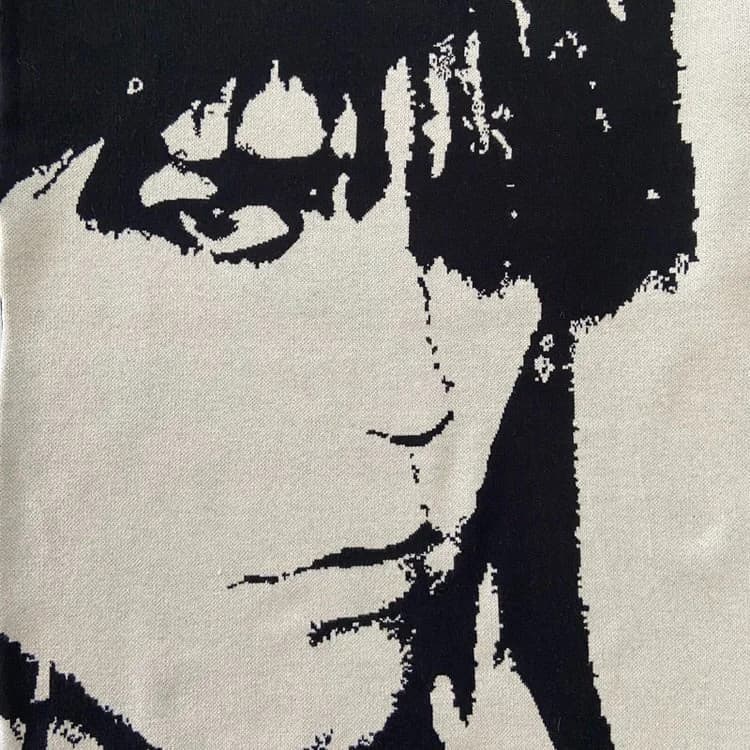
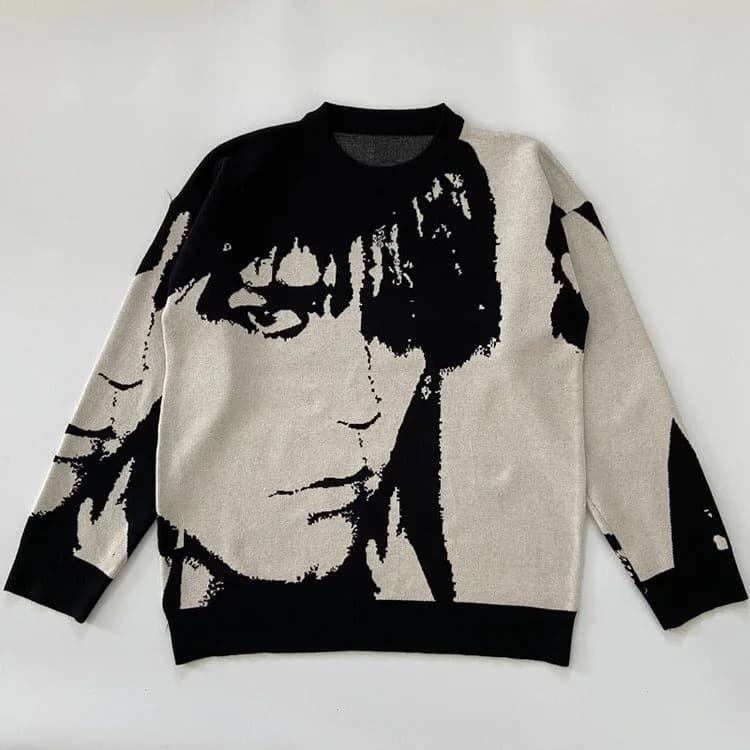
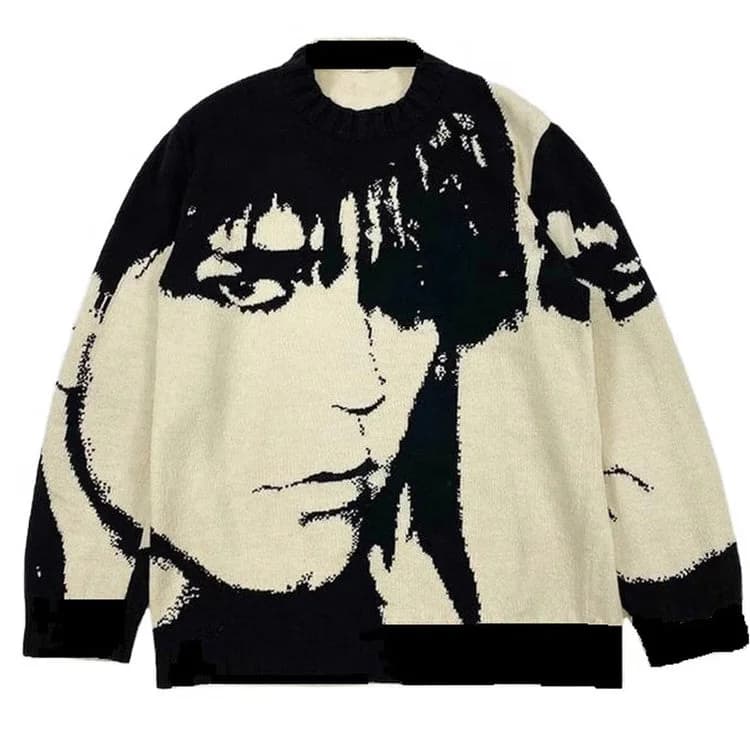
If you are building an outfit around a monochrome or earthy jacket, consider breaking up the chest area with a graphic or patterned piece. The Dance With My Hands Sweater, crafted from polyester in a contrasting white and black knit, provides instant visual texture under an open jacket without adding excess bulk around the wrists.
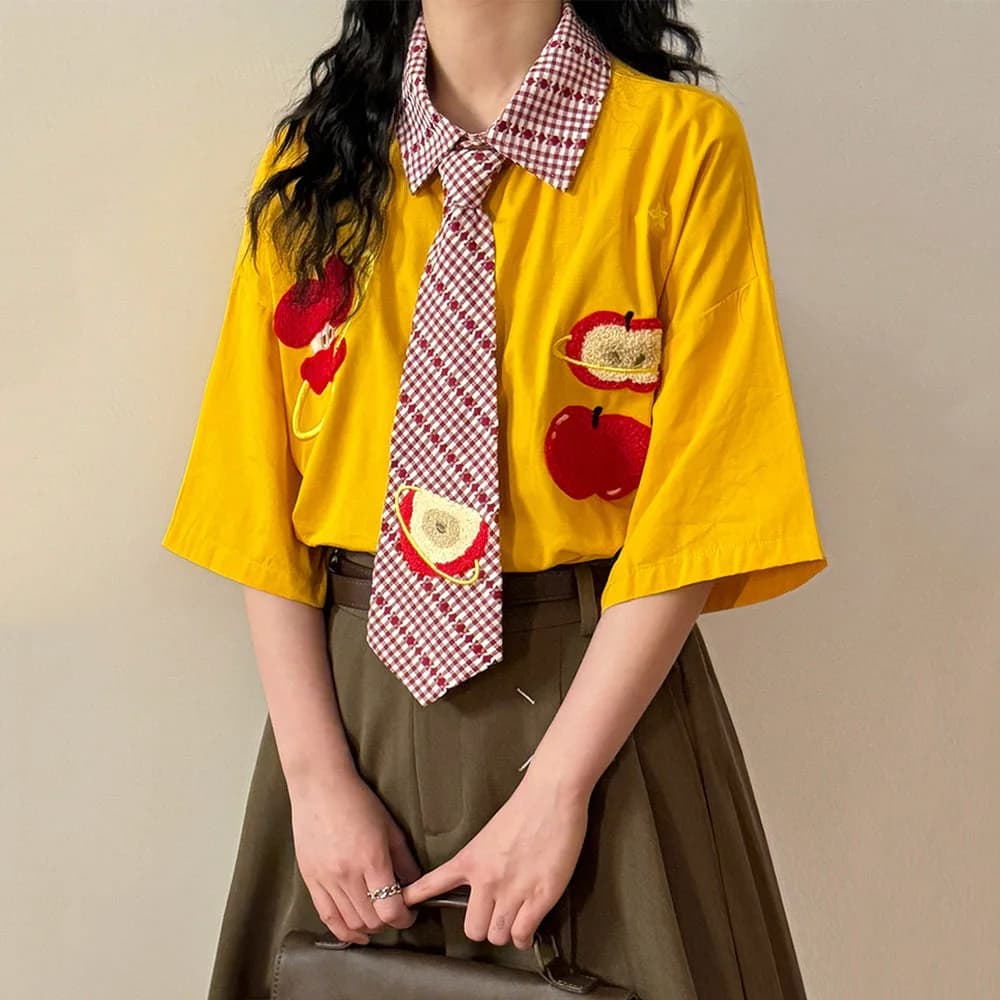
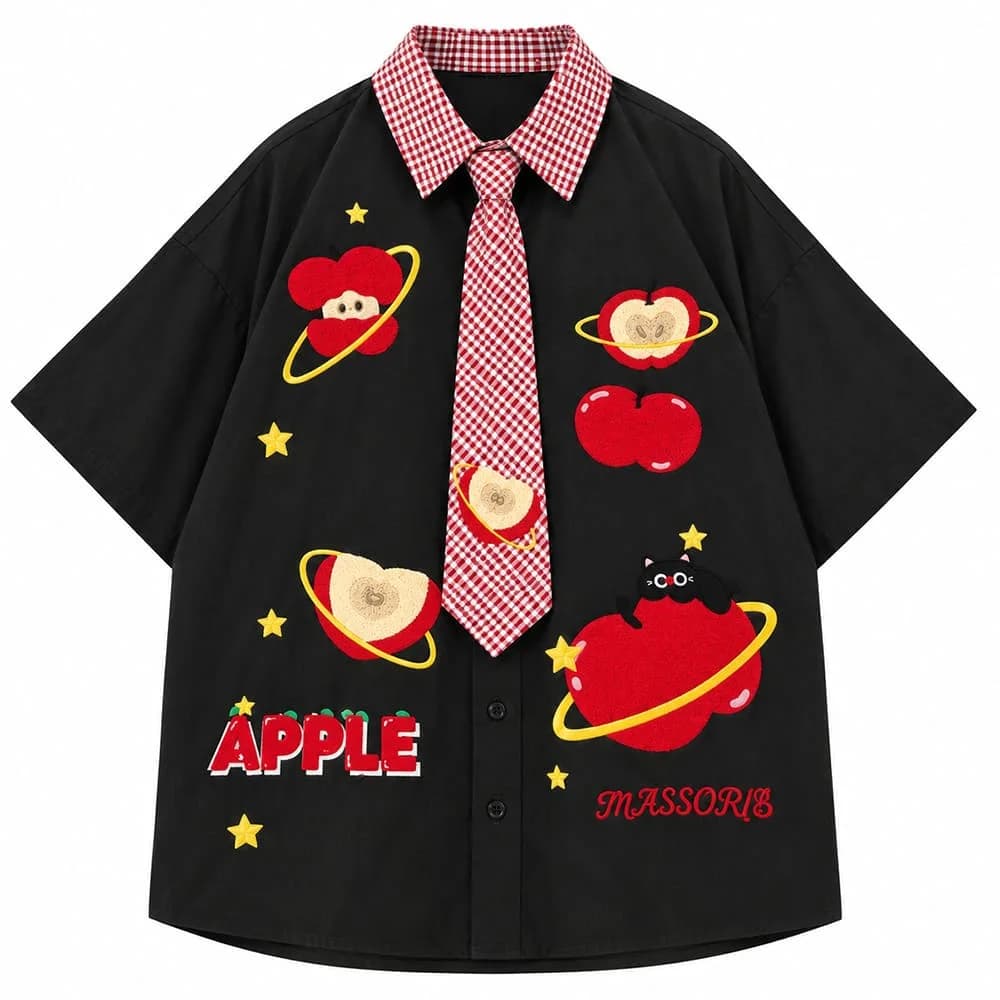
Alternatively, you can layer a lightweight, smooth top underneath. The Apple Embroidered Short Sleeve Tie Shirt, made of polyester and available in black or yellow, offers a charming collar and tie detail that frames nicely inside a soft utility jacket or loose cardigan. Mixing textures—like smooth woven polyester against twill or wool blends—ensures your layers look distinct even when your colors stay within a tight palette.

Integrating Hoodies Smoothly Under Outerwear
LayeringWearing pieces over or under one another to add depth, warmth or contrast. a hoodie under a jacket is an iconic casual combination, but it is also where many outfits go wrong due to hood bunching and restricted movement. If your jacket armholes are cut high and tight, pulling a heavyweight fleece underneath will leave you feeling stiff and looking shoulder-heavy.
When choosing hoodies as mid-layers, make sure the hood fabric has enough structure to rest neatly outside the jacket collar without collapsing into a knot behind your neck. A versatile option like the 90s Plaid Grey & Red Reversible Hoodie, constructed from a polyester and cotton blend, allows you to flip between a patterned plaid and a solid surface depending on how loud your jacket exterior is.
For a slightly different tone, the Black & Yellow 90s Plaid Reversible Hoodie also offers that same cotton-polyester construction, making it an adaptable mid-layer to pair under dark denim jackets or relaxed chore coats. You can discover more comfortable choices in our Soft Boy Hoodies collection to keep your layered looks functional and relaxed.

Managing Pattern Density and Color Blocking
Outerwear covers the largest surface area of your upper body, which makes its pattern density critical to your total look. If your jacket is patterned, your inner tops should generally lean into muted solid tones, subtle textures, or low-contrast stripes to avoid overwhelming the eye.
Conversely, if your jacket is plain canvas, denim, or twill, you have plenty of room to incorporate expressive shirting underneath. Wearing an Oversized Checkered Button-Up Shirt, made from breathable polyester in colorways like pink/black or black/white, under a neutral beige or olive jacket lets the checkered lines peek out at the placket and wrists, adding charm without looking cluttered.
Keep your color temperatures aligned across the entire outfit. Warm earthy jackets—such as sand, dusty brown, and olive—sit best alongside cream, faded mustard, and forest tones. Cooler navy, slate, or charcoal jackets pair cleanly with washed black, heather grey, and crisp white base layers.
- Let one garment dominate: either the jacket carries the pattern, or the shirt beneath does.
- Unbutton shirts halfway down over plain white tees to add another soft visual division.
- Avoid pairing high-contrast neon pieces with gentle pastel outer layers.
Adapting Outerwear for Changing Climates
Aesthetic outfits need to remain practical regardless of whether you are navigating a damp spring morning in the UK or a breezy coastal evening in Australia. Rather than buying separate aesthetics for different climates, adapt your base layers while keeping your core jacket silhouetteThe overall shape an outfit creates, from fitted to loose and layered. consistent.
In cooler weather, your jacket needs sufficient room to slip over knitwear without pulling across the back seams. Check the chest and arm measurements before layeringWearing pieces over or under one another to add depth, warmth or contrast. thick woolens underneath. For warmer weather, the jacket itself becomes the primary statement piece, worn over thin tees that manage heat efficiently without adding bulk.
During transitional seasons, lightweight shirts can actually function as your outer layer on warmer afternoons. Exploring our Soft Boy Tops gives you plenty of transitional garments that can be worn unbuttoned over undershirts when a full-weight winter jacket feels like too much fabric for the day's temperature.

Choosing Between Short Jackets, Parkas, and Coats
Different jacket lengths alter your perceived height and body shape, so selecting the right cut should be deliberate. Short jackets, such as bomber jackets, coach jackets, and cropped denim, naturally lift the eye and make your legs appear longer, which is ideal if you favor relaxed-fit trousers that pool slightly over your footwear.
Longer coats, including parkas and duster jackets, offer a graceful, flowing drape that moves nicely as you walk. However, long outerwear requires careful calibration: if the coat hem hits below the knee and the fabric is stiff, it can look rigid. Look for coats with fluid materials that drape softly around your calves and leave them unfastened to let the vertical line of your outfit remain visible.
Mid-length jackets that stop directly at the widest part of your thigh can be the trickiest to style. They tend to visually bisect the figure, which can look awkward over wider trousers. If you prefer mid-length outerwear, balance it with straight-leg pants or cuff your hems slightly to show a sliver of ankle or contrast sock.
Curating Lightweight Base Layers
The secret to feeling comfortable in layered outerwear is ensuring your base layer is soft, breathable, and easy to tuck. If your foundational t-shirt is stiff or poorly cut, it will twist under your outer garments and cause uncomfortable bunching around the chest and armpits.
A clean, well-proportioned t-shirt allows you to remove your jacket indoors without losing the gentle vibe of your look. Browsing our collection of Soft Boy T-Shirts will help you find comfortable base layers designed to sit softly against the skin, whether you want subtle chest graphics, embroidery, or straightforward solid neutrals.
When tucking your base t-shirt into high-waisted trousers, use a loose French tuck or a relaxed full tuck that lets fabric billow slightly over the belt. This keeps the look effortless rather than corporate, providing a soft foundation that complements unbuttoned jackets and lightweight cardigans alike.
- Choose soft cotton blends that slide against jacket linings without clinging.
- Keep neckbands flat and clean so they frame outer collar lines smoothly.
- Try rolling your t-shirt cuffs once or twice if they extend past short jacket sleeves.
Alternative Layering: Graphic and Vacation Shirts
You don't always need a traditional piece of heavy outerwear to achieve a layered aesthetic. In warmer months or humid climates, a lightweight, buttoned shirt worn completely open over a tank or tee creates the same flowing, proportioned effect as a jacket without trapping unwanted heat.
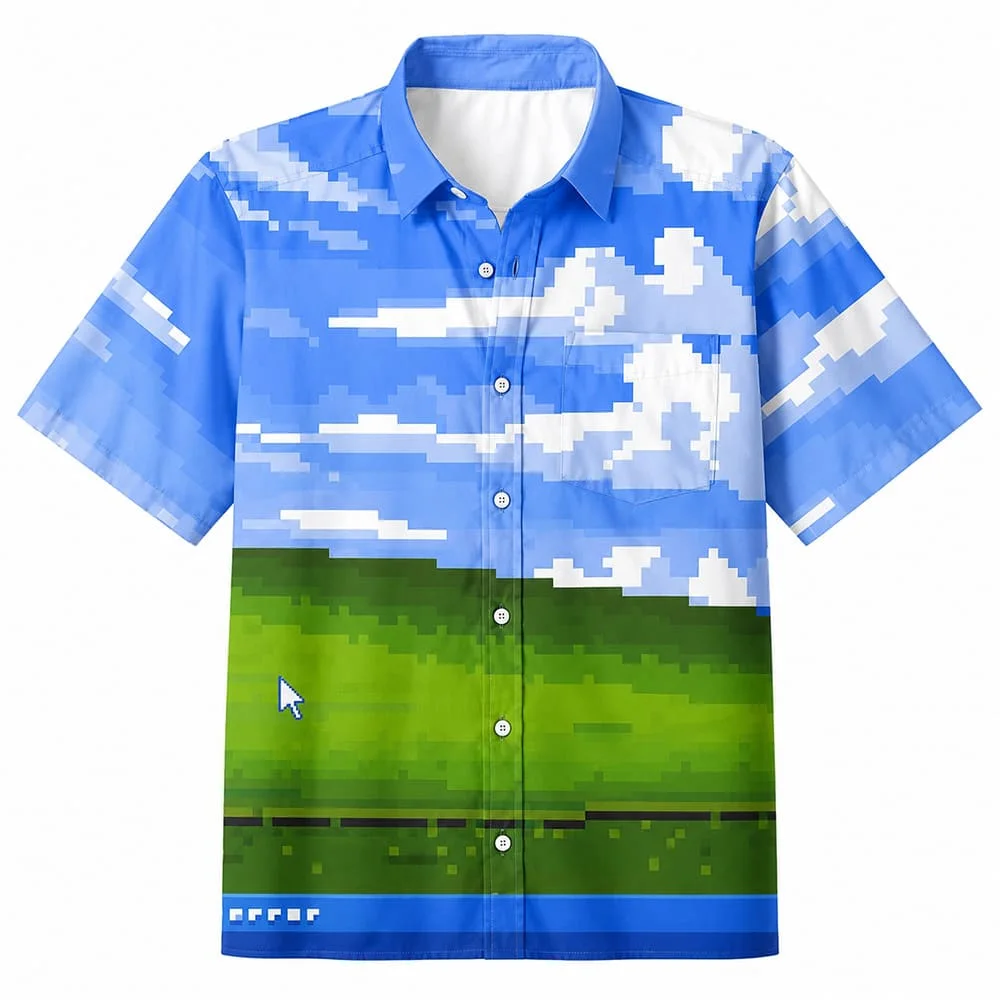
A shirt like the Bliss Desktop Hawaiian Shirt, made of smooth polyester in an airy blue and green print, works wonderfully as a featherweight summer overshirt. Worn unbuttoned over a white rib-knit tank with loose linen pants, it offers movement and color while maintaining an approachable, nostalgic mood.
Similarly, the System Overload Button-Up Shirt offers a monochrome grey polyester build that functions almost like an ultra-light chore shirt. Leaving it unbuttoned over dark trousers and a tucked tee delivers structured layeringWearing pieces over or under one another to add depth, warmth or contrast. suitable for mild evenings without the physical bulk of a lined coat.
Common Outerwear Styling Pitfalls to Avoid
One of the most frequent missteps in soft boy layeringWearing pieces over or under one another to add depth, warmth or contrast. is ignoring the stiffness of the outer fabric. Stiff, boxy workwear canvas that doesn't bend will clash with fluid pleated trousers, creating an awkward visual disconnect where the top half feels rigid and the bottom half feels relaxed. Always seek out pre-washed, unlined, or naturally soft materials.
Another common error is piling on too many competing accessories around the jacket collar. Stacking heavy woven scarves, oversized headphones, tote bag straps, and multiple chain necklaces around your neck clutters the neckline. Choose one or two focal points—like a clean canvas tote and a simple cap—to let the jacket drape cleanly.
Lastly, watch out for sleeve lengths that completely swallow your hands. While extended sleeves can look cozy, having zero hand visibility can look unkempt rather than thoughtfully styled. Push your sleeves back slightly or choose cuts that hit right at the thumb joint so your hands remain functional and visible.
- Avoid rigid, untreated work fabrics that refuse to drape with your trousers.
- Do not overload your collar line with headphones, bulky scarves, and multiple bags at once.
- Check that your wrists can emerge naturally without constant sleeve adjustments.
Footwear, Bags, and Accessories That Ground the Look
To complete a balanced jacket outfit, your accessories must speak the same design language as your outerwear. Lightweight, gentle clothing pairs best with utilitarian yet soft accessories, such as unstructured cotton canvas totes, nylon messenger bags, and vintage-style ballcaps.
Footwear choices should counterbalance the weight of your jacket. If you are wearing a thicker, lined fleece or an oversized denim jacket, dainty slim-profile plimsolls can make your feet look oddly small by comparison. Opt instead for retro runners, suede derby shoes, or classic canvas sneakers with slightly thicker rubber foxing to ground the silhouetteThe overall shape an outfit creates, from fitted to loose and layered..
Keep your everyday carry simple. A washed canvas shoulder bag slung across the body helps pull an open jacket slightly closer to your ribs, preventing oversized outerwear from billowing out too far in windy weather. This functional detail adds practical structure while keeping your hands free.
Evaluating Jacket Construction and Material Flow
When shopping for everyday outerwear, scrutinizing garment materials and construction helps ensure the jacket will hang the way you expect. Because soft boy aesthetics prioritize gentle shapes, garments made from pure polyester, cotton-poly blends, or brushed twills offer the right mix of drape and durability.
Look closely at shoulder construction in product photography. Drop-shoulder designs—where the sleeve seam sits an inch or two below your actual shoulder point—naturally soften your silhouetteThe overall shape an outfit creates, from fitted to loose and layered. and allow thicker sweaters to fit underneath without shoulder pads or ridges poking out. Set-in sleeves, by contrast, offer a sharper profile that works better over thinner t-shirts.
You should also check the hem finish. Jackets with elasticated bottoms will puff outward and create a rounded, blouson effect, which looks great with straight pants. Meanwhile, straight-cut hem jackets hang plumb, making them ideal companions for very wide, sweeping trousers. Match the hem style to the trousers you wear most frequently.
- Drop shoulders create an easy, relaxed drape and accommodate thick knits easily.
- Elasticated waistbands create a rounded bubble silhouetteThe overall shape an outfit creates, from fitted to loose and layered. that frames straight legs well.
- Unlined woven fabrics offer more fluid movement than stiffly lined heavy coats.
Your Outerwear Proportion Checklist
Before walking out the door in your layered outfit, running through a quick mental checklist can save you from an awkward silhouetteThe overall shape an outfit creates, from fitted to loose and layered.. Proportion is not about following strict body-type rules; it is simply about ensuring that the pieces you have chosen are working together rather than fighting for dominance.
Step in front of a mirror and check your three main horizontal lines: your shoulders, your jacket hem, and your trouser cuffs. If your jacket feels excessively bulky, unbutton it to expose the vertical line of your t-shirt and trousers. If your pants feel overwhelmingly wide, swap into a slightly shorter outer layer to restore visual balance to your legs.
With the right mix of relaxed cuts, staggered lengths, and breathable fabrics, outer layers will become the most effortless part of your daily rotation. Use these styling guidelines to experiment with your wardrobe and find the gentle, balanced drape that feels best for you.
- Is there a clear visual separation between your inner shirt hem and outer jacket?
- Do your shoulders look relaxed and free of stiff, bunching fabric?
- Can your hands and wrists move comfortably without disappearing entirely?
- Does your footwear have enough visual weight to balance the width of your jacket?