Created by the Kawaii Vibe editorial team. Our named style desks are editorial personas. Product details and availability can change.
Getting the balance right in soft boy pants outfits comes down to managing visual weight. Relaxed tailoring and slouchy bottoms are central to the look, but wearing wide pants with loose tops can easily turn into an unintentional block of fabric if you do not plan where garments begin, taper, or break over your shoes.
The goal is not to force yourself into slim-tailored rules, but rather to create intentional contrast. When your trousers have generous width, small decisions like where your shirt hem sits, how sleeves fold, and whether your pant hems pool or crop can completely change the way your proportions read throughout the day.
In this guide, we break down concrete combinations, layeringWearing pieces over or under one another to add depth, warmth or contrast. tactics, hemline placement, and smart fabric pairings. Whether you are dressing for cool breezes or warm afternoons, these practical techniques help you wear relaxed silhouetteThe overall shape an outfit creates, from fitted to loose and layered.s with purpose.
The Baseline Rule of Soft Boy Silhouette Proportions
Balancing relaxed trousers starts with understanding volume distribution. In classic styling, garments often skim the body closely to show natural body contours. With gentle, relaxed styling, the shape is intentionally softer, prioritizing roomier cuts that hang away from the torso and legs. To prevent an outfit from looking untidy or overwhelming your stature, you need at least one anchoring point where the silhouetteThe overall shape an outfit creates, from fitted to loose and layered. feels defined.
That anchor can happen at the natural waistline, at the wrist, or at the ankle. For instance, if you choose wide, puddle-hem trousers, keeping your upper layers structured or partially tucked helps preserve your natural height. Alternatively, if you prefer an untucked, slouchy sweater, selecting trousers that crop clean at the shoe collar keeps your lower half from looking weighed down.
When building looks from our curated soft boy aesthetic selection, treat volume as a balancing scale. Adding width to your lower half simply means you need to be deliberate with the length, hem, and drape of whatever you put on top.
- Anchor points: define at least one spot (waist, wrist, or ankle) to stop fabric from overwhelming you.
- The rule of thirds: aim for a 1/3 top to 2/3 bottom proportion rather than splitting your body in equal halves.
- Movement matters: stiffer fabrics maintain shape, while flowing textiles drape downward and reduce bulk.
Choosing Trousers: Wide-Leg vs. Straight vs. Tapered
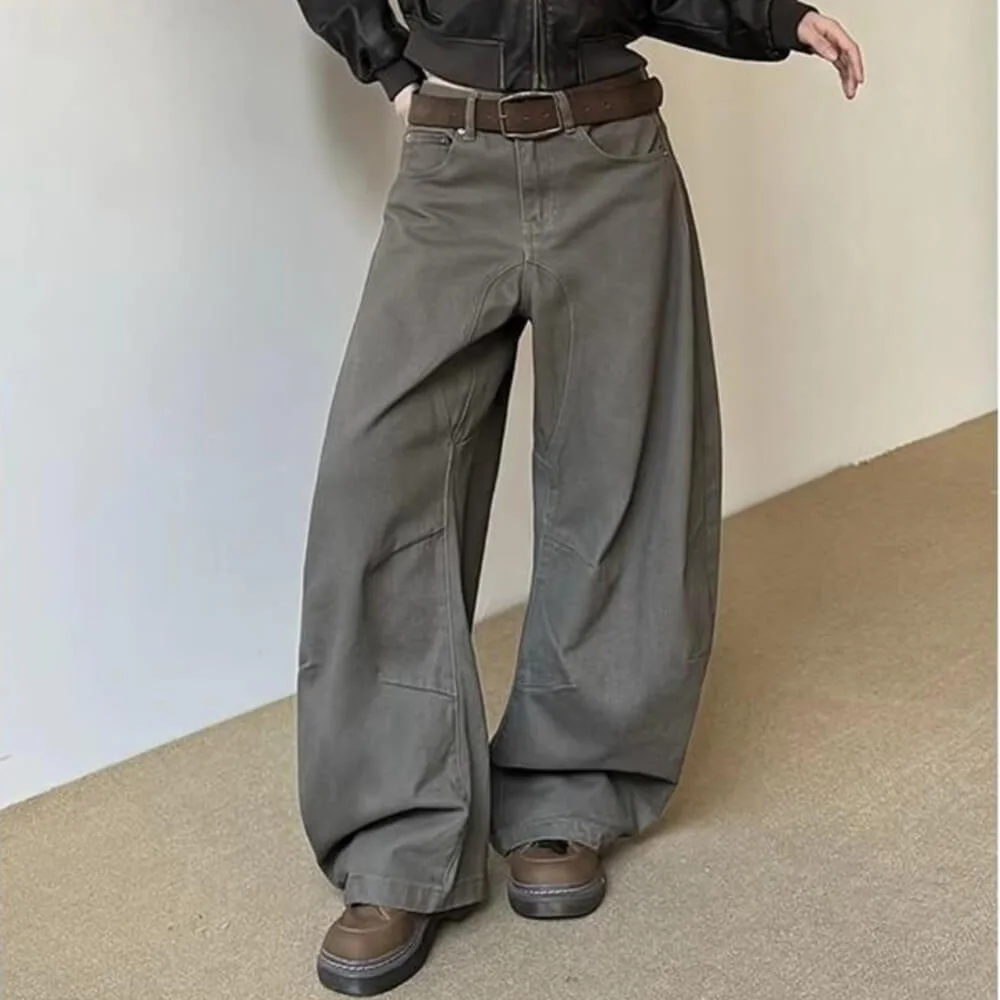
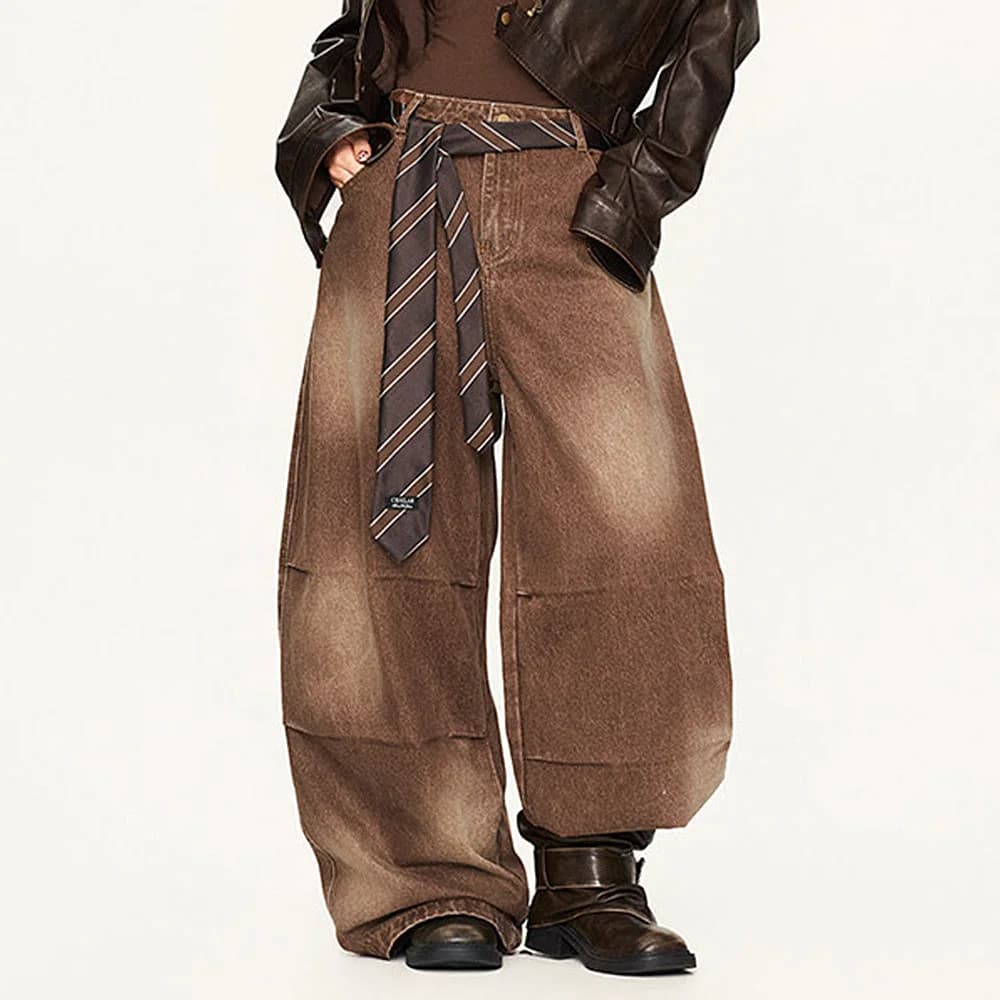
Every cut in the trousers category serves a distinct functional purpose in your wardrobe. Wide-leg cuts provide maximum movement and drape, making them ideal when you want an effortless, relaxed vibe. However, wide legs require shoes with enough sole presence—like retro court shoes or round-toe derbies—so the hems do not drag on damp pavement.
Straight-leg trousers offer the most predictable balance point. They fall evenly from the hip through the calf, giving you enough ease for comfortable movement while maintaining a clean vertical line. If you are experimenting with oversized tops for the first time, straight cuts provide a safe middle ground because they never compete with wide shoulder seams or relaxed knitwear.
Tapered options give you extra space through the seat and thighs before narrowing slightly at the ankle. This cut works exceptionally well for individuals who want comfort up top without losing sight of their footwear. If you browse through dedicated soft boy pants, look closely at how the garment is cut from knee to cuff, as this taper will dictate which shoe styles and jacket lengths look most natural.
- Wide-leg: offers maximum drape and movement; pairs best with substantial footwear.
- Straight-leg: clean, predictable line that balances heavy knitwear or boxy overshirts effortlessly.
- Tapered: gives thigh comfort while keeping hems neat, making it great for low-profile sneakers and loafers.
Denim Proportions and Managing Stiff Fabric
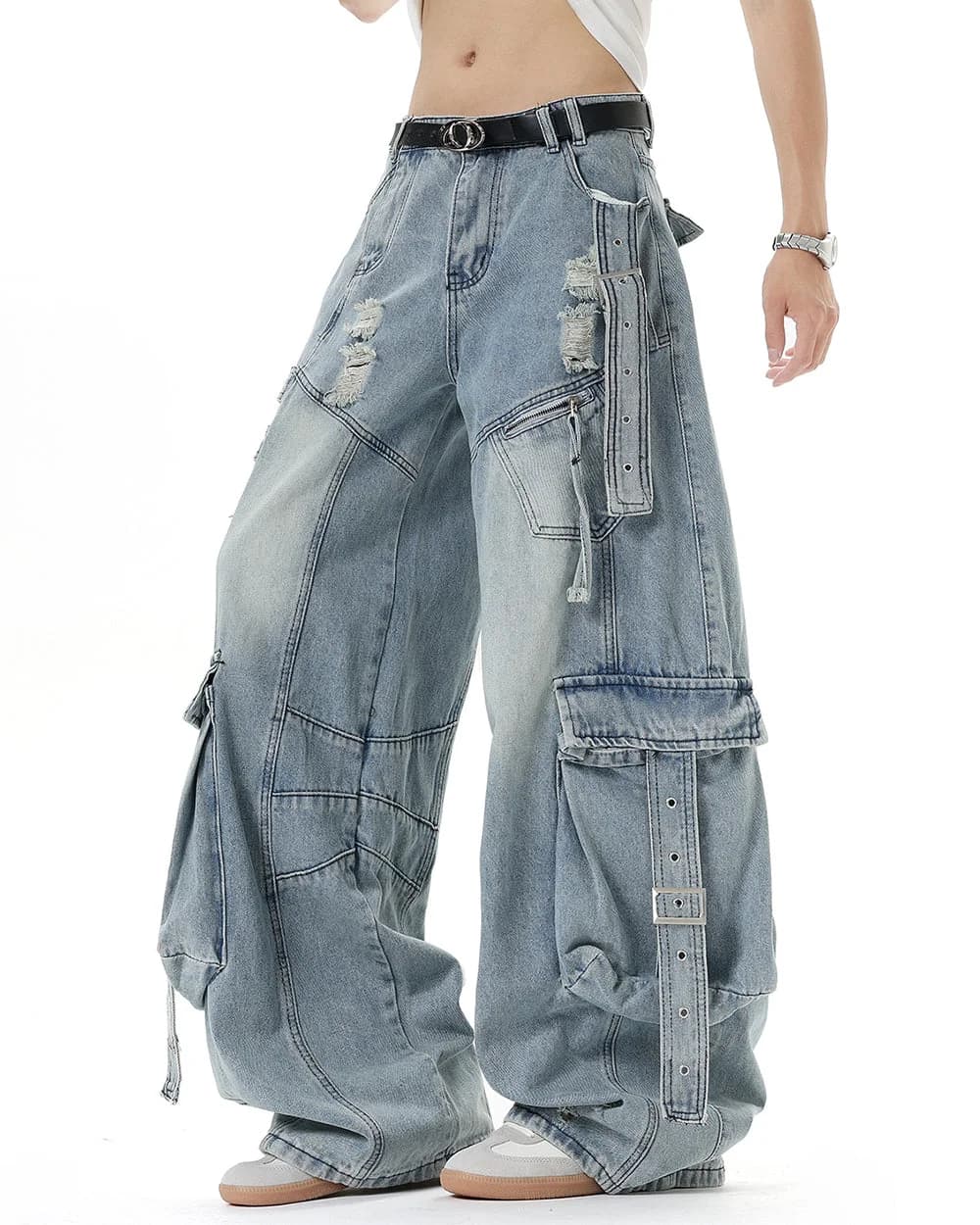
Denim behaves very differently from fluid chinos or drapey twill because the material naturally holds its own shape. When building an outfit with denim, you are working with structured visual weight. A heavy-duty, wide-leg jean will stand outward rather than draping softly against your calf, which immediately draws the eye down toward your lower half.
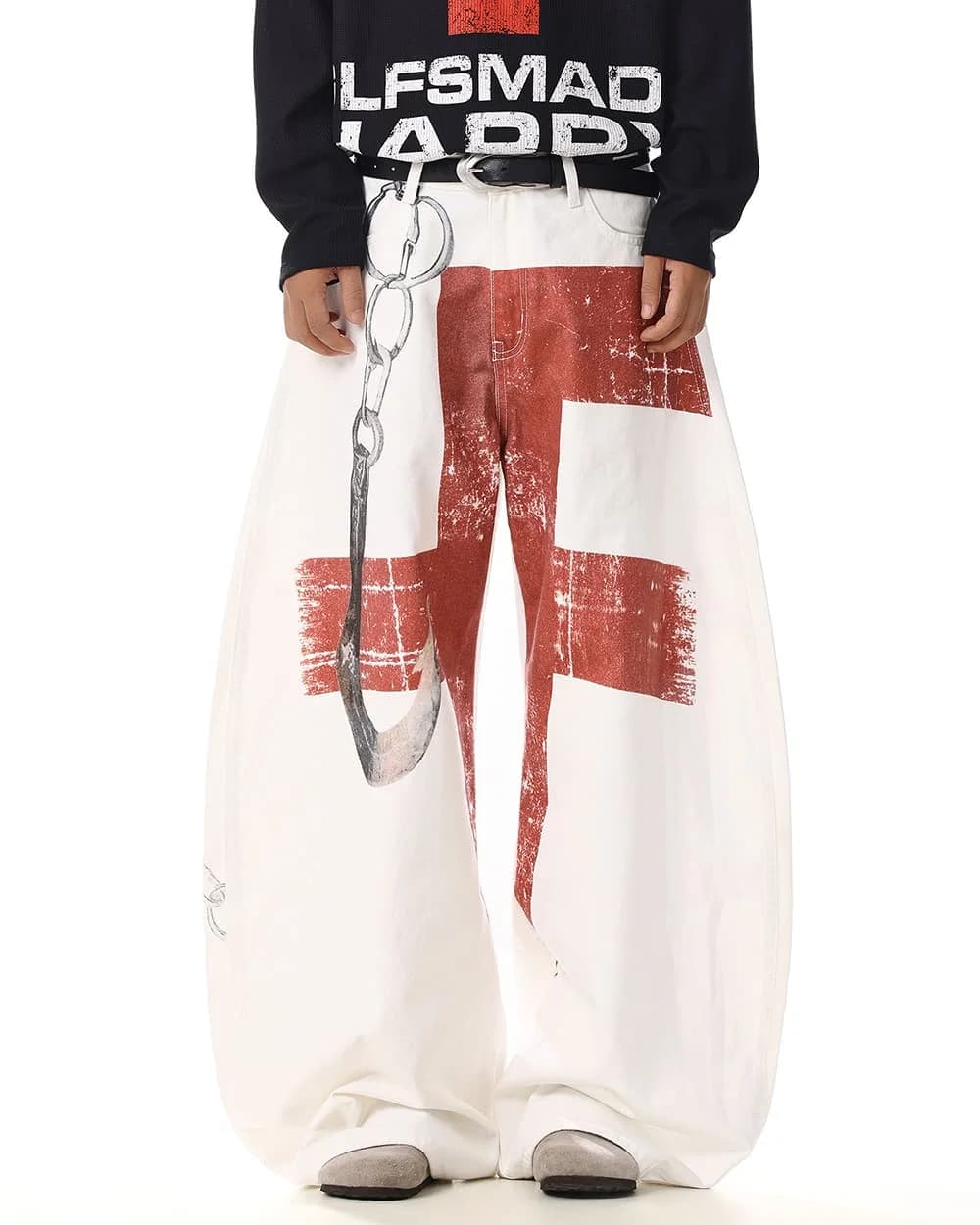
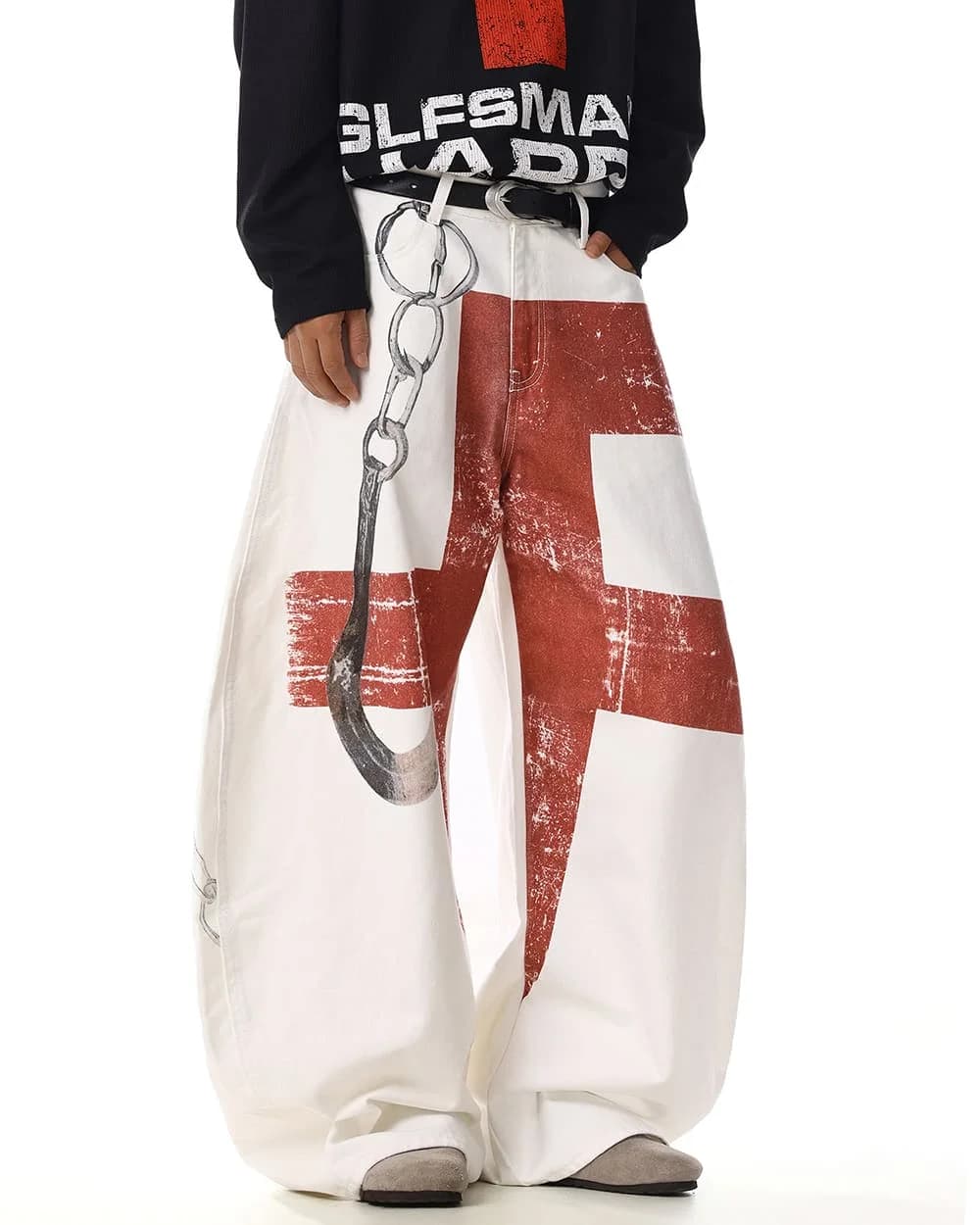
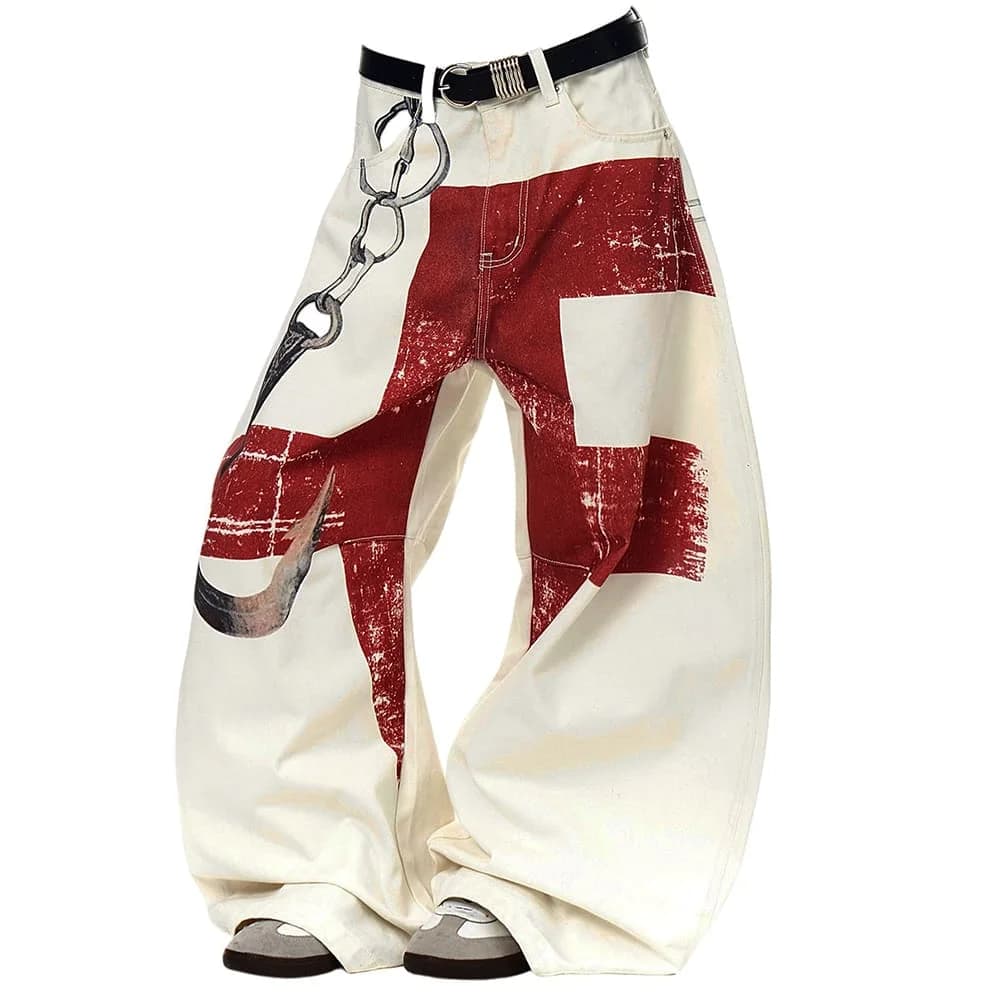
To prevent heavy denim from making your outfit look bottom-heavy, match the fabric weight on your upper half or create an intentional crop. A sturdy denim piece like The Problem Child Wide Leg Pants, made from durable denim in a white and red graphic aesthetic, establishes a strong visual focus with its generous cut. Because the denim has body, pairing it with lightweight, clingy tops can sometimes look mismatched; instead, it shines when paired with structured cotton tees or mid-weight layers that match its presence.
For anyone building an everyday rotation, exploring soft boy jeans reveals how wash and weight interact. Light-wash denim creates a breezy, vintage feel that pairs naturally with pastel and earth-toned layers, while saturated raw or dark denim provides a sharper contrast against slouchy neutral sweatshirts.
- Fabric weight balance: pair heavy denim bottoms with tops that have enough substance to hold their own.
- Hem treatment: a single roll cuff can add pleasant structure to rigid jeans if the leg length feels too long.
- Color harmony: lighter denim washes visually soften the wide cut, making voluminous pants feel lighter.

Tuck Styles: Full Tuck, French Tuck, and Free Hem
How your shirt meets the waistband dictates where viewers perceive your legs to begin. A full tuck pulls all upper fabric neatly inside your waistband, immediately setting your visual waistline at the top of your trousers. This technique is particularly effective when wearing high-rise or pleated pants, as it maximizes leg length and balances the breadth of wide legs.
A French tuck—tucking only the front center of your shirt while leaving the sides and back loose—gives you the best of both approaches. It reveals your belt buckle and waistband to preserve height, while allowing the sides of your shirt to fall softly over the hips. This is an adaptable choice when wearing relaxed button-ups or casual tops that feel slightly too long to leave fully untucked.
Leaving your hem completely free and untucked creates the classic laid-back skater or indie silhouetteThe overall shape an outfit creates, from fitted to loose and layered.. When doing this, ensure your shirt hem ends around mid-fly. If an untucked top extends all the way past your back pockets, it shortens the appearance of your legs and can make wide-leg trousers look bulky. Adjusting this tuck style allows you to wear the same pair of trousers across casual and semi-structured occasions.
- Full tuck: cleanest leg-lengthening effect; works best with mid-to-high rise pants and belts.
- French tuck: relaxed middle ground; reveals the waistband in front while softening hip lines at the sides.
- Free hem: most casual aesthetic; ensure the hem does not extend past the base of your trouser fly.
Layering Boxy Shirts Over Wide Trousers
Boxy, short-sleeve or long-sleeve button-ups are central to relaxed dressing, but pairing a wide top with wide bottoms can flatten your overall silhouetteThe overall shape an outfit creates, from fitted to loose and layered.. The solution is creating depth through unbuttoned styling and inner contrast. Leaving an overshirt unbuttoned introduces a strong vertical line down the center of your torso, breaking up horizontal width.
A patterned piece like the Oversized Checkered Button-Up Shirt, made from polyester and available in tones like black/white, pink/black, and orange/blue, provides clear graphic interest over relaxed bottoms. Wearing it open over a tucked plain tee maintains your natural waistline while letting the checkered pattern frame your upper body comfortably.
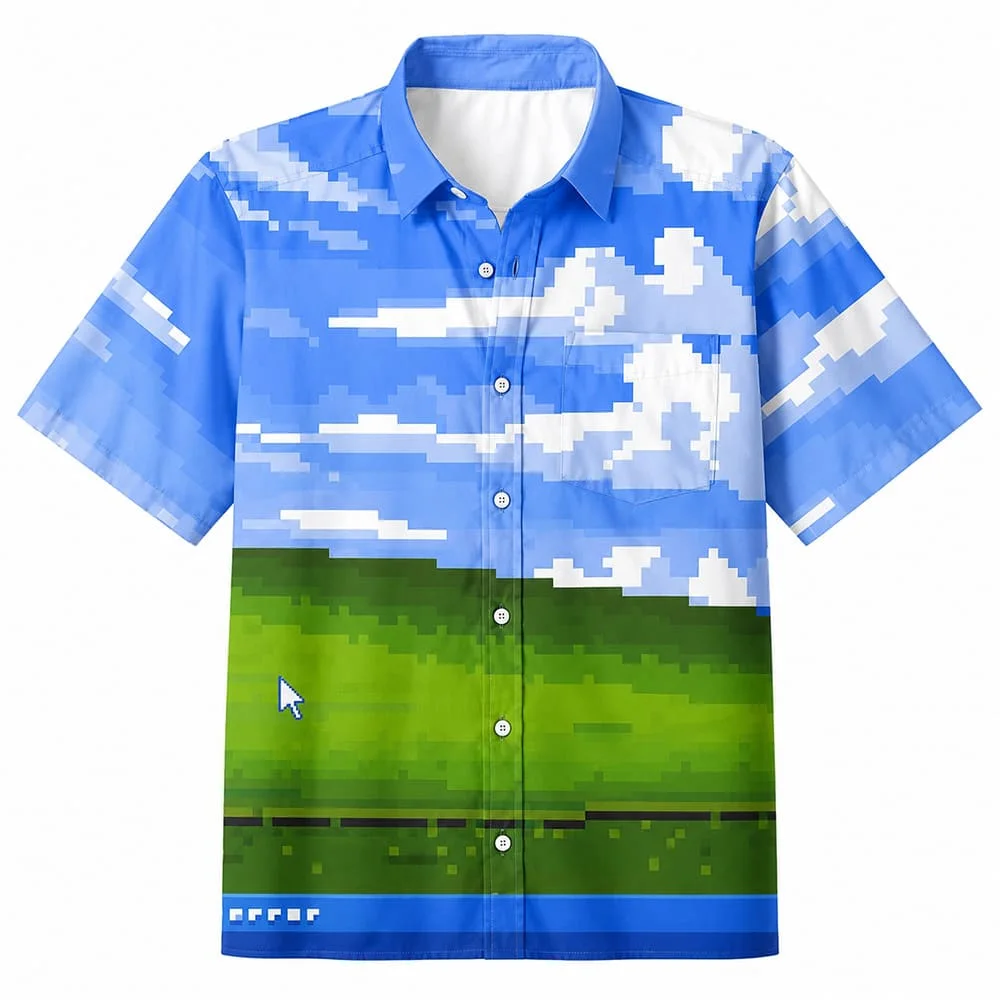
Similarly, smooth printed layers like the Bliss Desktop Hawaiian Shirt in its vibrant blue and green polyester weave, or the graphic System Overload Button-Up Shirt in grey, can either be worn loose for an airy warm-weather feel or worn open over a fitted base layer to anchor the volume of your pants.
- Open-front layeringWearing pieces over or under one another to add depth, warmth or contrast.: leaving button-ups open creates two vertical front panels that slenderize your torso.
- Inner layer tuck: keep the under-tee tucked in so your leg proportions stay clearly defined.
- Sleeve balancing: rolling short sleeves once or twice can expose your wrists, providing an anchor point.

Sweatshirts and Hoodies: Managing Upper Bulk
Thick fleece tops and oversized sweaters add pleasant comfort, but they also bring considerable upper-body volume. If your sweatshirt falls straight down without any hem cinch, it forms a wide rectangle that can make straight or wide pants look shapeless. Balancing this requires intentional hem manipulation.
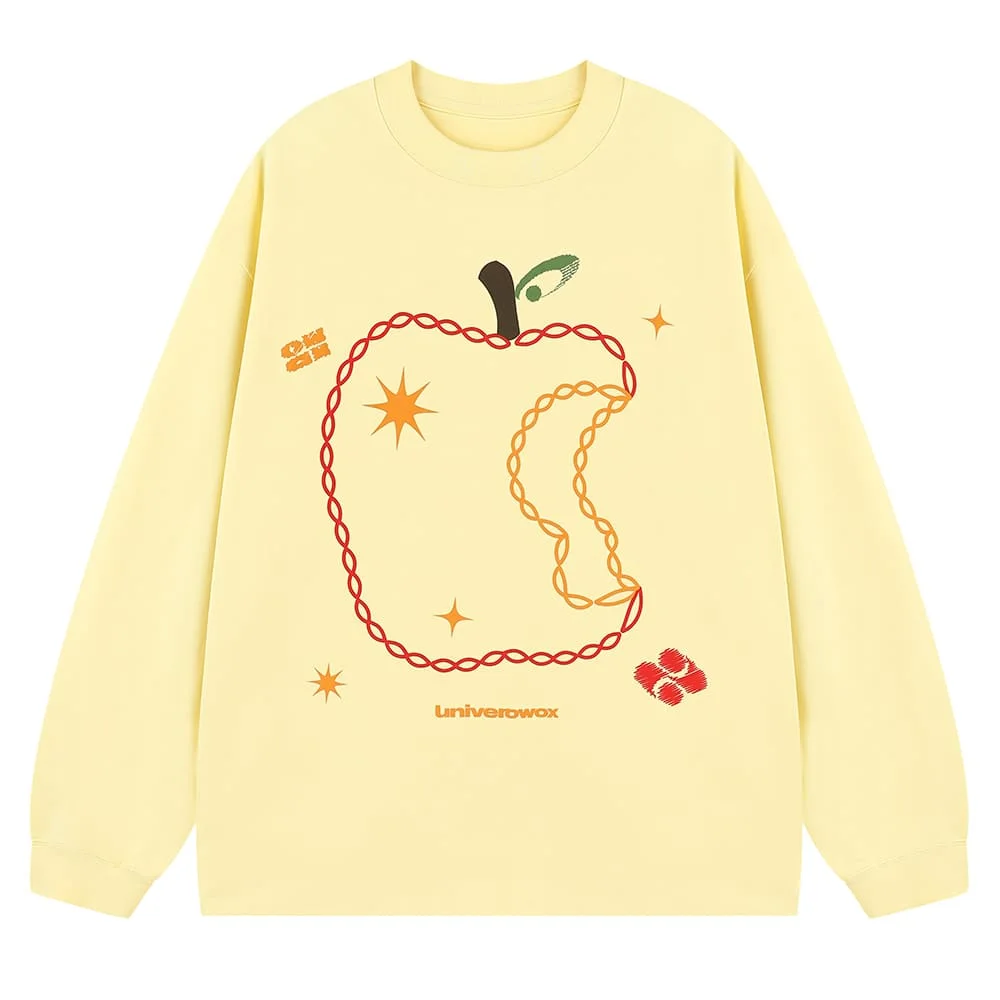
One simple method is folding the ribbed hem of your sweatshirt upward and inward so it rests right at your hipbone, rather than stretching over your seat. A roomy option like the Big Apple Oversized Sweatshirt, constructed from a cotton and polyester blend in versatile shades like yellow, black, grey, and white, provides generous chest volume. When paired with wide-leg bottoms, wearing this crewneck slightly gathered at the waist preserves your lower-body proportions without sacrificing the cozy drape.
For zip-up and hooded options, two-tone designs help break up broad chest panels visually. The 90s Plaid Grey & Red Reversible Hoodie and the Black & Yellow 90s Plaid Reversible Hoodie, both made from a polyester-cotton blend, allow you to switch between subtle solids and bold plaid. Leaving these hoodies half-zipped creates a soft V-shape up top, drawing attention toward your face and balancing broader trousers underneath.
- Ribbing fold: fold the bottom elastic band under itself to shorten the torso line naturally.
- Half-zip styling: unzip hoodies halfway to prevent a solid, bulky block of fabric across your chest.
- Color placement: use contrasting hoodie panels or lining to guide the eye vertically through the outfit.
T-Shirt Proportions: Hem Drops, Collars, and Sleeves
The humble t-shirt is frequently the foundation of daily outfits, yet small cut variations dramatically influence how wide pants read. A standard slim tee can look disconnected when paired with ultra-wide bottoms, making the head and shoulders appear disproportionately small. Conversely, an excessively long tee drapes past the hips, dragging your visual center of gravity downward.
The ideal base tee features dropped shoulder seams, a slightly wider collar rib, and a hem that sits just below the belt line. Exploring our range of soft boy t-shirts offers silhouetteThe overall shape an outfit creates, from fitted to loose and layered.s designed specifically to match the easy-going drape of relaxed trousers. When a tee has enough room through the sleeves—falling closer to the elbow rather than high on the bicep—it naturally balances the leg width below.
If you enjoy tailored or playful upper details, the Apple Embroidered Short Sleeve Tie Shirt, made of smooth polyester in black or yellow options, brings a structured tie accent to the collar. Pairing a collared piece like this with roomy bottoms adds gentle vintage charm while keeping your neckline structured and crisp.
- Sleeve length: elbow-skimming sleeves balance wide leg silhouetteThe overall shape an outfit creates, from fitted to loose and layered.s better than tight, short sleeves.
- Collar thickness: wider, sturdy neckbands keep oversized tees looking intentional and tidy.
- Hem drop: ensure untucked t-shirts hit no lower than the midpoint of your trouser pockets.

Hem Breaks: Puddle, Slight Break, and Ankle Crop
Where your trouser leg ends against your footwear defines the entire mood of your outfit. A puddle hem occurs when extra fabric folds intentionally over the top of the shoe, gathering once or twice before resting. This works best with wide-leg pants crafted from softer textiles, but you must ensure the back hem does not drag underneath your heel on the ground.
A slight break is the most versatile option for everyday wear. Here, the pant hem touches the front of your shoe, creating a single, subtle bend in the fabric crease while the rest of the leg stays straight. This keeps your look tidy and works seamlessly across both straight and tapered cuts, pairing well with vintage running sneakers, canvas low-tops, or chunky leather lace-ups.
An ankle crop finishes just above the shoe collar, revealing your socks or the top of high-top sneakers. Cropping is especially useful if you are shorter in stature, as it exposes the shoe completely and eliminates messy fabric pooling. When shopping for bottoms within our broader soft boy clothes catalog, factor in your inseam so you can plan whether you will crop, cuff, or let the trousers break naturally.
- Puddle hem: relaxed and slouchy; requires a shoe with sufficient height so hems stay off the ground.
- Slight break: timeless and neat; rests lightly on the vamp of your shoe without stacking fabric.
- Ankle crop: exposes footwear and socks; excellent for maintaining clean lines without shortening your legs.
Footwear Pairing: Choosing Sole Height and Toe Shape
Footwear serves as the foundation that supports the visual weight of wide or straight-leg trousers. If you wear delicate, narrow shoes with wide-leg denim, the trousers can completely swallow the footwear, making your feet look disproportionately small. To create balance, you need shoes with adequate sole thickness and toe presence.
Round-toe canvas sneakers, chunky retro athletic trainers, and lug-soled loafers are staples in this aesthetic. The rounded front provides a sturdy visual boundary where the pant hem can cleanly terminate. When wearing wide corduroys or loose chinos, a shoe with a sole height of 1 to 1.5 inches helps lift your hems off the sidewalk, keeping your pants clean and prolonging their lifespan.
For cropped trousers, your footwear choices open up significantly. High-top canvas sneakers, chukka boots, and desert boots fill the gap between the cropped hem and the foot gracefully. Consider the color connection between your socks, shoe tongue, and trouser cuff; matching sock tones to your trousers lengthens the leg line, while contrasting patterned socks create an expressive visual break.
- Chunky soles: provide necessary physical clearance and visual weight for wide trouser legs.
- Rounded toes: keep your feet visible beneath generous leg openings without looking dwarfed.
- Sock transitions: use matching socks to extend leg lines, or contrasting socks to highlight ankle breaks.
Seasonal Adaptations: Balancing Weight in Different Climates
Styling relaxed trousers across changing seasons requires swapping fabric weights while keeping proportions consistent. In humid or warm climates, thick denim and heavy fleece become uncomfortable quickly. You can maintain the relaxed silhouetteThe overall shape an outfit creates, from fitted to loose and layered. by shifting toward lightweight cotton poplin, linen blends, or fluid rayon trousers that move freely in the breeze.
During warmer months, pair breezy straight-leg pants with breathable tops from the soft boy tops collection, such as short-sleeve button-ups left unbuttoned over ribbed tanks. This keeps your outfit cool and comfortable while providing the layered, relaxed texture the style is known for. Sandals with substantial footbeds or woven slides can replace heavy sneakers without losing proportional balance.
In cooler conditions, wide trousers offer the practical benefit of easily hiding thermal base layers underneath. LayeringWearing pieces over or under one another to add depth, warmth or contrast. a dense knit over a collared shirt, topped with a wool overcoat or utility jacket, builds a balanced, academic look. The long lines of a mid-thigh coat complement wide trousers exceptionally well, creating continuous, graceful vertical drape from shoulder to hem.
- Warm climate: choose linen blends and light cottons; rely on unbuttoned short-sleeve shirts for airflow.
- Cool climate: utilize the roominess of wide cuts for thermal underlayers without altering the drape.
- Outerwear length: three-quarter and mid-thigh coats pair beautifully with wide trousers by reinforcing vertical lines.
Belt Selection and Waist Placement
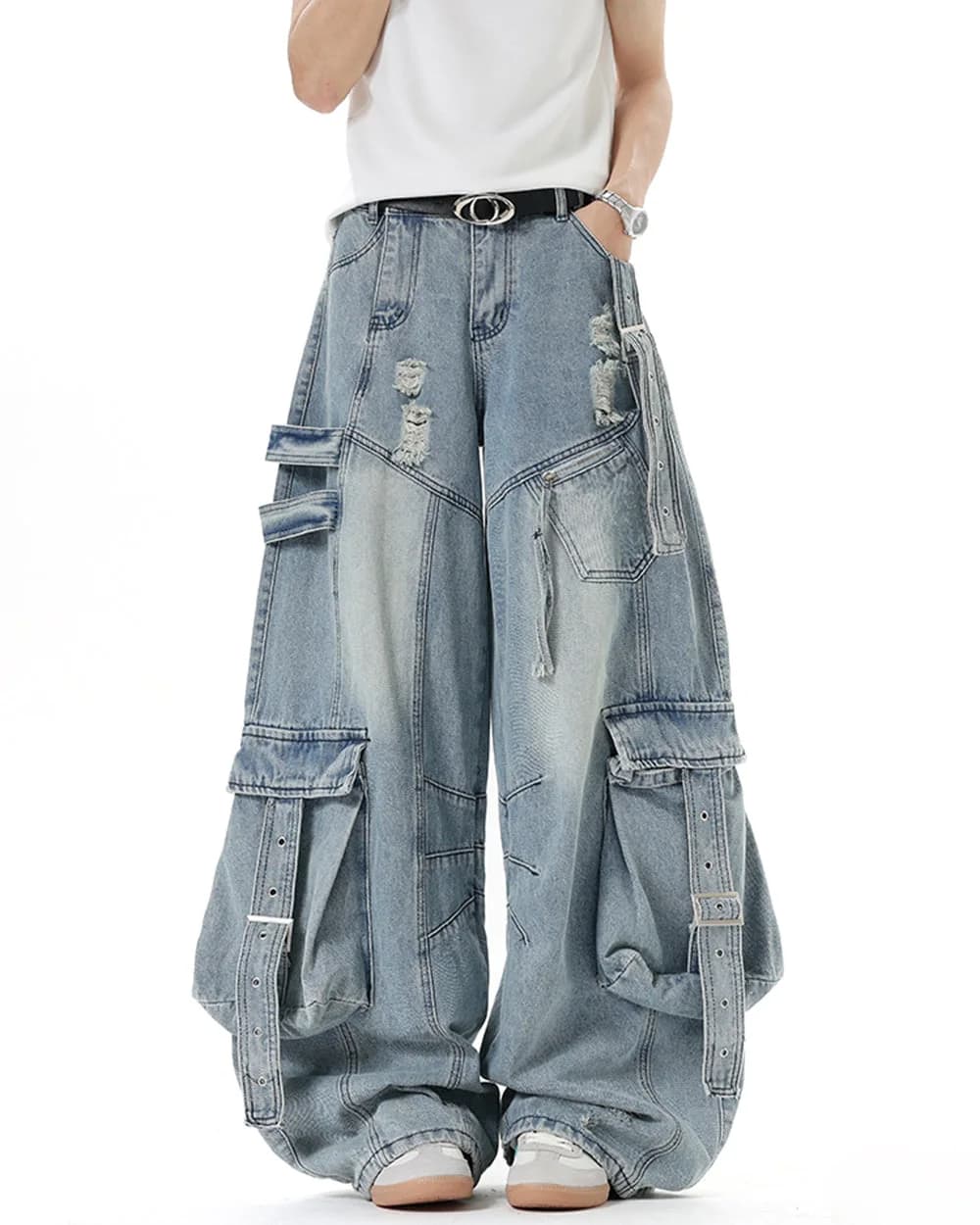
The belt you choose does more than hold your trousers in place—it provides a crucial dividing line between your upper and lower garments. A thin, formal dress belt can look lost against heavy corduroy or denim, whereas a medium-width leather belt with a brushed silver buckle grounds casual trousers with tactile appeal.
Woven cotton webbing belts, skate belts, and vintage-style leather belts in shades of chocolate brown, tan, or washed black work seamlessly with relaxed outfits. Leaving a small belt tail hanging slightly past the first belt loop is a classic relaxed styling choice that adds easygoing charm to an outfit, particularly when wearing a French-tucked top.
Waist placement also changes your entire proportional read. Mid-rise pants sit comfortably across the hips for a laid-back, slouchy feel, which pairs well with casual t-shirts and hoodies. High-rise trousers sit closer to your natural navel, which draws the eye upward, making your legs appear noticeably longer. Pair high-rise fits with fully tucked button-downs or cropped knitwear to take full advantage of that extended vertical line.
- Belt width: select medium-width belts (around 1.25 to 1.5 inches) to match relaxed pant loops.
- Buckle finish: brushed metals, matte finishes, and antique brass fit casual textures better than polished dress buckles.
- Rise placement: high rise elongates legs; mid rise provides a casual, grounded skater or vintage feel.
Monochrome vs. High-Contrast Bottoms
Color choice between your pants and top significantly influences how wide your silhouetteThe overall shape an outfit creates, from fitted to loose and layered. appears. A high-contrast combination—such as bright white wide-leg trousers paired with a dark navy sweatshirt—draws immediate attention to the horizontal seam at your waist. This clearly separates your top and bottom halves, which is great if you want to highlight leg length, but it can also make your torso look shorter if not balanced properly.
Monochrome or low-contrast pairings soften silhouetteThe overall shape an outfit creates, from fitted to loose and layered. boundaries. Wearing oatmeal-colored straight trousers with an ecru knit, or washed black jeans with a charcoal hoodie, creates a continuous vertical line. This allows you to wear wider garments without looking shorter, because the eye travels smoothly down the outfit without abrupt horizontal breaks.
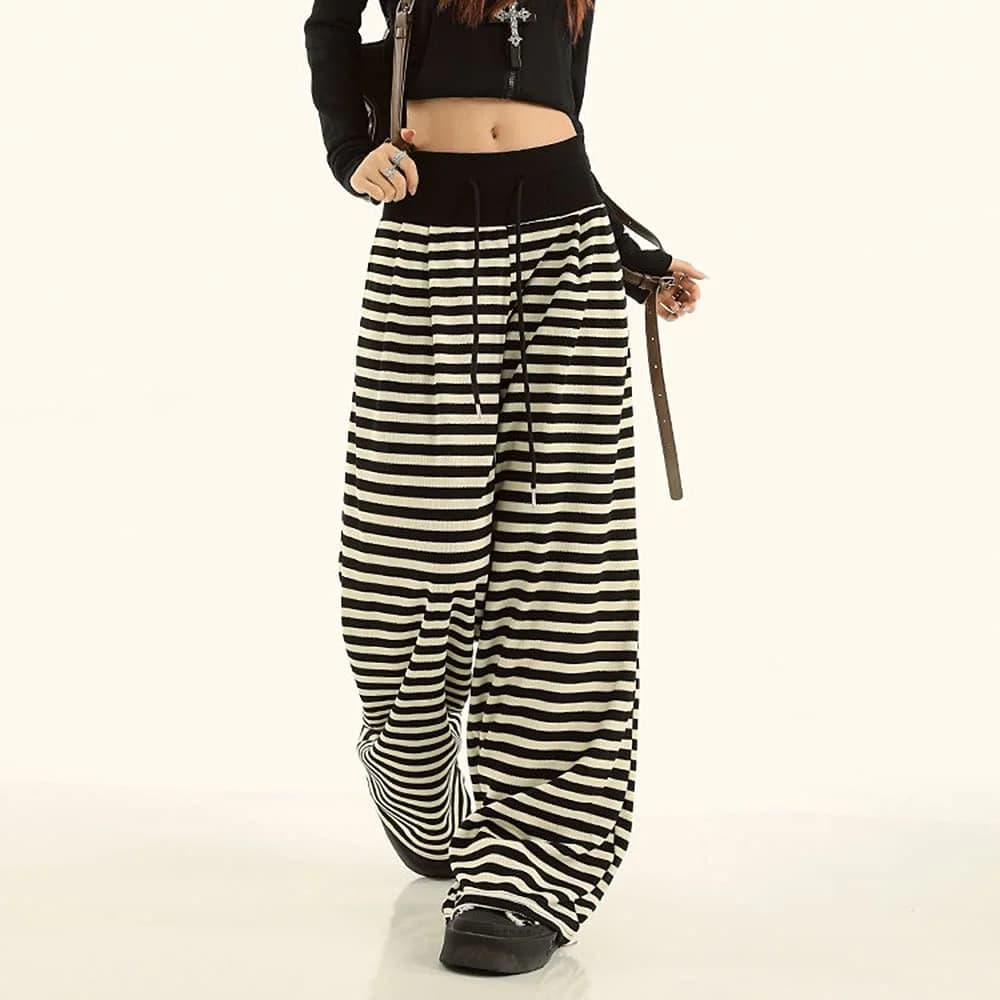
If you enjoy wearing patterned pants or bold color-blocking, anchor the rest of your outfit with muted tones. For example, pairing bold graphic pants like The Problem Child Wide Leg Pants with a neutral black or white top keeps the pants as the hero piece while avoiding visual clutter. Balance high-contrast colors by incorporating smaller recurring tones in your accessories, socks, or collar.
- Low contrast: elongates your frame and allows you to wear wider silhouetteThe overall shape an outfit creates, from fitted to loose and layered.s without visual interruption.
- High contrast: clearly defines waistlines and leg lengths; best executed with a clean tuck.
- Pattern balance: let one piece carry complex patterns while surrounding pieces provide calm, solid support.

Common Proportion Pitfalls and Quick Adjustments
One common mistake when styling relaxed bottoms is letting multiple baggy items sag simultaneously without structure. When an oversized hoodie drops well past the hips over puddle-hem trousers with low-profile shoes, the entire body line is pulled downward into an unshaped column. You do not need to switch to tight clothing to fix this; simple styling tweaks restore balance instantly.
First, check your shirt hem length. If your untucked top completely covers your back pockets, try a gentle French tuck at the front, or fold the hem upward against itself. This small step reveals the waistband and instantly lengthens your lower half. Second, check your pant hems. If your trousers are bunching excessively around your ankles and sweeping the pavement, roll the cuffs once or twice to show clean footwear definition.
Another frequent pitfall is selecting shoes with insufficient sole thickness. If your wide-leg hems swallow your shoes entirely, switch to footwear with a firmer, wider footprint, like chunky retro trainers, round-toe boots, or thick-soled oxfords. These simple adjustments preserve the comfortable, laid-back aesthetic you love while ensuring your outfit looks purposeful and well considered.
- Avoid the double sag: balance slouchy bottoms by gathering, tucking, or cropping your top.
- Prevent hem dragging: cuff long trousers if they bunch more than twice over your shoe.
- Fix swallowed shoes: swap thin canvas plimsolls for sneakers or boots with chunkier outsoles.
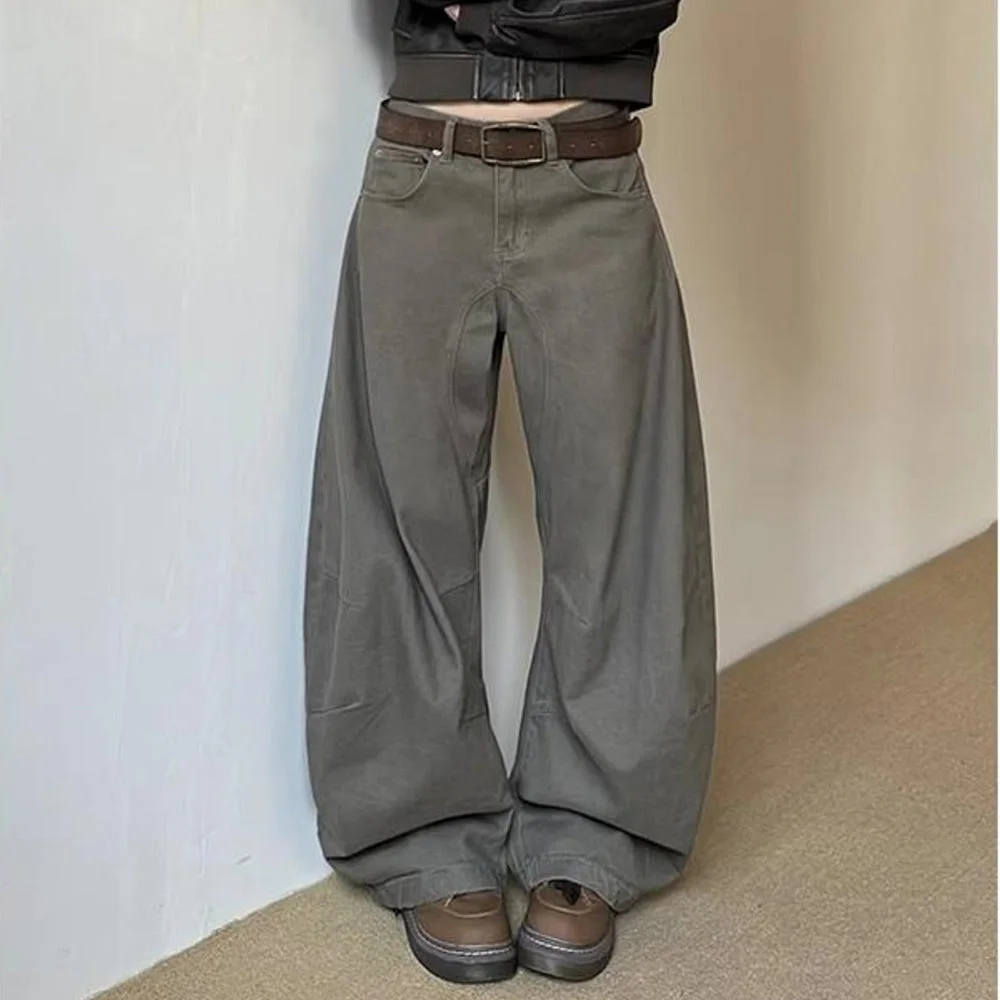
Soft Boy Pants Outfit Proportion Checklist
Before heading out the door, take a moment to evaluate your outfit in a full-length mirror using this reliable proportion checklist. Checking your look from head to toe ensures each garment complements your frame comfortably, allowing you to walk with confidence.
Start at your head and shoulders: is the shoulder seam of your top sitting naturally or dropping softly, and does the chest width harmonize with the breadth of your pants? Move down to your midsection: have you created a clear waist anchor using a full tuck, French tuck, or well-positioned shirt hem? Finally, examine your lower half: are your trouser cuffs resting cleanly on your shoes with your preferred break, and do your soles have enough substance to support the fabric volume?
Keep this checklist handy whenever you assemble new combinations. With a clear eye for width, length, and layeringWearing pieces over or under one another to add depth, warmth or contrast., you can easily adapt your wardrobe to create relaxed, comfortable outfits that always look intentional.
- Waist anchor: is my waistline indicated via a tuck, belt, or proper top length?
- Fabric harmony: do the weights of my top and bottom garments feel balanced, not mismatched?
- Hem break: is my trouser length intentional—either a clean crop, gentle break, or deliberate puddle?
- Footwear support: do my shoes have enough volume and sole height to ground wide-leg openings?
- Comfort check: does the outfit allow easy, natural movement throughout the entire day?