
Created by the Kawaii Vibe editorial team. Our named style desks are editorial personas. Product details and availability can change.
The short answer: pick one ring to be the star, add two or three quieter supporting rings on other fingers, and leave at least one finger bare. That single rule fixes most overcrowded hands. Stacking looks messy when every ring is shouting at the same volume, not because you wear too many.
This guide walks through it finger by finger, then looks at scale, metal tone, colour, nails and typing. It also covers a few outfit-style hand combinations you can copy and adjust. Mika from The Style Desk writes these as styling ideas, so use them as starting points and trust what feels right on your own hands.
If you want to browse while you read, the main shelves are aesthetic rings, the wider rings collection and the jewelry collection. Everything below works with whatever you already own too.
The Quick Formula: One Star, Two Helpers, One Rest
Start with a count. For everyday wear, four to six rings across both hands is a comfortable range for most people, and you can go higher for a night out. Within that, assign jobs. One ring is the star: the chunkiest, most colourful or most detailed. Two or three rings are helpers: thinner, plainer, or a similar colour to the star. And at least one finger stays empty so the eye has somewhere to rest.
This works because a hand is small and busy already. Knuckles, nails, veins and movement all compete for attention. When you give the eye a clear first stop, it reads as styled instead of cluttered. Think of it like an outfit with one statement piece and a calm base.
Try it with what you own right now. Lay out every ring on a table and pick the star first. Then remove anything that looks too similar to it, because two competing stars cancel each other out. Put the helpers on the opposite hand or at least two fingers away from the star. Take a quick photo, since a phone picture shows crowding faster than a mirror does.
If you are still building a collection, it helps to buy in roles rather than at random: one bold piece, a couple of slim ones, and maybe one playful accent.

Choosing Your Hero Finger
The hero finger is where your star ring lives, and the best choice depends on how you move your hands. The middle finger is the most central and gives a balanced look, especially for a chunky or colourful ring. The index finger is the most visible when you point, hold a cup or gesture, so it suits a ring you want people to notice. The ring finger feels classic and is easy to dress up or down.
Pick based on comfort first. If you type, draw, game or hold a pen all day, avoid putting the biggest ring on a finger that bends a lot or rubs against a neighbour. The thumb can carry a bold ring with less fuss for some people, since it sits slightly apart, but it may bump against surfaces, so try it for an hour before committing.
A simple test: put the star on, make a loose fist, then open your hand flat. If the ring pokes the next finger or spins to the side, move it. Also check how it looks from your own point of view, not just in the mirror, because you will see your hands from above all day.
Once the hero finger is set, everything else is arranged around it. Helpers sit one or two fingers away, never directly beside it unless they are very slim.
A Finger-by-Finger Map
Here is a layout you can borrow. Thumb: one statement band or a single fun ring, worn alone. Index: a medium ring or a slim stack of two. Middle: your star or a slim helper. Ring finger: a delicate pair or a single band. Little finger: one tiny ring, often at the knuckle or just a simple band.
The pinky is the most underrated spot. A small ring there adds balance when the other hand is busy, and it rarely gets in the way of typing if it sits low on the finger. Many people also like wearing a midi-style ring higher on the finger, but check that it stays put and does not pinch when you bend.
Mix hands for balance. If your dominant hand has the star and two helpers, give the other hand one or two quiet rings. Matching ring counts on both hands can look stiff, while a slight imbalance looks relaxed and intentional.
A sample layout: left hand with a slim band on the ring finger and a small ring on the pinky; right hand with a colourful ring on the middle finger and a plain band on the thumb. That is four rings, three jobs, and four fingers left empty. It reads as stacked without feeling heavy.
Scale: Mixing Chunky, Slim and Tiny
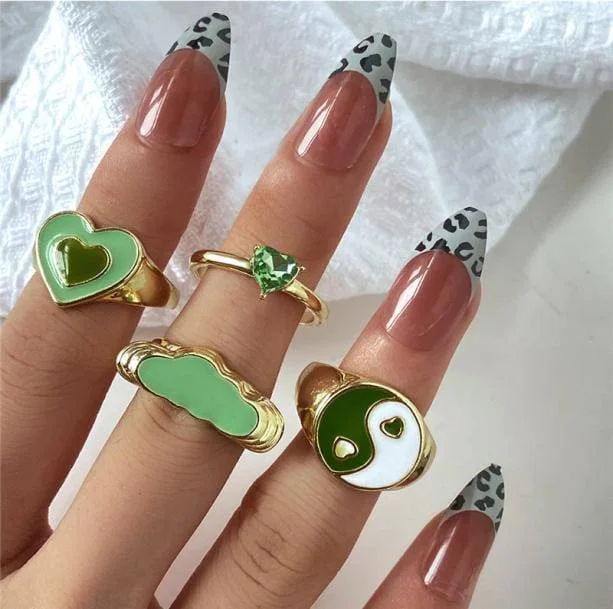
Scale is the part most people skip, and it matters more than the number of rings. A good stack has three sizes in it: one big, one medium, one small. If everything is the same width, the hand looks like a row of beads. If everything is chunky, the fingers look crowded fast.
Pair a wide or sculpted ring with slim neighbours. Put two thin bands together on one finger only if both are plain, since two detailed thin rings tangle visually. Keep chunky pieces to one per hand when your fingers are short or you wear lots of bracelets, because wide rings take up more room than they seem to.
Think about the gap between rings too. A little skin showing between rings gives the stack shape. On one finger, stacking two or three rings snugly can look neat, but only if they sit flat and do not twist. Test them by turning your hand and shaking it gently. If they clink and rotate, give them more space or swap one out.
When comparing options online, check the photos for a finger reference and read the sizing details on the listing rather than guessing. Some pieces are listed as one size, so it helps to know how snug or loose you like rings before ordering.
Mixing Metal Tones Without a Clash
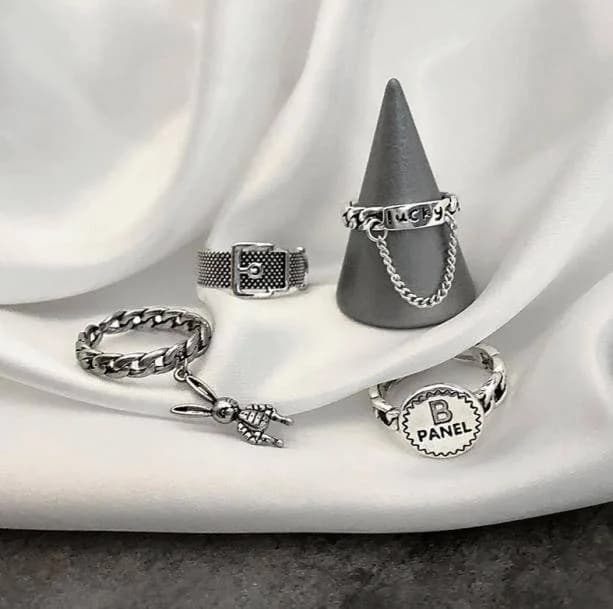
Mixing silver and gold tones is fine. The trick is to make it look planned. Pick a main tone for about two thirds of your rings, then use the other tone as the accent. A hand with three silver-tone rings and one gold-tone ring looks styled. A hand with exactly half and half in random spots can look accidental.
A bridge piece helps. That is a ring containing both tones, or a coloured ring that sits happily with either. Colourful acrylic or enamel-style designs often act as a neutral between metals because the eye focuses on the colour, not the finish. If a piece has no stated material on its listing, avoid assuming what it is made of, and judge it by how it looks in the photos.
Repeat tones across your jewellery as well. If your rings lean silver, one matching earring or necklace keeps the whole look connected, even when the other pieces are mixed. If you wear a watch or bracelet, let it join the main tone or the accent, not a third tone.
One quick check before leaving the house: hold your hands out at arm's length. If you can name the main tone and the accent in a second, you are good. If you cannot, remove the ring that is confusing things.

Adding Colour with Y2K-Style Rings
Colour is where cute stacks come alive, and also where they get messy. The easy fix is a limit: no more than two colours per hand, plus your metal tone. Choose one colour for the star and echo it in a helper, or pick a neutral base and let one colourful ring do the talking.
The Y2K Aesthetic Rings come in white, blue, green, pink, orange, dark green and brown, in one size. That range is useful for planning. White or brown can act as a softer pairing with metal rings. Pink or orange suits a playful star. Dark green and blue sit well against both gold and silver tones. Because it is one size, think about whether you prefer your rings a bit loose or snug and which finger you want it on before you order. Details beyond the listed colours and size are not given, so check the product page.
Try a colour-matching idea: wear a pink ring as your star on the middle finger, then add a plain metal band on the ring finger and a slim ring on the other hand. Your clothing can echo the colour in a small way, like a top, a bag charm or a hair clip.
If you want a calmer take, choose the white or brown option and keep everything else minimal. The shape stays cute without adding more colour to manage.

Rings and Nails: Length, Shape and Colour
Nails are part of the stack, so plan them together. Long nails already draw attention, which means fewer or slimmer rings usually look better. Short, natural nails can handle chunkier rings because the hand has more breathing room. If you have a detailed manicure, treat the nails as the star and keep rings simple.
Match, don't copy. A pink ring with pink nails can look sweet but can blur together, while a pink ring with a neutral or contrasting nail makes the ring pop. Clear or milky nails let any ring colour work. If you have bold nail art, go for plain metal bands or just one coloured ring that picks up one shade from the design.
Check the practical side. Long nails can catch on wide rings when you pick things up, and very tall or sculptural rings may knock against nail tips. Slide a ring on and try picking up a coin from a flat surface. If the nail and ring fight, choose a lower profile style or move it to a finger where the nail is shorter.
Also think about fresh nails. Gel or acrylic can feel slick, and rings may spin more than usual. A slightly snugger fit or a different finger can help. Take rings off when applying lotions, nail products or cleaning products, so residue does not sit under the band.
Typing and Daily Comfort
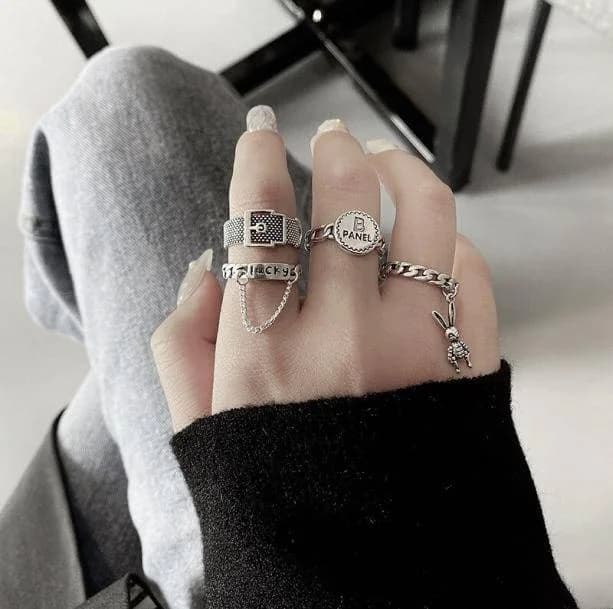
If you type a lot, comfort decides which rings stay on. The fingers that do the most bending are the index and middle on both hands, and thumbs on the space bar. Rings with tall settings, sharp edges or wide flat faces can press against keys, desks and laptop edges. Smooth, low profile pieces are usually easier at a keyboard.
Try a ten minute typing test. Put your planned stack on and type a paragraph, then use your trackpad or mouse. Notice any clicking sounds, pinching between fingers or rings sliding to the side. If something annoys you in ten minutes, it will annoy you in an hour. Move that ring to the other hand, or save it for non-typing days.
A good desk day setup is one slim band per hand and a single fun ring on the hand that uses the mouse least. Rings on the pinky and ring finger often stay out of the way while typing, but it varies by person. If you write by hand, check the pen side of your hand, because a bulky ring on the index finger can rub the pen.
Comfort also means taking breaks. If a ring leaves a deep mark, feels tight or bothers your skin, take it off and choose a different fit. If you have ongoing concerns, ask a qualified professional rather than guessing.
Fidget Rings in a Stack
Some people like something to twist or spin while thinking, in meetings or on the train. If that sounds like you, look at the anxiety and fidget rings collection and treat a spinning ring as a helper in your stack, with a clear job: it is the ring you play with. This is a styling and habit idea, not a medical one, so there are no health claims here.
Where you put it matters. Place the moving ring on a finger and hand where your other thumb can reach it easily, often the middle or index finger of your non-dominant hand. Keep neighbouring rings slim and smooth so they do not catch on its moving parts. Avoid putting it beside a chunky star ring, since two big pieces on adjacent fingers can rub as you twist.
Think about noise as well. Metal on metal can click in quiet rooms, so a gap between your fidget ring and other rings keeps things calm. If you work in a quiet office or library, test it first at home.
For looks, treat the fidget ring like any other: pick it to match your main tone or your accent colour. That way it blends into the stack, and nobody has to know it is also your favourite thing to turn while you think.

Three Hand Looks You Can Copy
Look one, the soft everyday: a slim plain band on the ring finger, a small ring on the pinky of the same hand, and a single colourful ring on the other hand's middle finger. Wear it with a plain tee, jeans and a tote. The outfit is quiet, so the colour reads as a playful detail. Swap in a different colour from the Y2K Aesthetic Rings range to match a bag charm or sneakers.
Look two, the desk day: one slim band on each ring finger, one low profile ring on the right index, and nothing on the thumbs. Pair it with a knit, shirt or cardigan with narrow cuffs. Nothing catches on sleeves or keys, and the hands still look finished. It works for classes, remote work or an office.
Look three, the night out: a bold star ring on the middle finger, two slim helpers on the opposite hand, a pinky ring, and one bare finger on each hand. Go with a simple dress or black top so the rings are the details. Keep nails neutral or match the star's colour family. If you wear bracelets, choose one and keep it thin.
Each look has a star, a few helpers and rest spaces. Change the pieces, not the structure, and you can build dozens of variations from the same small collection.
Matching Earrings and Other Jewellery
Hands are one part of the picture. A stack looks more intentional when your earrings and other pieces share something with it, such as a tone, a shape or a mood. You don't need to match everything. One echo is enough.
If your rings lean silver and sweet, the Minimalist Aesthetic Flower Earrings come in silver and gold, so you can pick the one that matches your main tone. For a space-and-stars mood, the Celestial Aesthetic Earrings are listed in gold and silver, and the Star Child Aesthetic Stud Earrings come in silver, which suits a small, quiet pairing with slim bands. If you want a pop of pink to echo a coloured ring, the Indie Aesthetic Flower Earrings are listed in pink and plastic.
Keep balance in mind: if your hands are full, choose smaller earrings, and if your earrings are bold, simplify the rings. Do the same with necklaces and bracelets. A good rule is that only one area, hands, ears or neck, gets to be the loudest.
You can explore more options in the jewelry collection and mix across categories to build a small set that works together, rather than buying single pieces that never meet.


Weather, Fit and Wear Over a Day
Fingers can feel different depending on the day. In hot or humid weather, many people find rings fit snugger, while in cold weather they can feel looser and slide around. That is a common experience, not a rule, so test your stack at different times and keep a slightly looser option and a snugger option on hand.
Plan around activity. For workouts, swimming, cooking and cleaning, it is usually easier to take rings off and keep them in a small dish. Cold winds and gloves can pull rings off or twist them, so if you wear gloves, leave the chunkiest rings at home or wear them on top only if the gloves are stretchy and roomy. Carry a small pouch so they do not scratch each other in your bag.
Sleeves and layers matter too. Chunky rings can snag on knits, and thin fabrics can catch on raised settings. If you wear a lot of knitwear, choose smoother shapes. With short sleeves or sleeveless outfits, hands are more visible, so a slightly bolder stack works.
Over a long day, check your hands at lunch. If a ring feels tight, move it to a roomier finger or take it off for a while. Comfort beats the look every time, because you will fidget with a ring that bothers you.
How to Compare Options Before You Buy
When shopping, compare rings by role, not just by cuteness. Ask: is this a star, a helper or a rest piece? If you already own three stars, a fourth will not help. Browse aesthetic rings for personality pieces and the broader rings collection for plain bands and helpers that tie things together.
Read each listing closely. Note the listed colour options, the size information, and the material if one is given. If the material is blank or vague, do not assume. Look at the photos for thickness, height off the finger and edge shape, because those decide comfort. If a listing says one size, think about how you like rings to fit and which finger will take it before ordering.
Build a small test plan. Choose one new ring and check that it works with at least three items you already own: a metal band, a coloured piece and a plain nail look. If it only works in one outfit, it may not earn a spot.
Also compare the cost per wear, in plain terms. A simple ring that fits every stack gets used more than a dramatic ring that needs a special outfit. Balance both so you have fun pieces and workhorses.
Common Pitfalls and a Quick Checklist
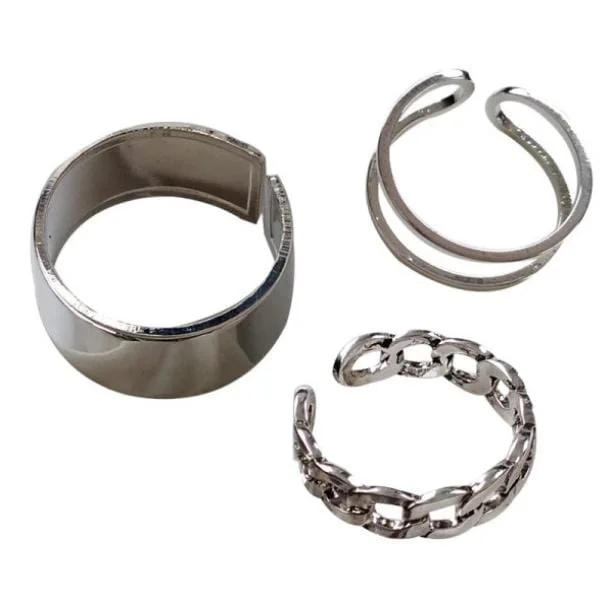
The most common mistakes are easy to spot. Too many stars on one hand. Three colours plus two metal tones. Chunky rings on adjacent fingers that rub. Loose rings that spin and hide their design. Wearing every ring you own because you can. Forgetting that nails, bracelets and watches count as part of the look too.
Another trap is ignoring comfort until it hurts. If a ring catches on keys or pinches when you grip a bag handle, you will stop wearing it, so test before relying on it. And remember that skin can react to some jewellery. If you notice irritation, take the piece off and speak to a qualified professional if it continues.
Use this checklist before you leave the house. It takes under a minute and catches most problems.
Finally, treat your stack as flexible. Swap one ring a day and see what feels fresh. The best hands are not the fullest ones, they are the ones where each ring has a reason to be there.
- Do I have one clear star ring?
- Is there at least one empty finger?
- Do I have a main metal tone and just one accent?
- Are there no more than two colours on each hand?
- Do my nails and rings support each other instead of competing?
- Can I type, grip and gesture without pinching or snagging?
- Do my earrings or other jewellery echo one detail from my hands?


