Created by the Kawaii Vibe editorial team. Our named style desks are editorial personas. Product details and availability can change.
Building a jewelry stack that feels natural with relaxed tailoring and streetwear comes down to structure. When your daily rotation leans toward dropped shoulders, boxy tees, and structured outerwear, standard delicate jewelry often gets lost or snags on heavy fabric. Tomboy styling relies on purposeful lines, tangible weight, and zero fuss.
Getting this right means understanding where your collar lands, how your metals reflect light, and which chain links anchor your look without creating visual static. Instead of piling on random chains, focusing on collar clearance and proportion lets you wear jewelry that holds its own against dense fleece, stiff canvas, and broken-in denim.
Solving the Ribbed Crewneck Dilemma
The heavy cotton crewneck is the backbone of relaxed styling, but it is also the easiest collar to crowd. A ribbed neckband creates a thick horizontal border sitting directly against the collarbone. If your chain drops right onto that ribbing, it flips awkwardly, hides behind the fabric, or shifts sideways every time you turn your head. To fix this, you need either immediate clearance inside the collar line or an intentional drop far past the ribbing seam.
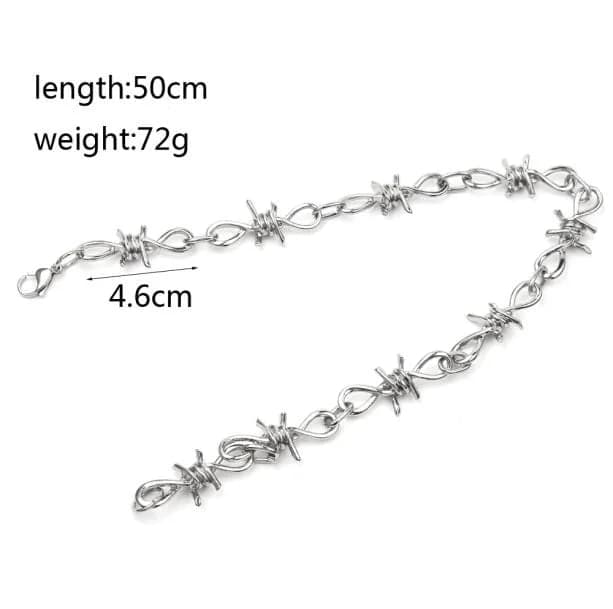
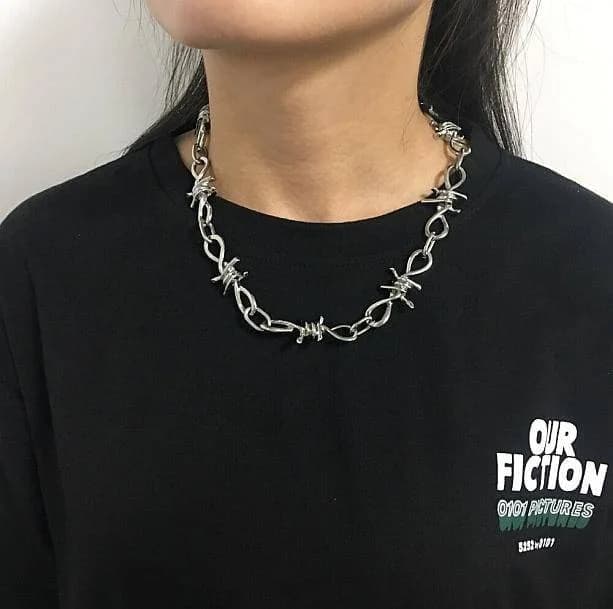
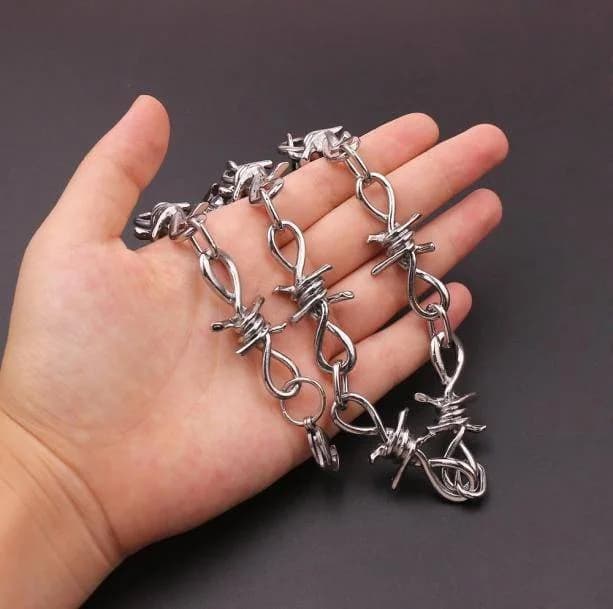
Short chokers or compact neck rings sit inside the throat hollow above the fabric edge, keeping your neck area clean and separated from the garment. For a stark, minimal accent that rests cleanly against the skin above a standard crew cut, the Metal Wire Necklace offers a continuous, rigid line that avoids the bunching typical of loose links. If you prefer chains that hang over the tee, jump straight down to a mid-chest drop so the metal hangs completely flat against the smooth chest fabric.
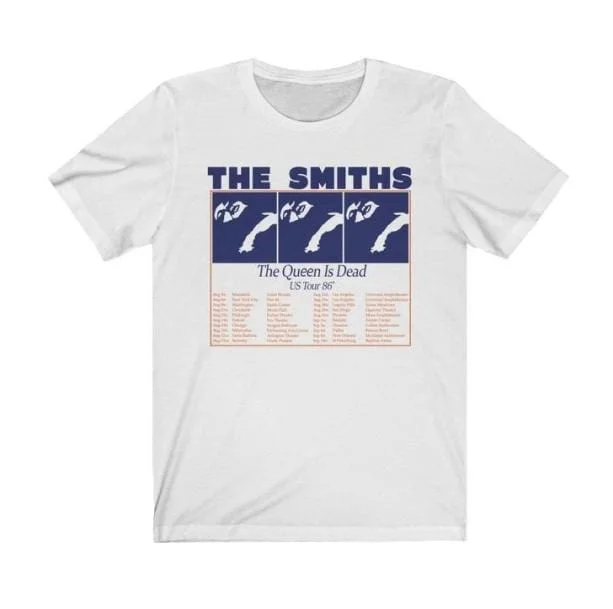
When pairing a graphic cut like The Queen Is Dead T-Shirt with outerwear, make sure your pendant does not compete directly with high-placed screen prints. Dropping your main pendant three inches below the neckline keeps the graphic legible while establishing clean visual layers.
- Keep short pieces resting on bare skin at least one inch above the ribbed collar.
- Choose mid-length chains that clear the collar band entirely to avoid awkward flips.
- Avoid delicate chains with low-profile pendants that easily slide beneath heavy jersey cotton.
Open Collars and Camp Shirts
Camp collars, unbuttoned flannels, and open-front work shirts create natural vertical and diagonal breaks across the chest. Unlike crewnecks, these open silhouetteThe overall shape an outfit creates, from fitted to loose and layered.s expose skin while framing your neck with folded lapels. The goal here is avoiding entanglement between the lapel points and your chains while anchoring the open space created by the unbuttoned placket.
A flat curb or figaro chain resting just below the collarbones gives you a strong horizontal line that counters the downward points of an open shirt. If you wear an undershirt, match the chain drop to the undershirt collar rather than the outer shirt lapels. Wearing a dark rib tank underneath an unbuttoned overshirt provides an even surface where polished links stay front and center without slipping under the side fabric.
If you are browsing through curated Tomboy Necklaces, pay close attention to clasp types and chain profiles. Flat links like curb, Cuban, and marine links sit flush against the skin, making them far less likely to catch on the fold of a flannel collar than textured rope chains.
High Necks, Hoodies, and Dense Outerwear
Hoodies and mock necks completely cover the collarbone, presenting thick layers of fleece or knitwear. Dainty chains disappear immediately into fleece, while lightweight chains get pulled backward by the weight of the hood. To counter these heavy textiles, your jewelry pieces need physical presence and sufficient chain length to drape forward naturally.
A sturdy chain needs to measure long enough to clear the drawstring zone of a hoodie, typically hanging lower down the sternum. When layeringWearing pieces over or under one another to add depth, warmth or contrast. over structured military styles like the Army Girl Jacket, your jewelry has to compete with utility pockets, storm flaps, and heavy brass zippers. Choosing wide links or a solid bar pendant ensures the jewelry reads as a deliberate focal point rather than an accidental strand caught in utility hardware.
In colder settings, high-density fabrics also cause friction that spins necklaces around. Using heavier center pendants keeps the closure at the back of your neck where it belongs, preventing that annoying slide where the clasp migrates to the front by midday.

Choosing Metal Finishes for Casual Outfits
Selecting metal finishes is less about strict rules and more about matching the mood of your wardrobe. High-polish chrome and mirrored silver bring a sharp, modern street look that pairs naturally with black denim, crisp white tees, and technical outerwear. They offer a bright, reflective contrast that pops against dark fleece and structured twill.
Antiqued silver, brushed steel, and oxidized pewter offer a muted, utilitarian feel. These finishes integrate smoothly into distressed skate staples, work jackets, and vintage-wash textiles because they do not reflect blinding white highlights. When styling casual pieces from the wider Tomboy Clothes range, an aged metal finish feels grounded and lived-in from the first wear.
Warm metals like brass and yellow gold add depth to earthy color schemes such as olive drab, chocolate brown, and washed khaki. If your daily jacket is faded army surplus, warm metals echo the undertones of the canvas, preventing the jewelry from looking too sterile or out of place.
If your casual outfit already has visible jacket or top hardware, choose one brushed metal accent and keep other accessories simple. For an everyday outfit with roomy tops, cargo trousers and an outer layer, the K-Pop Boy Outfits collection offers a separate styling direction; compare garment measurements when choosing a layer over your top.
A brushed metal finish can sit quietly beside a graphic tee when the print already supplies color and texture. Try one simple chain with a varsity-style layer and straight-leg denim, leaving the shirt graphic as the main accent. Keep other jewelry minimal so the neckline remains readable. For related American-casual outfit ideas, browse the Amekaji Clothes collection.
- High-polish silver creates sharp contrast against deep blacks and saturated tones.
- Oxidized finishes work best with vintage washes, distressed canvas, and workwear.
- Brushed brass and warm gold complement warm neutrals, olive green, and tan.

Mixed Metals Without the Mess
Mixing silver and gold can look messy if the distribution feels accidental. When you toss on a random yellow gold chain alongside a single silver ring, it often looks like you got dressed in the dark. The secret to mixing metal tones seamlessly is repeating each tone at least twice across different zones of your outfit.
If you wear a silver chain, introduce gold through your rings or a mixed-metal bracelet that already combines both shades in its construction. Another clean method is matching your jewelry finish to the hardware built into your clothes. If your outerwear features prominent brass snaps, wearing a silver chain with a brass or gold signet ring bridges the two shades throughout your full silhouetteThe overall shape an outfit creates, from fitted to loose and layered..
Take a look at your accessories to help anchor the mix. Belt buckles, wallet chains, and bag clips count toward your overall metal balance. When you balance hardware across your torso and waistline, combining cool and warm tones looks like an intentional styling decision rather than an afterthought.
- Distribute each metal tone in at least two places across your jewelry and accessories.
- Use pieces that combine both metals to serve as an anchor for the whole stack.
- Factor in jacket zippers and belt hardware when balancing gold and silver tones.
The Three-Piece Layering Formula
LayeringWearing pieces over or under one another to add depth, warmth or contrast. without clutter requires a strict rule of hierarchy: base, anchor, and accent. Piling on three chains of similar thickness and length creates a tangled, chaotic mess that twists together before you even walk out the door. Each piece in your stack needs to serve a different structural purpose and occupy its own vertical zone.
Your base piece is usually your shortest layer, such as a mid-width flat chain resting near the collar. The second piece is your anchor, which drops lower and provides visual weight, often featuring a distinct link style or a solid bar. The third piece, if you choose to wear one, should be a longer accent chain that clears the anchor entirely, sitting comfortably on the mid-chest.
To keep this stack looking natural rather than fussy, limit yourself to varying chain gauges. Combine a tight 3mm curb chain with a wider 6mm link to establish clear visual contrast. When the textures and scale differ significantly, each chain keeps its visual identity, preventing that tangled ball of metal look.
- Zone 1: Short base chain (flat link, sits high near the clavicle).
- Zone 2: Mid-length anchor (heavier gauge or geometric pendant).
- Zone 3: Optional long drop (clears the anchor by at least two inches).
Rings, Cuffs, and Wrist Spacing
Wrist and hand styling provides immediate edge, especially when wearing rolled cuffs or boxy short-sleeve button-downs. However, overloading every finger creates clunky hand movements and snags on pocket linings. The key to relaxed ring styling is asymmetry, leaving breathing room so your hands look strong rather than weighed down.
Try concentrating two rings on one hand—like a wide thumb band and a square signet on the opposite index finger—while keeping the other hand minimal with a single flat band. When adding wristwear, balance a bare wrist against a solid cuff or a structured watch. Avoid lightweight, dangling charms that jingle constantly or catch on your desk while typing.
For a cohesive everyday rotation, explore the broader Tomboy Jewelry collection to source solid signets and clean cuffs. Sticking to geometric faces, flat edges, and brushed surfaces keeps your hands looking effortless while standing up to daily physical activity without denting or twisting.
Bridging Upper Jewelry with Waist Chains
Jewelry styling does not stop at your chest; it naturally extends down toward your waistline. Integrating functional hardware at the hip grounds relaxed fits, drawing the eye down and balancing out top-heavy layers like oversized jackets or winter hoodies. Pant chains provide an industrial, grounded edge that ties directly into the neckwear you choose up top.
If you style utility bottoms like the Aesthetic Pants With Chain, the included side hardware creates a low-slung focal point. To make this work seamlessly, match the chain link profile on your pants to your necklace. Pairing an industrial curb pant chain with a delicate rope necklace feels disconnected; matching it with an equally clean, angular chain creates an intentional line from collar to hip.
A similar balance applies to bold statement bottoms like the Red Pants With Chains. Because these pants carry heavy color and built-in metal accents, keep your chest layers refined and quiet. A single silver band at the neck prevents your overall outfit from feeling crowded by too many competing hardware points.
- Coordinate link styles between your neckwear and your waist hardware.
- If your pants feature heavy metal chains, scale back to a single clean chain up top.
- Ensure waist chains hang naturally alongside your pockets without pulling fabric awkwardly.

Outerwear and Hardware Compatibility
Outerwear creates the ultimate frame for jewelry, but competing metal elements can quickly overwhelm an outfit. Heavy utility jackets come loaded with their own metal footprint: brass snaps, chunky zipper pulls, D-rings, and grommets. When your jacket is already doing heavy visual lifting, your jewelry needs to complement that hardware rather than fight it for dominance.
Structured choices like the Dark Academia Jacket present clean, tailored lapels and classic buttons, offering an uncluttered canvas for sharp silver chains or layered lockets. The flat lapel framing leaves the upper chest open, letting polished links catch the light without running into metal zippers or pocket hardware.
Before walking out the door, take a step back and check the balance. If your jacket has high-contrast silver hardware on the chest pockets, keep your necklace inside your collar, or skip the pendant in favor of strong rings and a solid cuff. Let one element take center stage so your outfit stays streamlined and purposeful.
- Tailored coats with horn buttons leave room for bolder, multi-strand neckwear.
- Jackets with heavy exposed chest zippers look best paired with simple chokers or rings.
- Match the visual weight of your chains to the fabric thickness of your outer layer.
Earrings and Piercings with Relaxed Fits
Ear jewelry frames your jawline and can sharpen the soft, unstructured silhouetteThe overall shape an outfit creates, from fitted to loose and layered.s typical of oversized streetwear. While traditional styling might pair dainty drops with casual wear, tomboy aesthetics favor clean architectural lines, industrial clickers, and solid mini hoops that sit close to the lobe without dangling into high collars.
Thick, compact huggies in polished stainless steel or oxidized silver give you a sharp accent that never snags on scarf yarn or sweater necks. If you have multiple lobe or cartilage piercings, build a subtle gradient using slightly decreasing hoop diameters as you move upward. This creates an engineered, cohesive look that mirrors the clean lines of workwear and tailored trousers.
Ear cuffs are another great tool for adding balance without needing new piercings. A single flat cuff perched on your upper cartilage adds an asymmetrical accent that offsets a clean collarbone. Keeping ear styling compact and close to the skin ensures it complements your overall outfit without competing with your neckwear stack.

Belts, Buckles, and Leather Accents
Leather accents and belt hardware are the unsung connectors of relaxed styling, serving as the bridge between your upper body and your footwear. A sturdy leather belt anchors loose denim, while the buckle design offers another opportunity to harmonize your metal choices. Wearing an oversized silver buckle with mismatched gold chest jewelry creates visual friction that disrupts an otherwise clean fit.
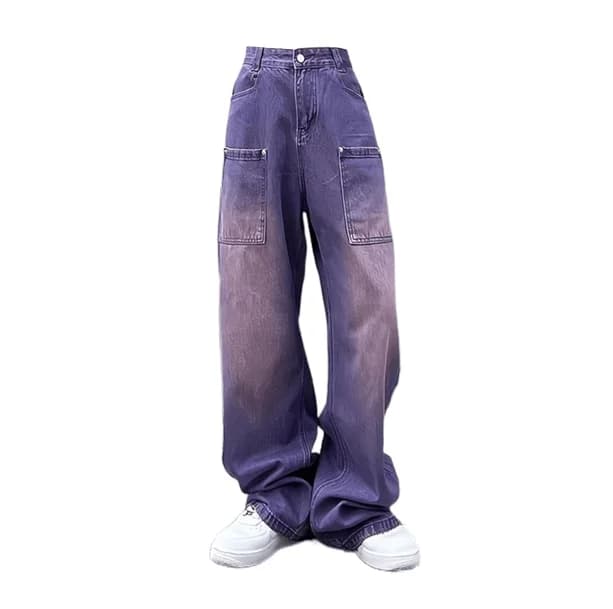
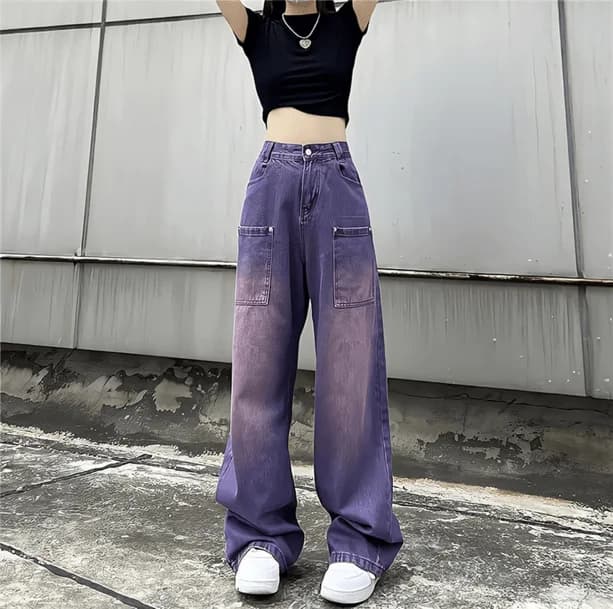
When securing wide-leg denim like the Tomboy Purple Loose Jeans, you need a substantial belt that can hold the dense cotton in place without folding under the pressure of the waistband. Sourcing a dependable strap from the Tomboy Belts lineup gives your fit structural integrity while introducing a dependable hardware anchor at your center.
Consider the finish of your leather as well as the metal buckle. Smooth black full-grain leather pairs naturally with polished silver and cold-toned industrial chains. Meanwhile, textured brown leather or distressed strap materials naturally welcome antique brass, matte bronze, and warm signet rings, tying your look together seamlessly from top to bottom.
- Pair wide-leg cotton denim with thick belt straps to prevent waistline bunching.
- Align your belt buckle finish with your primary necklace or watch hardware.
- Use leather accents to introduce rich texture between heavy tops and casual bottoms.
Sizing, Chain Gauges, and Proportions
Getting chain proportions right makes the difference between jewelry that looks intentional and pieces that look swallowed by your clothes. The millimeter thickness—or gauge—of a chain dictates how it holds up against different fabric weights. A fine 1mm box chain works against bare skin, but it looks fragile and lost against a 400gsm heavyweight fleece hoodie.
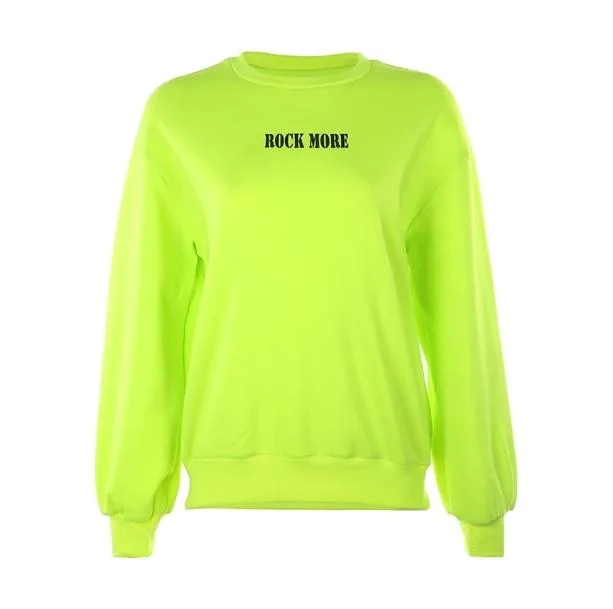
For casual day-to-day wear over tees and sweatshirts, aim for chain thicknesses between 3mm and 6mm. This middle range provides enough presence to show clearly over cotton weaves without appearing heavy or costume-like. If you are styling a bright, oversized layer like the Neon Sweatshirt Green, a sturdy 5mm link necklace cuts cleanly across the saturated fabric, establishing a grounded focal point that centers the bright volume.
Chain lengths also need precise calculation based on your build and collar style. An 18-inch chain lands right around the collarbone on most people, making it ideal for open collars or resting above crewnecks. A 22-inch or 24-inch chain drops down to the sternum, perfectly clearing hoodie collars and sitting comfortably over graphic prints without snagging.
- 1mm–2mm chains: Best for bare skin, open collars, and low-profile layeringWearing pieces over or under one another to add depth, warmth or contrast..
- 3mm–6mm chains: Ideal everyday weight for crewneck tees and structured shirts.
- 7mm+ chains: Heavy statement weight designed to balance bulky outerwear and fleece.
Everyday Maintenance and Storage
Even the sharpest jewelry stack loses its edge when links are covered in grease, sweat, or tarnish. Because casual jewelry often encounters daily wear, gym bags, and active movement, adopting a zero-effort cleaning routine keeps your pieces looking fresh without needing specialized tools or harsh chemical dips.
Stainless steel and solid titanium are fantastic metals for effortless wear because they resist rust and skin discoloration, making them ideal for everyday use. For sterling silver, a quick rub with a dedicated microfiber polishing cloth removes surface oxidation caused by air and sweat. Avoid wearing soft, unsealed fashion metals in hot showers or swimming pools, as chlorine breaks down surface platings rapidly.
Storing your necklaces properly prevents the daily frustration of untangling knots. Never throw multiple loose chains into a single tray together. Instead, hang them vertically on small wall hooks, or store them individually in soft cloth pouches. Keeping your chains separated ensures you can grab your go-to stack and head out the door in seconds.
Pre-Outfit Hardware Checklist
Before stepping out, run through a quick styling check to ensure your jewelry works in harmony with your clothes rather than fighting them. Stand in front of a mirror and take in your full silhouetteThe overall shape an outfit creates, from fitted to loose and layered., from your ear piercings down to your footwear hardware, checking for balance and ease of movement.
First, test your mobility. Turn your head side to side and tilt your chin down. If your short chain catches on your ribbed collar or scratches your neck, adjust your clasp or swap in a slightly longer length. Second, check your metal distribution. Ensure your hardware tones feel balanced across your top, waist, and hands, rather than clustered entirely on one side.
Finally, assess your physical comfort. Your jewelry should enhance your day, not distract you with constant adjustments, loud jingling, or heavy pulling. When your proportions align with your outfit's structure, you achieve that sharp, effortless tomboy aesthetic without any excess clutter.
- Collar Check: Did your chain clear the collar ribbing cleanly?
- Metal Check: Are your hardware finishes distributed intentionally across zones?
- Movement Check: Can you turn your head and move your arms without links snagging?
- Balance Check: Does the jewelry gauge hold its own against your heaviest fabric?