Created by the Kawaii Vibe editorial team. Our named style desks are editorial personas. Product details and availability can change.
Balancing tomboy pants outfits comes down to controlling volume so wide cuts look intentional rather than overwhelming. When trousers have a loose silhouetteThe overall shape an outfit creates, from fitted to loose and layered., deep rise, or utility pockets, every other element in the outfit needs to respond to that weight. Getting the proportions right does not mean turning loose clothing into a tight outfit; it means choosing where the eye rests, how fabric stacks around footwear, and where your layers stop along the torso.
Whether you prefer rigid denim, soft corduroy, or structured utility pants, adjusting three variables—garment width, hem break, and jacket hemline—gives you complete control over your daily shape. This guide breaks down exact visual formulas for building grounded, comfortable tomboy outfits across changing temperatures and footwear choices, keeping your silhouetteThe overall shape an outfit creates, from fitted to loose and layered. relaxed without feeling messy.
The Baseline Rule: Anchor Points and Torso Breaks
The quickest way to make wide trousers work is to create at least one clear visual break along your vertical line. Loose cuts sit naturally lower on the waist or drape straight down from the hip. If your top hem hangs loose at mid-thigh while your pant legs billow out, the silhouetteThe overall shape an outfit creates, from fitted to loose and layered. loses all structure. You can solve this by establishing an anchor point either at the natural waist, the upper hip, or the collarbone.
A simple baseline outfit pairs relaxed bottoms with a top that stops cleanly at the waistband. For example, setting up a foundation with pieces from our Tomboy Pants collection lets you experiment with boxy tees that are cropped just enough to show your belt line without exposing skin. This breaks up the vertical span, giving the wider leg cut room to move naturally without pulling the eye straight down to the floor.
- Establish a clear waistband marker using a tuck or boxy cropped hemline.
- Keep shoulders slightly structured when wearing extreme wide-leg trousers.
- Prevent mid-thigh top hems unless using an unbuttoned overshirt for vertical drape.
Managing Pant Width: Matching Leg Volume to Footwear
A common struggle with oversized pants is leg opening swallow, where the hem completely covers your shoe and causes the bottom of the pant to drag. To keep the silhouetteThe overall shape an outfit creates, from fitted to loose and layered. looking grounded, your shoe choice must have enough sole thickness or toe volume to support the pant leg's circumference. Delicate, paper-thin canvas shoes often disappear beneath a 22-inch leg opening, causing the outfit to look bottom-heavy and sloppy.
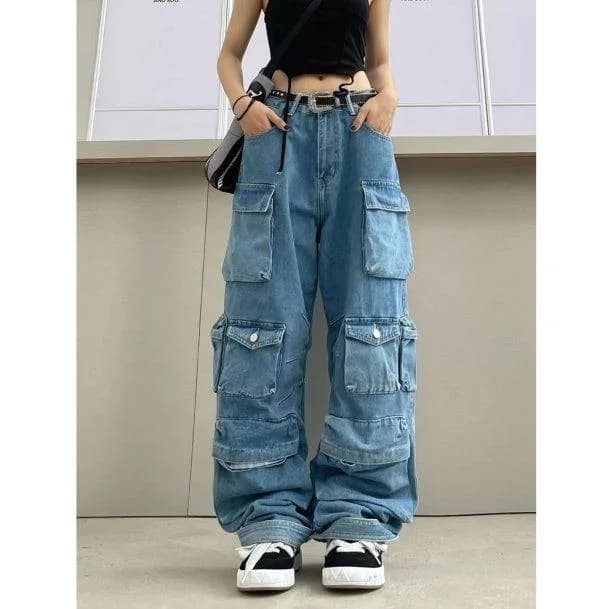
When styling wider utility cuts like the Multi-Pocket Aesthetic Pants, which come in cotton and feature distinct pockets in Blue, Green, White, and Black across sizes S to 2XL, reach for shoes with presence. Chunky skate sneakers, flat-soled basketball shoes, or platform work boots push the fabric out, giving the hem clean definition as it meets the ground. For narrower straight-leg cuts, lighter low-profile trainers work smoothly because the leg opening sits naturally around the shoe collar without pooling.
- Pair wide leg openings (over 20 inches) with platform soles, thick trainers, or work boots.
- Pair straight-leg cuts with classic low-profile sneakers or slip-ons.
- Ensure footwear toe boxes are rounded or square rather than sharply pointed to anchor loose hems.
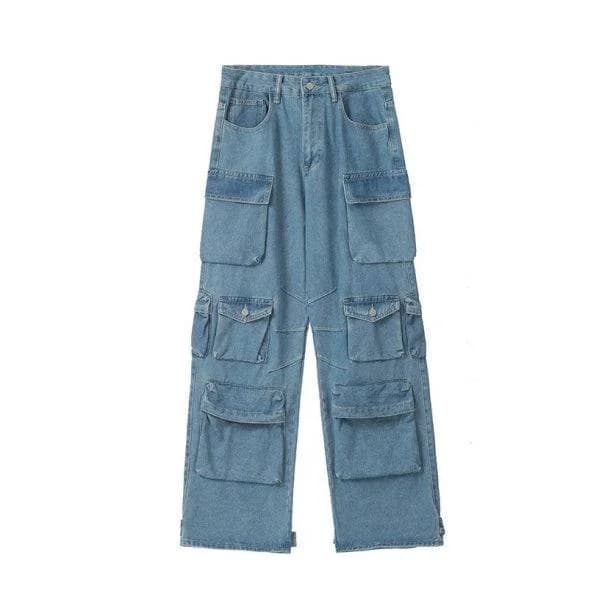
Hem Breaks: Stacking, Cropping, and Full Drapes
How your pants hit your shoes alters your perceived leg length and overall balance. A full break occurs when fabric folds over itself multiple times at the ankle, often called stacking. Stacking looks best with rigid, heavier fabrics that hold their own shape rather than collapsing into limp folds. If you prefer this skate-inspired look, choose pants with a slightly tapered opening so the folds rest neatly above the sole instead of sliding under your heel.
For a cleaner, utilitarian drape, a half-break or zero-break works better. A half-break shows just a single fold of fabric before resting gently on the shoe tongue, which prevents hems from soaking up moisture on wet days. If you find a pair is pooling excessively, rolling a wide cuff twice creates a sturdy, retro cuff that instantly adds structure to relaxed denim or cotton twill. Cuffs also offer an easy way to showcase contrast stitching or patterned socks without altering the garment permanently.
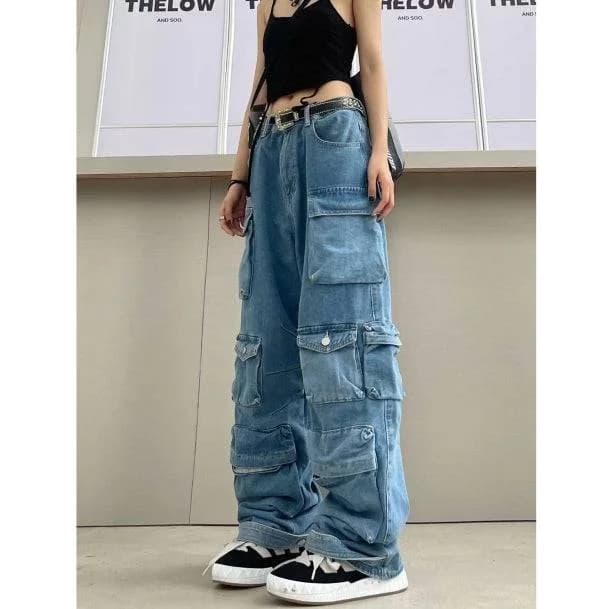
Denim Proportions: Styling Loose and Straight-Leg Jeans
Rigid and loose denim creates a very specific silhouetteThe overall shape an outfit creates, from fitted to loose and layered. because cotton denim holds horizontal lines and creases firmly. Unlike fluid drapey pants, baggy jeans push outward at the knee and thigh. When browsing Tomboy Jeans, the goal is to balance that denim stiffness with upper layers that have complementary texture and weight.
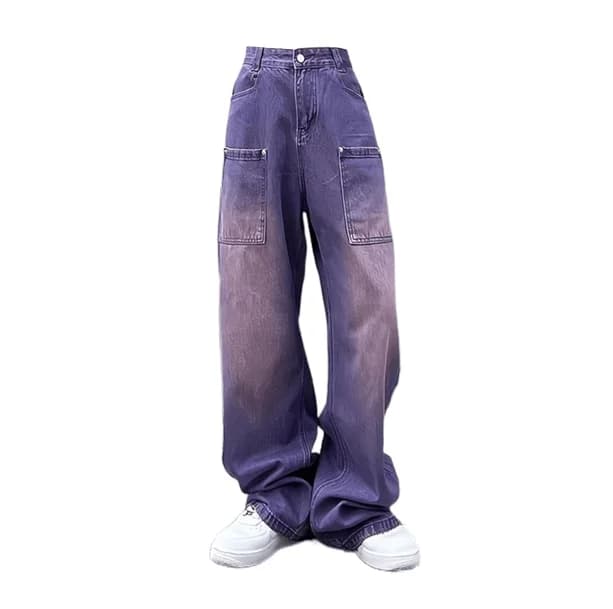
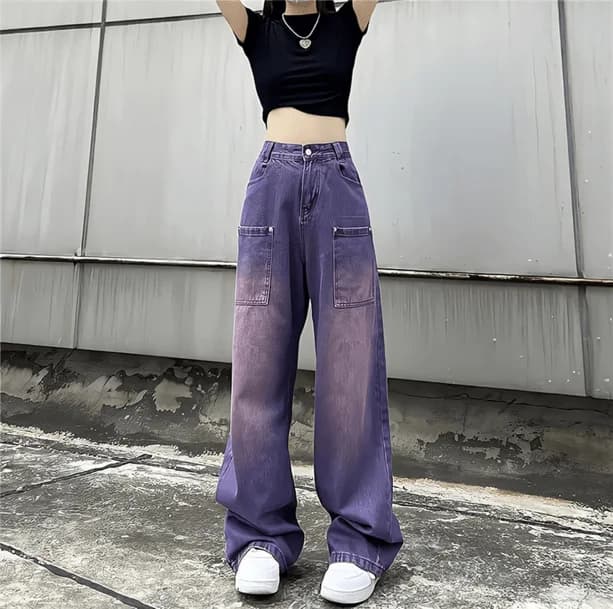
If you are wearing a pair with a distinct tint, such as the Tomboy Purple Loose Jeans, made from cotton in sizes S to 2XL, treat the denim as the bold centerpiece. Because loose purple denim commands attention, pairing it with neutral, boxy tops lets the cut take center stage. Balance the heavy cotton fabric below with an oversized jersey knit tee tucked into a plain leather belt, or an unzipped hoodie that mirrors the relaxed, easy-going width of the legs.

Utility and Cargo Silhouettes: Balancing Pocket Bulk
Cargo pockets add practical storage, but they also introduce horizontal volume right at the thighs or calves. When pockets sit directly on the widest part of your leg, they can shift the visual weight of your outfit downward. The key to wearing utility pieces is balancing that added lower-leg width so you look proportional from head to toe.
If you are styling pieces from the Tomboy Cargo Pants collection, pay attention to pocket placement. Bellows pockets that sit lower on the outer calf help balance broad shoulders or heavy outerwear. For a high-contrast street look, consider the Aesthetic Pants With Chain, available in Black and Khaki across sizes M, L, and XL. The attached hardware draws the visual focus upward toward the hips, breaking the utility pocket line and offering an easy transition point for boxy graphic tops or fitted ribbed singlets.

Upper Body Width: Boxy Fits vs. Compact Tops
When building outfits from the wider world of Tomboy Clothes, you generally have two reliable proportion formulas for your top half: the fitted contrast or the double-oversized box. Neither is better than the other, but they produce completely different vibes and suit different body frames and preferences.
The fitted contrast formula pairs loose trousers with a slim-fitting ribbed tank or a fitted long-sleeve tee. This cleanly outlines your shoulders and ribcage while letting the pants billow below, providing maximum contrast. The double-oversized formula pairs wide pants with an equally roomy tee or crewneck sweater. To stop the double-oversized look from appearing like pajamas, ensure the upper garment has firm, dropped shoulder seams and ends no lower than mid-hip, preventing a continuous, shapeless column of fabric.
Outerwear Lengths: Cropped Jackets to Longline Coats
Jacket length determines how your leg lines read from the front and back. A cropped jacket—one that hits right at the top of the hip bones—artificially lengthens the legs when worn over wide or mid-rise pants. This is especially helpful if you feel that oversized pants make you look shorter. Denim trucker jackets, bomber jackets with ribbed hems, and cropped utility vests all create this crisp, lengthening division.
Longline outerwear presents a striking alternative. A knee-length car coat, duster, or loose trench worn open over relaxed trousers creates two tall, parallel vertical lines down your torso. These vertical edges slim the overall profile while letting the wide hems swing freely at the bottom. The main length to avoid with ultra-wide pants is outerwear that finishes directly across the widest point of the thighs, as this breaks the outfit right where pants carry the most horizontal bulk.
Graphic Accents and Hardware: Breaking Up Flat Space
Solid wide-leg pants feature a lot of unbroken fabric area, which can occasionally look flat or monotonous, particularly in black or dark navy. Incorporating hardware, contrast stitching, or bold graphic hits introduces visual points that help break up large planes of material. Hardware also bridges the gap between casual streetwear and calculated tomboy styling.
The Street Style Star Pants, crafted in a cotton and polyester blend and available in sizes S to XL, use star appliqués to add visual texture to a loose fit. Similarly, the Red Pants With Chains, available in sizes S, M, and L, use detachable silver-toned chains and a bold hue to give a wide silhouetteThe overall shape an outfit creates, from fitted to loose and layered. immediate energy. When styling pants with graphic elements or chain detailing, keep your tops and shoes clean and understated to avoid visual clutter.
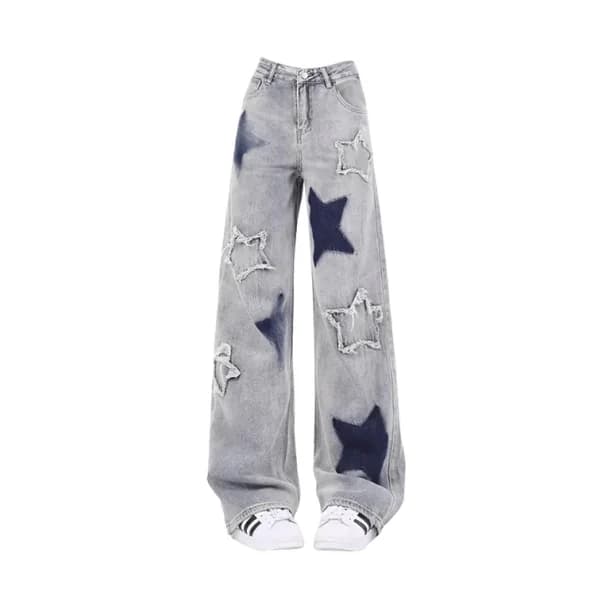
Texture Balancing: Corduroy, Twill, and Smooth Blends
Texture plays an underappreciated role in how wide pants drape and read visually. Stiff twill creates angular folds, while corduroy softens the outline with deep vertical ridges that catch the light differently. Mixing fabric surfaces ensures that monochromatic tomboy outfits remain visually interesting even when all pieces share the same color family.
A strong option for tactile styling is the Grandmacore Corduroy Pants, offered in Brown, Beige, Black, and Purple across sizes S, M, and L. The textured corduroy fabric provides a soft, vintage feel that pairs naturally with flat cotton tees or smooth nylon jackets. When wearing corduroy, balance its velvety surface against flat-weave canvas sneakers or rugged leather boots to create clean, intentional contrast between your top, bottoms, and footwear.
Top Layering Tactics: Shirts, Vests, and Hoodies
LayeringWearing pieces over or under one another to add depth, warmth or contrast. is central to tomboy styling, giving you a way to modulate warmth and visual depth without losing your silhouetteThe overall shape an outfit creates, from fitted to loose and layered.. A favorite formula is leaving an unbuttoned flannel or work shirt open over a base layer. When you move, the open shirt billows back, revealing the waistband and preventing wide pants from visually consuming your torso.
You can explore adaptable layeringWearing pieces over or under one another to add depth, warmth or contrast. pieces in our Tomboy Tops collection, matching them to your chosen pant rise. A chunky knit vest worn over an oversized collared shirt adds collegiate grit while keeping arm volume streamlined. If you prefer hoodies, look for styles with sturdy ribbed waistbands that can be folded upward onto the hips, creating a boxy drape that allows your pants to sit comfortably at their natural rise.
With wide trousers, choose an open overshirt whose hem ends around the waistband or hip to keep the trouser rise visible. For a different layered outfit, the K-Pop Boy Outfits collection pairs roomy tops and outer layers with cargo trousers; compare garment measurements to check how the layers will sit together.
Adapting to Warm and Cool Weather Shifts
Wide pants are exceptionally practical across changing climates because their loose fit allows for airflow in warm conditions and accommodates thermal underlayers when temperatures drop. In summer or warm climates, lightweight utility pants let breezes circulate much better than skinny jeans. Pair them with breathable linen shirts worn unbuttoned over ribbed tanks, or choose breezy shorts cuts that hit just below the knee.
In colder months, wide-leg utility trousers provide ample room to layer merino wool or thermal tights underneath without binding at the knees. The Hip Hop Cargo Pants, made from polyester and available in White, Blue, Black, and Pink in sizes S to 3XL, provide smooth room for layeringWearing pieces over or under one another to add depth, warmth or contrast. thermal bases beneath. Finish cool-weather outfits with a heavy knit beanie and a boxy shearling or puffer jacket, keeping your layers proportional to the relaxed fit below.
Evaluating Options: Fabric Weight, Rise, and Cut
When shopping for your next pair of tomboy trousers, assessing specific garment specifications prevents fit surprises. Fabric composition directly influences how the pant behaves: pure cotton twill or denim will fall in stiff, architectural folds, whereas polyester blends offer fluid movement and resist wrinkling around the knees and pockets during long days.
Rise measurement is equally critical. Low-rise utility pants naturally settle onto the hip bones, creating a slouched, 2000s skate look that demands longer hem breaks and boxy tees. Mid-to-high rises cinch closer to the natural waist, making it easier to tuck in oversized shirts without losing your torso definition. Look closely at size charts and compare the rise and thigh width against a pair of pants you already own that fits comfortably.
- Check fabric weight: 100% cotton holds rigid shapes; synthetic blends drape smoothly.
- Match rise to styling preference: low-rise for skate slouch, high-rise for tucked-in boxy shirts.
- Verify leg opening circumference against your primary footwear to ensure proper hem clearance.
Common Pitfalls in Tomboy Proportions
The most frequent misstep in tomboy pants styling is neglecting the hem line relative to daily footwear. Letting pants drag continuously underneath your heels not only frays the fabric rapidly but also flattens the bottom of your silhouetteThe overall shape an outfit creates, from fitted to loose and layered.. If a pair is too long for low-profile shoes, either cuff them intentionally or swap to a shoe with an elevated sole to keep the fabric suspended above ground level.
Another common error is combining an ultra-long, wide tunic top with very wide, unshaped pants. This hides your frame completely, turning your silhouetteThe overall shape an outfit creates, from fitted to loose and layered. into a solid rectangle without visual rhythm. If you enjoy wearing long tops, introduce a half-tuck at the front buckle or leave buttons unfastened from the belly button down. This simple adjustment lets your legs peek through with every step, restoring proper proportion to your outfit.
The Outfit Assembly Checklist
Before heading out, run through a quick visual audit to ensure your outfit proportions feel balanced and comfortable. Tomboy styling thrives on ease, but taking ten seconds to adjust cuffs, waistband position, and outerwear hem breaks makes the difference between looking relaxed and looking swallowed by oversized clothing.
Use this practical checklist whenever you style relaxed denim, cargo pants, or wide-leg utility trousers for everyday wear. Adjusting one or two elements using these rules will quickly dial in your outfit, giving you a functional, comfortable shape that moves easily with you throughout the day.
As a final proportion check, notice whether a graphic layer adds too much visual weight above roomy trousers. For a casual American-inspired alternative, choose a simple tee with straight-leg denim and one varsity detail, keeping the remaining pieces quiet. This gives the outfit one clear focal point without adding competing volume. See the Amekaji Clothes collection for related combinations.
- Hem check: Is the pant hem clearing the ground, resting neatly with stacking or a clean cuff?
- Shoe balance: Does your footwear have enough sole thickness to ground the pant leg's width?
- Waistline definition: Is there a clear visual marker at the waist or upper hip via a tuck, belt, or cropped hem?
- Layer harmony: Does your outerwear end either above the hip bones or down past the mid-thigh?
- Hardware balance: If pants feature chains or prominent cargo pockets, are your tops kept clean to avoid visual clutter?