Created by the Kawaii Vibe editorial team. Our named style desks are editorial personas. Product details and availability can change.
Short answer: use a front tuck when you want the cleanest line, a half tuck when you want relaxed shape, and a knot when the tee is roomy and you want a hem that sits at the waist without adding layers. The best choice depends on two things: how heavy the fabric is, and where the waistband of your bottoms sits.
This guide compares the three methods side by side. We cover thin versus thick cotton, high versus low rise, skirts versus pants, belts, and the small fixes that stop the lumps. Nothing here needs special gear, just a mirror and a minute.
Where we mention shop items, they are optional ideas for a particular part of an outfit. We stick to the details listed on each product page, so check sizes and options there before you decide.
The Quick Answer: Which Tuck Fits Which Tee
Start with the fabric. A thin, drapey tee tucks flat almost anywhere, so a full front tuck or a half tuck both work. A thick, boxy tee fights you at the waist, so a half tuck or a knot usually looks better than a full tuck.
Then think about the waistband. High-rise bottoms hold a tuck in place and give it a neat anchor. Low-rise bottoms let the tee slide out and bunch, so a knot or a loose half tuck is more forgiving.
If you only remember one rule, make it this: the more fabric you have to hide, the less of it you should push into the waistband. A small amount tucked in looks intentional. A whole tee stuffed in looks like a bag.
- Thin tee plus high rise: front tuck or half tuck
- Thick tee plus high rise: half tuck
- Thin tee plus low rise: knot or loose half tuck
- Thick or boxy tee plus low rise: knot, or leave it out
The Front Tuck: Clean and Quick
A front tuck means tucking just the center front of the tee into your waistband, usually about the width of your hand, and leaving the sides and back loose. It breaks up a long torso, shows the waistband, and keeps the rest of the tee relaxed.
To do it, pinch the hem at the center, fold it up and in, and push it behind the waistband. Then gently pull a little fabric back out over the waistband so it blouses slightly. That small drop stops the tuck looking stiff and hides any flat line the hem might make.
This works best on mid to lightweight cotton. On a very thin tee, check the hem in a mirror, because the folded edge can show through light bottoms. If it does, tuck less, or switch to a darker or thicker waistband area.
The Half Tuck: Relaxed With Shape
The half tuck tucks one side only, usually the front on one side of center, and lets the other drape. The hem ends up slightly uneven, which feels casual and a bit lived-in. It is the most flexible of the three methods because you control how much goes in.
Place the tuck just off center, near a belt loop or the zip line, so the shape looks planned. Tucking right at the side seam tends to bunch. Leave the free side long enough to cover the waistband, then check the back so the hem is not riding up unevenly.
This is the best choice for medium-weight tees that are a little too long. You get the waist definition without wrestling the whole hem. If the fabric is stiff, tuck a smaller section and let it sit loosely rather than pulling it tight.
The Knot: Shorter Hem, No Tucking
A knot gathers the front hem into a small twist at one side or center, shortening the tee without cutting it. It suits roomy tees, where there is plenty of fabric to bring up. It avoids the waistband entirely, so there is no tucked layer to add bulk.
Pull the two front corners of the hem together, tie a simple overhand knot, and slide it to where it sits flattest, often just off center. Tug the tee down at the sides so the knot is the only gathered spot. The result should look like a neat short hem, not a bundle.
Knots work best on soft, light-to-medium cotton that bends easily. A thick tee makes a lumpy, hard knot. If you wear it with low-rise bottoms, a knot is often the neatest option because it lifts the hem clear of the waistband.
Fabric Weight: Thin, Medium and Thick Tees
Thin fabric moves easily, so it forms soft folds and tucks flat. The downside is that every line shows. Pair thin tees with a smooth waistband and avoid chunky belt buckles beneath the fabric unless you want that detail visible.
Medium cotton is the easiest to work with. It holds a shape without stiffness, and all three styles look good. Thick or structured tees resist folding. For these, tuck a small section or use the knot, and skip tucking the sides and back.
A simple test: pinch the hem and fold it twice. If it stays flat and soft, it will tuck well. If it springs back or forms a ridge, use less fabric. Washing and drying can change how a tee feels, so check care instructions on the product page and consider how the fabric will behave after a few washes.
- Thin: tuck small, watch for show-through
- Medium: any style works
- Thick: half tuck or knot, tuck less
Bottom Rise: High, Mid and Low
High-rise pants and skirts give the tuck an anchor near your natural waist. A front tuck looks tidy here, and the waistband frames the fold. Tuck lightly, because the tee has a shorter distance to cover and extra fabric adds up fast.
Mid-rise sits between hip and waist. This is the most forgiving, and half tucks look natural. Let a little fabric hang over the waistband so the line stays soft.
Low-rise offers the least grip. A tucked tee tends to slide loose throughout the day. Choose a knot, or tuck a small amount behind a belt so the belt holds it. You can browse pants in a few rises and compare the waistband height to see how a tuck will sit before you buy.
Tucking Into Pants
Pants give the most grip, so tucks stay put. Straight and wide-leg styles pair well with a front tuck because the balanced leg shape suits the small waist detail. Try a fitted tee with wide legs, or a boxy tee half-tucked into straighter ones.
Pay attention to the fly area. The tee should lie smooth over the zipper, so tuck at the center or slightly off to a side and smooth with a hand. Bulky pockets near the front can create lumps, so move the tuck a little away from them.
If the tee tends to creep out, tuck it in, pull the waistband up slightly, and then let the tee blouse over. Gravity handles the rest, and the blouse hides the escape route.
Tucking Into Skirts
Skirts are friendlier to tucking because the waistband is usually smooth. A front tuck into a high-waisted skirt creates a clean waist and shows the skirt's shape. Look at skirts with a firm waistband if you want a tuck to stay in place all day.
Gathered or pleated waistbands add bulk, so tuck less and keep the tee thin. For A-line skirts, a fitted tee with a small front tuck balances the flare. For straight skirts, a looser tee with a half tuck keeps the line from looking too narrow.
Elastic waistbands may push a tuck out as you move. If that happens, switch to a knot, which sits above the waistband and stays more stable.

Using a Belt to Hold the Look
A belt does two jobs: it holds the tuck and finishes the waist. With a front tuck, the belt crosses over the fold and keeps the tee from sliding. Pick a slim belt for thin tees and a slightly wider one for medium fabrics.
Place the belt just over the tuck line, not under the hem, so it sits smooth. Fasten it so it is snug but not pinching, since pressure causes ripples in the tee above it. Try belts in different widths to see how they balance the fabric you have.
For a half tuck, the belt can hold the tucked side while the loose side hangs over. It frames the asymmetry and makes the look feel finished.
Outfit Ideas With Specific Tees
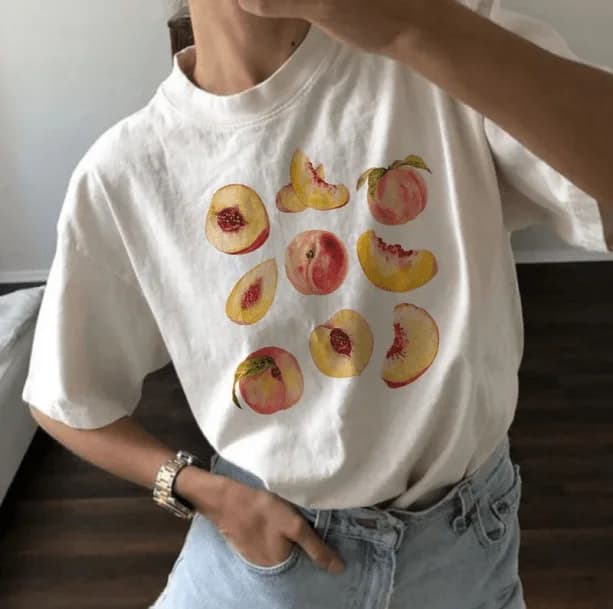
A graphic tee like the Vintage Peaches T-Shirt, listed in cotton, works well with a front tuck into high-rise pants. The tuck keeps the print area visible while defining the waist. It comes in White, Khaki, Gray and Pink, so you can match your bottoms.
The Cool Cats Club T-Shirt is also cotton, and suits a half tuck into a skirt. Let the free side drape over the waistband for a relaxed shape. The Aesthetic Cow T-Shirt, listed in a cotton and nylon blend, comes in many colors and could be knotted over low-rise bottoms if the fit is roomy.
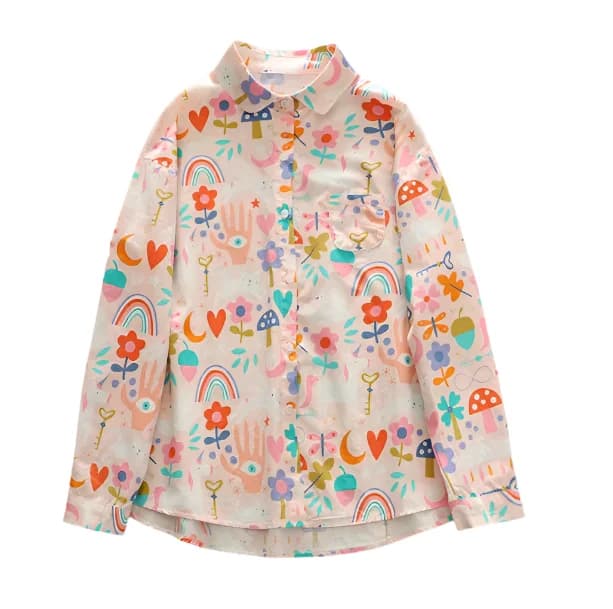
For a softer look, the Kawaii Pastel Button-Up Shirt can be front-tucked into a skirt with a belt. The sizes run from M (US 6) to XXXL (US 16), so check the size list. Browse more at Tops & T-Shirts.

Statement and Aesthetic Tees
Tees with prints or bold designs need careful placement. A full tuck can hide part of a graphic, so use a front tuck that leaves the main print visible, or knot the hem so the design sits higher. Look through aesthetic tops and tees to see where the designs sit.
The Forest Bugs T-shirt is listed in broadcloth, a fabric that is typically crisp, so a small front tuck is usually easier than a full one. The Aesthetic Kidcore Shirt is cotton and one size, so check how the length falls on you before choosing between a tuck and a knot.
The Cat Lady Shirt, listed in cotton and polyester, may drape differently from pure cotton, so test a half tuck first and see how it holds.

Common Pitfalls and Fixes
The most common problem is too much fabric in the waistband. Fix it by tucking a smaller section and letting the rest hang. Another is a visible hem line through thin bottoms, which a slightly looser tuck or a darker waistband area can solve.
Tucks also slide out when you sit or move. A belt, a higher rise, or a small blouse over the waistband helps. If the knot keeps loosening, tie it tighter or choose a tee with more grip in the fabric.
Last, avoid pulling the tee tight across the stomach after tucking. Tugging causes ripples. Instead, smooth from the center outward and let the fabric relax.
- Bulk: tuck less
- Hem shows: loosen the tuck
- Slides out: add a belt or raise the rise
- Ripples: smooth from center out
Weather and Layering
Tucks change with layers. Under a cardigan or jacket, a front tuck keeps the waist neat and cuts bulk at the hem. In warm weather, a knot lets air move and keeps the hem away from the waistband.
When layeringWearing pieces over or under one another to add depth, warmth or contrast. a tee under a button-up, tuck the tee fully but thinly, or leave it out and let the shirt cover it. Too many tucked layers makes a thick ring at the waist.
Think about how long you will wear the outfit. For a long day, choose the method that stays put without fuss, usually a belted front tuck or a simple knot.
Final Checklist Before You Head Out
Run through a quick check in the mirror. Look at the front, the side and the back. A good tuck should look smooth from all three angles, with no sharp ridges or twisted seams.
Match the style to the fabric and rise, and keep a spare option in mind. If the tuck is not working, switch to a knot or leave the tee out. No method is wrong, only better for certain pieces.
Use this list when you are choosing a tee or deciding how to wear one you already own.
- Pinch test: does the hem fold flat?
- Rise check: high holds, low slides
- Tuck only as much as you need
- Add a belt if it slips
- Pull a little fabric out for a soft blouse
- Check the back view