Created by the Kawaii Vibe editorial team. Our named style desks are editorial personas. Product details and availability can change.
Ordering clothes online across borders gets confusing fast when numerical sizing tags change based on geography. A standard US 6 is not equivalent to a UK 6, and picking an Australian or New Zealand size 10 means something completely different than pulling an American size 10 off a retail rack. Add in relaxed aesthetics, dropped shoulders, and varied fabric tensions, and guessing based on generic size tags almost always leads to an awkward fit.
The simplest approach to reliable online sizing is adopting a measurement-first habit instead of trusting regional letter or number tags. By tracking your actual bust, waist, and hip circumferences against actual flat-garment specifications, you bypass the vanity sizing quirks and standard conversions that retailers often scramble. Whether you are hunting for cozy loungewear, structured outwear, or tailored bottoms, matching body numbers to fabric charts gives you full control over how your outfit drapes.
This conversion walk-through breaks down the foundational math separating US, UK, AU, and NZ apparel tags. We will unpack how tops, pants, dresses, and unisex items diverge across regions, how to evaluate fit profiles before checking out, and how to construct intentional outfits that accommodate seasonal layeringWearing pieces over or under one another to add depth, warmth or contrast. and everyday ease.

The Baseline Difference Across US, UK, AU, and NZ Tags
The single biggest source of ordering errors when browsing international labels stems from the basic numerical offset between the American numbering system and the Commonwealth sizing scale used in the United Kingdom, Australia, and New Zealand. In womenswear, the baseline rule of thumb is a four-number jump between the United States and the United Kingdom or Australia. If you wear a tailored US 4, your equivalent baseline label in the UK, Australia, and New Zealand is an 8. If you pick up a US 8, the corresponding Commonwealth size is generally a 12.
Australia and New Zealand largely share the exact same sizing sequence as the United Kingdom for standard fashion items. That means a shopper in Melbourne, Auckland, or Manchester will typically look for the same tag size when shopping Commonwealth brands. However, relying purely on this numerical shift can still fail you because brand-level tolerances vary. A US size 2 might map cleanly to an AU 6 in high-end tailoring, but fast-fashion chains often alter their pattern blocks to flatter regional buyer averages.
When exploring broader catalogs like our aesthetic clothes collection, you will also notice that letter tags such as small, medium, and large do not line up uniformly. A US Small is frequently engineered around a slightly wider chest and shoulder span than an Australian Small. For that reason, treating the four-digit tag gap as a starting hypothesis rather than an absolute rule prevents return hassles before you even examine garment specs.
- US size + 4 = Approximate UK / AU / NZ tag (e.g., US 6 = UK/AU/NZ 10)
- UK, Australian, and New Zealand womenswear tags use the same core numerical sequence
- Letter labels (S/M/L) often lean slightly roomier in US cuts than Commonwealth counterparts

Why Tag Labels Differ Between Regions
Regional clothing sizes did not evolve from a unified scientific standard; they evolved from mid-century census data, industrial military specs, and domestic retail vanity sizing. In the United States, standardized commercial sizing charts were introduced in the mid-twentieth century and gradually shifted wider decade by decade to accommodate changes in population averages and customer psychology. As a result, modern US sizes are cut substantially more generously than vintage garments bearing the exact same label numbers.
British standards developed along a separate track through the British Standards Institution, establishing their own measurements for bust, waist, and hip ratios that prioritized different waist-to-hip drops. Australia and New Zealand historically imported British garment drafting principles, which cemented the 6-8-10-12-14 progression across the southern hemisphere. While domestic body shapes in all four countries have shifted over time, pattern cutters still rely on legacy blocks tailored to their local domestic core markets.
These historical divergences explain why you can never trust a single conversion chart across all categories. When browsing general clothing, a label that calls itself a medium in the UK might feel snug across the ribcage to someone accustomed to North American mass-market casualwear. Understanding that regional tags represent brand pattern traditions rather than objective universal measurements allows you to approach shopping with realistic expectations.
- Vanity sizing in North America gradually widened measurements for standard numerical tags
- British and Commonwealth pattern drafting evolved independently with different base proportions
- Regional market expectations dictate whether a baseline size skews close-fitting or relaxed
Measuring Your Body Accurately for Sizing Charts
To make clothing size conversion US UK AU completely painless, you must establish an accurate, up-to-date set of core body measurements. Never rely on the numbers stamped inside your favorite pair of vintage trousers or a dress you bought three years ago. Soft tailor's tape measures are inexpensive, flexible, and give you the real baseline figures needed to decode any store's size chart. Keep the tape parallel to the floor, pull it flat without letting it dig into your soft tissue, and breathe normally while taking each measurement.
Start with your bust by wrapping the tape around the fullest part of your chest, usually across the nipple line, while wearing your everyday undergarments. Next, find your natural waistline, which is the narrowest point of your torso located above your navel and below your ribcage; bending sideways slightly will help you identify this natural hinge. Finally, measure your hips by wrapping the tape around the widest part of your pelvic area and glutes, keeping your heels together so you capture the true maximum circumference of your lower body.
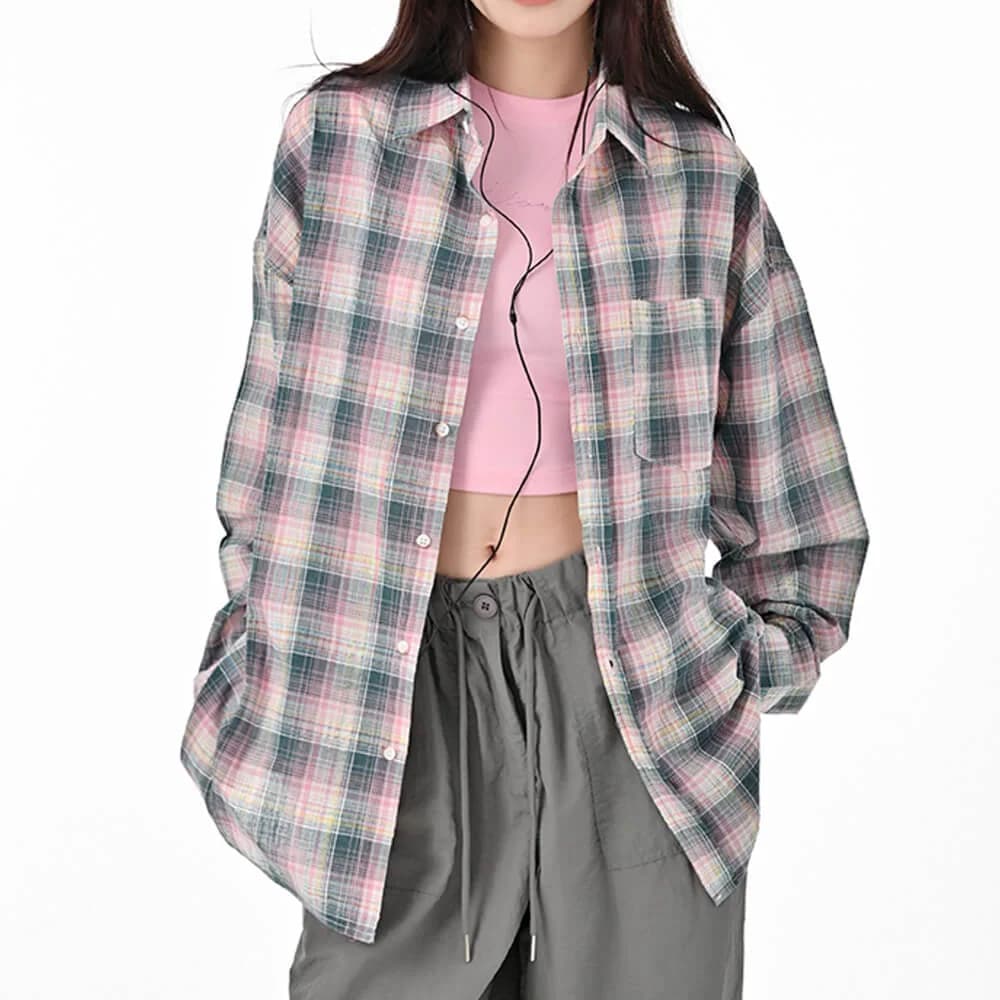
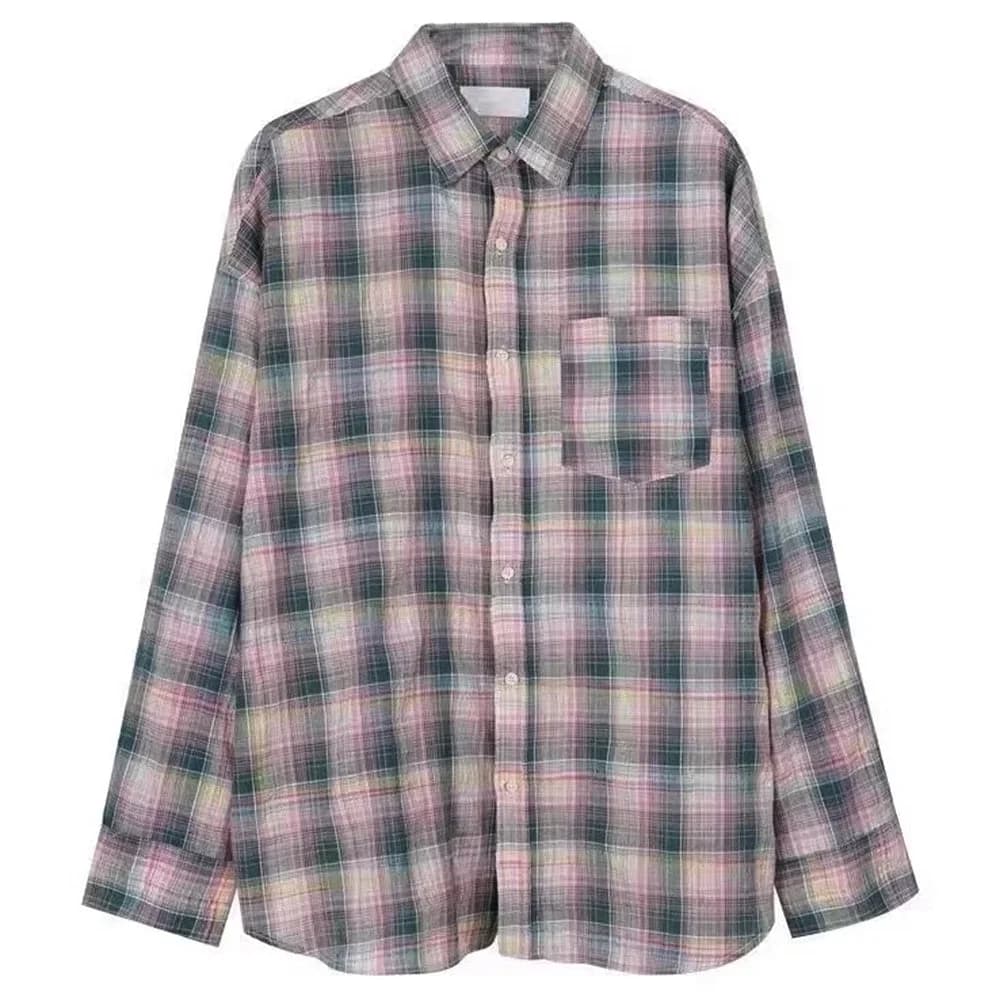
Write these three numbers down in both inches and centimeters. International apparel sites frequently present sizing tables in metric format, especially labels originating in Australia, New Zealand, or Europe, while US charts still prioritize imperial inches. If you want to layer an open piece like the Oversized Checkered Button-Up Shirt over a tank, knowing your chest width in centimeters makes judging photos and planning proportions against your physical bust measurement much easier, especially when sizing charts are unavailable on the page.
- Chest/Bust: Measured at the fullest point while breathing naturally
- Waist: Measured at the narrowest torso point between ribs and hip bones
- Hips: Measured at the widest line around the glutes with feet touching
- Record both centimeters and inches to easily match imperial or metric store charts

Reading Garment Measurements Versus Body Measurements
One of the most frequent missteps in international shopping is confusing garment measurements with body measurements on a product page. A body measurement chart indicates the size of the person the garment was engineered to fit, factoring in design ease for movement. A garment measurement chart, on the other hand, lists the exact dimensions of the fabric when laid flat on a table. If your chest measures 96 centimeters and you purchase a top with a flat chest measurement of 48 centimeters, you are buying a skin-tight fit with zero wiggle room.
Design ease refers to the extra space cut into clothing so you can breathe, walk, sit, and reach without pulling the seams apart. Rigid woven fabrics like raw denim or heavy polyester require at least 4 to 6 centimeters of ease around the bust and hips for comfortable movement, while stretchy knits can function with little or no ease. For exaggerated, streetwear-leaning silhouetteThe overall shape an outfit creates, from fitted to loose and layered.s, ease can expand up to 20 or 30 centimeters past your body measurements to create an intentionally draped shape.
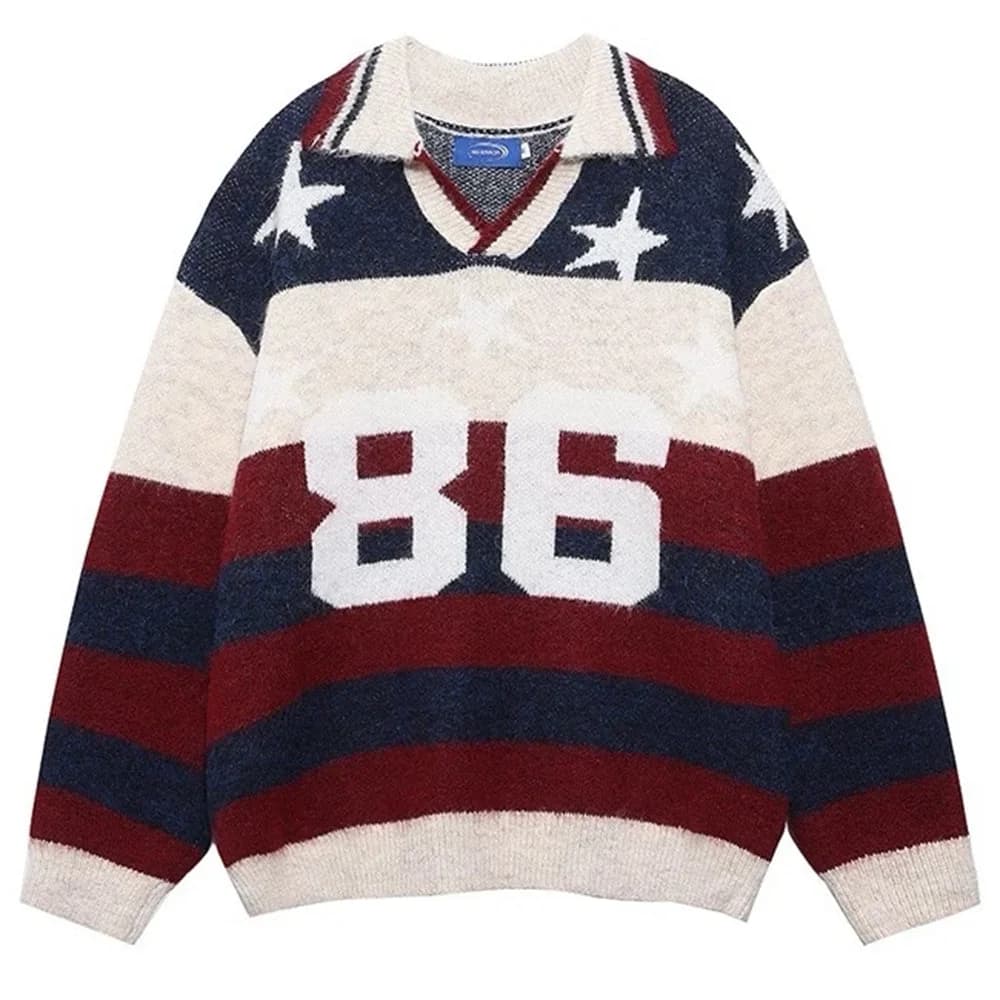
When looking at relaxed knitwear such as the Oversized College Number Sweater, check the listing notes or compare with your own sweaters to gauge width. While some charts specify half-chest width—meaning the distance straight across the armpits on a flat surface that you simply double for total circumference—items without an on-page chart require comparing against a loose knit you already wear.
- Body charts show the physical dimensions of the wearer; garment charts show flat fabric specs
- Half-chest flat measurements must be multiplied by two for total circumference
- Always factor in 4 to 6 cm of ease for woven fabrics to allow comfortable sitting and moving
Tops and Knitwear Conversion Nuances
Sizing tops across US, UK, AU, and NZ stores requires extra vigilance around shoulder seams, sleeve length, and armhole depth. In standard US sizing, tops designated as Small through Extra Large often feature wider shoulder drops and slightly roomier bicep circumferences than equivalent UK or Australian tops. If you have broad shoulders or an athletic back, stepping up one size from your calculated Commonwealth conversion can prevent uncomfortable pulling across the upper back seams.
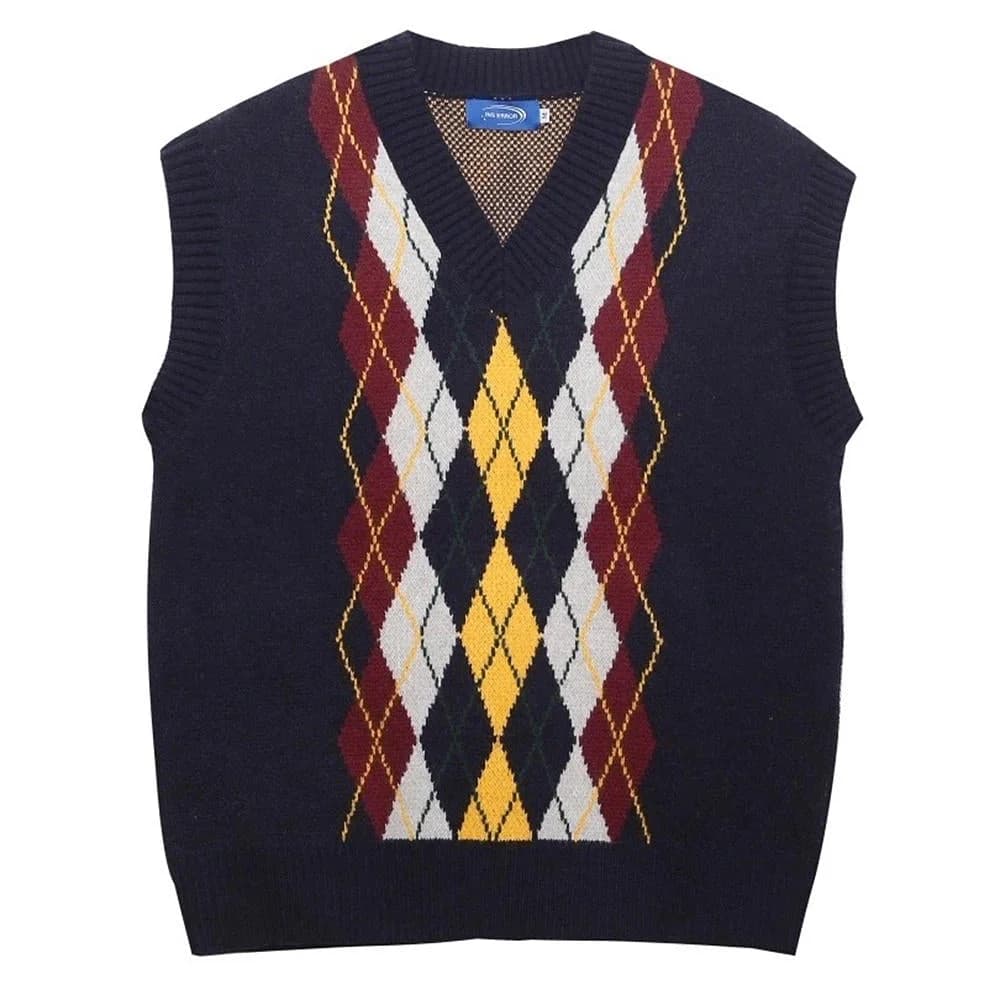
Knitwear presents another nuance because gauge, stitch density, and yarn weight alter how a top hangs on the frame. A slouchy knit like the Oversized Argyle V-Neck Grandpa Knit Vest relies on an open armhole and generous torso to sit comfortably over collared bases. If you are converting from a US Medium to an Australian size 10, check that the armhole depth allows enough clearance so your inner shirt does not bunch up or pinch under your arms during regular wear.
When styling an easy transitional look, balance a boxy knit vest with fitted underlayers to manage volume. Pair the vest with a fitted neutral long-sleeve tee, crisp straight pants, and ankle boots for mild autumn or spring outings. If you choose a drop-shoulder graphic sweater instead, matching the width across the collarbones ensures the neckband stays centered rather than sagging off to one side.
- US tops frequently feature wider shoulder points than UK/AU cuts in equivalent letter sizes
- Armhole clearance is critical when layeringWearing pieces over or under one another to add depth, warmth or contrast. vests or sweaters over collared bases
- Check shoulder-to-shoulder flat widths to ensure neckline stability on relaxed cuts
Navigating Bottoms and Waist-to-Hip Ratios
Trousers, shorts, and skirts are notoriously unforgiving when converting sizes between the United States and Commonwealth territories. In American sizing, pants are often marked in even sizes from 0 through 16, or by nominal waist inch bands like 26, 28, or 30. However, a tagged waist 28 in modern American casualwear rarely measures 28 inches flat; it is often engineered to fit a natural waist closer to 29 or 30 inches due to regional vanity adjustments.
In contrast, Australian and British bottoms marked as size 10 or 12 adhere more strictly to specific hip brackets. Australian pattern grading frequently assumes a standard waist-to-hip differential of roughly 25 to 28 centimeters. If your silhouetteThe overall shape an outfit creates, from fitted to loose and layered. carries more volume in the hips or thighs relative to a narrow waist, buying by your waist tag alone will leave your trousers uncomfortably tight across the seat and crotch rise. Conversely, picking a Commonwealth size based strictly on hip specs might require minor tailoring or a belt at the waistband.
When shopping for denim in our aesthetic jeans range, pay attention to the rise measurement alongside waist circumference. High-rise trousers measure against your narrowest torso point, while mid-rise and low-slung cuts settle closer to your iliac crest. Always cross-reference the rise measurement with your personal torso length to confirm where the waistband will physically rest on your body.
- Nominal waist inch labels often carry 1 to 2 inches of vanity ease in US apparel
- Australian and UK pants grade around specific hip-to-waist ratios that can feel narrower through the seat
- Rise height determines whether you should check the high waist or mid-hip measurement on the chart
Dress Sizing and Proportional Alignment
Dresses present a distinct conversion challenge because a single garment must fit your bust, waist, and hips simultaneously. In a two-piece outfit, you can easily pair a UK 10 top with a UK 12 skirt, but a one-piece dress demands that you prioritize the most restrictive part of the silhouetteThe overall shape an outfit creates, from fitted to loose and layered.. When browsing our dedicated dresses selection, the first step is identifying the focal tension point of the garment.
For an A-line, babydoll, or empire-cut dress, the bust and ribcage fit is the primary decider. The skirt flares outward from under the chest or waist, meaning your hip circumference has ample clearance regardless of whether you pick a US 6 or an AU 10. If the dress is a fitted sheath or bodycon style, your largest measurement—whether bust or hip—must dictate the tag size you select, as woven materials without elastane will not stretch across high-friction zones.
Consider how sleeve construction and torso length interact with international conversions. British and Australian dresses occasionally run slightly shorter in the bodice compared to American standard sizing, which can push the waist seam higher on individuals with longer torsos. If you measure between two regional sizes on a fitted dress chart, choosing the larger size gives you room to sit comfortably while leaving room for simple adjustments by a local tailor.
- Identify the primary tension zone: bust for empire cuts, hips for tailored sheaths
- Base your dress size on your largest physical measurement whenever the fabric lacks elastane
- Check the torso length from shoulder to waistline to ensure the seam hits your natural waist
Deciphering Free Size and One-Size Labels
One-size-fits-most or Free Size garments appear constantly in relaxed street fashion, but they require a realistic eye when comparing them across international markets. Free Size does not mean a garment fits every body shape identically. Instead, it indicates that the garment was cut with enough ease to drape over a specific mid-range bracket, typically aligning with a US 4 to 8, or a UK/AU/NZ 8 to 12. If your measurements fall significantly above or below that bracket, the garment will fit very differently than pictured on a model.
A piece like the Oversized Hungry Dog Sweater relies on an intentionally generous cut and drop-shoulder build to accommodate diverse frames within that Free Size range. On a petite frame, the sweater drapes as a relaxed, longer tunic that pairs naturally with fitted leggings or bike shorts, while on broader frames it functions as an easy, slouchy crewneck.
Before adding a Free Size piece to your cart, always locate the flat garment measurements rather than relying on the tag name alone. Check the total length from high shoulder point to hem, as well as the sleeve length measured from the collar seam. This gives you a clear mental picture of where the hem will drop against your thighs and whether the cuffs will reach past your wrists.
- Free Size typically corresponds to an adaptable US 4–8 or UK/AU/NZ 8–12 baseline
- The garment's silhouetteThe overall shape an outfit creates, from fitted to loose and layered. changes from micro-dress to standard relaxed sweater across different sizes
- Check sleeve length and total back length to verify how the proportions will look on your height


Layering Outerwear and Fabric Tension Adjustments
Outerwear conversion requires factoring in what you plan to wear underneath the coat or jacket. When converting your standard shirt or dress size into an international jacket size, blindly ordering your exact numerical conversion can lead to restricted arm movement once winter arrives. If you wear an Australian size 12 and buy an outer layer strictly graded to a size 12 block, you may find the shoulders bind whenever you layer a chunky wool knit underneath.
For casual, street-inspired outwear like the No Apologies Oversized Grommet Jacket, the pattern already includes dropped shoulders and roomier sleeves designed for easy layeringWearing pieces over or under one another to add depth, warmth or contrast.. With structured or tailored jackets, however, sizing up by half a step or choosing the upper regional conversion ensures that your bicep and armpit seams do not pinch. A good test is comparing the jacket's flat bust measurement against a thick sweater you already own.
To style an adaptable cold-weather outfit, balance the bulk of a heavy jacket with streamlined foundations. Wear a fitted turtleneck under the jacket, paired with straight-leg denim and sturdy lug-sole boots. This configuration provides core warmth while keeping the silhouetteThe overall shape an outfit creates, from fitted to loose and layered. balanced, preventing the oversized jacket from overwhelming your visual frame.
- Account for the thickness of seasonal base layers when calculating coat chest dimensions
- Oversized jackets already incorporate design ease; tailored coats rarely do
- Check the bicep width on outerwear specs if you frequently wear heavy knit sweaters underneath

Inclusive Sizing: Plus Size Translations
Converting curve and plus-size garments across US, UK, AU, and NZ borders requires navigating separate grading systems that diverge sharply from standard numerical lines. In the United States, plus sizing typically starts at 14W or 16W and runs through 24W or beyond, using a 'W' designation that provides deeper armholes, wider sleeve bands, and roomier hip allocations than standard missy sizes. In the UK, Australia, and New Zealand, curve apparel continues the standard numerical sequence, running from size 16 through 28 without a letter tag shift.
When browsing our curated plus size options, keep in mind that a US 16W is not the exact equivalent of an Australian size 16. Because of the core four-digit conversion gap, a US 16W generally aligns closer to an Australian or UK 20. Confusing a US 18 with an AU 18 will leave you with a garment that is two full sizes too small across the bust and hips. Always verify whether the size chart displays American commercial sizing or Commonwealth standards.
Fabric composition plays an especially vital role when choosing curve silhouetteThe overall shape an outfit creates, from fitted to loose and layered.s. Woven tops with no mechanical give require strict adherence to your largest measurement. If you prefer breathable, casual separates, look for items with modest ease or slight blend elasticity. An everyday look featuring an oversized graphic layer like the Big Apple Oversized Sweatshirt combined with stretch leggings and retro sneakers delivers all-day comfort without tension at the seams.
- US 16W translates roughly to a UK / AU / NZ 20 in standard Commonwealth sequence
- The American 'W' indicator features a distinct pattern block with roomier bicep and torso curves
- Never assume identical numbers represent equal circumferences across different continents
Unisex and Oversized Fit Profiles
Unisex sizing introduces another layer of conversion complexity because it is almost universally drafted on a traditional men's pattern block. This means unisex garments feature broader shoulders, longer sleeve runs, and straight torso lines that bypass the natural inward curve of the waist. A unisex size Small across US, UK, and Australian brands is typically designed to fit a standard men's 34-to-36-inch chest, which aligns closer to an American women's Medium or an Australian size 10 to 12.
If you are shopping for a relaxed, slouchy aesthetic, understanding this baseline block helps you pick the right volume without losing your proportions completely. A casual piece like the Snap Clip Oversized Hoodie already has deliberate volume built into the design. If you normally wear a UK size 8 or 10, staying true to your standard unisex equivalent produces a clean, draped streetwear look, whereas sizing up twice will create an exaggerated drop-shoulder fit that sits well below your hips.
To make unisex pieces feel intentional rather than accidental, create contrast in your outfit geometry. Pair a wide, boxy hoodie with slim-leg jeans or bike shorts, and finish with clean low-profile sneakers. If you want to shorten the visual line of a long unisex hem, tuck the front band lightly into your waistband to highlight your natural waist while preserving the relaxed hang of the back and sleeves.
- Unisex sizing uses men's straight-cut pattern blocks with wider shoulders and longer torsos
- A unisex Small generally corresponds to a women's US Medium or UK/AU 10–12
- Balance broad, boxy unisex tops with slim-fitting bottoms to maintain clean outfit proportions
Fabric Stretch and Shrinkage Considerations
Numerical conversions and garment measurements are only half the equation; the physical properties of the fabric dictate how those measurements behave in real life. Two shirts with identical 100-centimeter chest measurements will feel radically different if one is cut from non-stretch woven cotton poplin and the other from an elastane-blend ribbed jersey. When looking at online size charts, always review the listed material composition before deciding which regional size to order.
Synthetic fibers such as polyester and acrylic maintain their dimensional stability through wash cycles, meaning the measurements on the chart will remain consistent over time. Natural fibers like untreated cotton, linen, and wool can contract by 3 to 7 percent after their initial wash, particularly if exposed to warm water or dryer heat. If your bust or hip numbers sit right at the upper edge of a cotton garment's conversion boundary, moving to the next size up prevents a post-laundry fit disaster.
For instance, a structured woven top like the Sunflower Embroidery Oversized Shirt relies on a crisp drape that looks best with moderate clearance around the shoulders and torso. Because woven tops do not flex when you reach forward, having that extra inch of chest ease guarantees comfortable daily wear without stress along the front button placket.
- Woven materials require built-in design ease; stretch knits can accommodate close-to-body measurements
- Cotton and wool fabrics can shrink slightly during initial domestic washing cycles
- Polyester and synthetic blends maintain rigid sizing dimensions throughout standard laundering
Common Fit Pitfalls and How to Avoid Them
The most frequent pitfall in international clothes shopping is assuming that your size is consistent across every brand in your own country. If you wear an 8 in one high-street shop and a 12 in another domestic boutique, using that arbitrary number to calculate your UK or Australian conversion will amplify the error. Instead of converting a tag number you think you wear, always convert from your tape-measured physical numbers into the seller's specific product table.
Another routine misstep is ignoring sleeve and inseam lengths. A garment might fit your chest or waist perfectly, but if the pattern was graded for someone three inches taller or shorter, the cuffs will swallow your hands or the hems will drag on the pavement. Australian and UK brands frequently draft for an average height of 165 centimeters (roughly 5 feet 5 inches), whereas American tall ranges or petite lines adjust the vertical grade by several centimeters.
Finally, never overlook the closure mechanics of the item. A pull-on top with an elasticated neckline is vastly more forgiving across size boundaries than an unlined blouse with a hidden side zipper and high collar. If you sit directly between two regional sizes on a garment with rigid closures and zero stretch, always choose the larger size; taking an item in slightly is simple, but letting out a seam that lacks allowance is impossible.
- Never convert an assumed domestic tag number; convert your fresh tape measurements
- Check vertical dimensions like pant inseam, sleeve length, and total back drop
- Choose the larger size when facing non-stretch fabrics with rigid zipper closures
The International Sizing Checklist
Before you finalize any international clothing purchase, running through a rapid verification checklist eliminates uncertainty and safeguards your wardrobe budget. Taking two minutes to confirm key garment specs against your domestic expectations prevents the disappointment of opening a parcel that looks nothing like the product photos or refuses to button across your frame.
Keep your personal measurement notes handy and treat every chart as an independent puzzle rather than assuming brand consistency. Compare flat garment chest widths against your favorite existing tops, check whether the waistline corresponds to your high waist or low hip, and confirm whether the listed sizes represent American, British, or Australian tagging conventions.
By treating size conversion as a practical measurement match rather than a guessing game, you unlock the ability to shop global fashion collections with total confidence. You will know exactly how a piece will hang, how it will layer over your seasonal staples, and how to style it from the moment it arrives at your door.
- Have your bust, natural waist, and full hip numbers ready in inches and cm
- Confirm if the product chart shows body targets or flat garment measurements
- Apply the +4 baseline rule when shifting between US and Commonwealth tags
- Check material composition to evaluate mechanical stretch and laundry shrinkage
- Verify vertical rise, sleeve length, and total garment length against your frame