
Created by the Kawaii Vibe editorial team. Our named style desks are editorial personas. Product details and availability can change.
The short answer: stay warm without bulk by stacking three thin jobs instead of one thick one. A snug base layer holds heat close, a mid-weight knit adds trapped air, and a tightly woven outer layer blocks wind. Each piece stays slim, so your jacket still closes and your arms still move.
Most bulk problems come from wearing the wrong thickness in the wrong place. A chunky sweater under a fitted jacket pushes the sleeves up and strains the shoulders. Swap it for a fine knit, move the warmth into your legs and feet, and the whole outfit calms down.
This guide walks through each layer, how to compare them, and a few outfit formulas you can adapt. Fabric details below come only from product listings, so check each page for the full specifics before you buy.
The Three-Job Layer Idea
Think of your outfit as three jobs. Job one is the base: it sits against your skin, stays close, and stops cold air from sliding in. Job two is insulation: something with a bit of loft or texture that traps warmth. Job three is the shell: a tight-weave layer that stops wind from cutting through everything underneath.
The trick is that none of these has to be thick. Three thin layers with small pockets of air between them usually feel warmer than one heavy piece, and you can peel one off when you walk into a heated room. That flexibility is the real win in changeable weather.
A quick test before you leave: lift your arms, reach forward, and sit down. If the jacket pulls across your back or the sleeves ride up past your wrists, one of the middle layers is too thick. Fix that first, before adding anything else.
- Base: close-fitting, thin, soft against skin
- Middle: fine to medium knit, not chunky
- Outer: tight weave that blocks wind
- Check reach, sit and zip before heading out
Choosing a Thermal Base That Disappears
A good base layer should be nearly invisible under clothes. Look for a slim, fitted cut with sleeves that end at the wrist and a neckline that will not peek out awkwardly. If it bunches at the waist or underarm, it will show through everything on top, so a snug fit matters more than extra thickness.
Browse the women's long sleeve tops and pick plain, stretchy, fitted styles in a neutral shade. Match the neckline to what goes over it: a crew neck under a crew sweater, a scoop under a wide-neck knit, a higher neck under a collared jacket for extra coverage at the throat.
Colour is a small but useful detail. A base in a shade close to your skin tone or to your top layer will not flash at the cuffs. White under a dark knit tends to show at the neck, so go dark under dark and light under light.
- Slim fit, wrist-length sleeves
- Neckline slightly lower than the layer above
- Tone matched to the layer on top
- Avoid thick ribs or seams that print through
Knit Weights: Fine, Medium and Chunky
Knit weight describes how thick and open the yarn is. Fine knits look smooth and slim, medium knits show visible texture, and chunky knits are loose, heavy and tall. For thin layeringWearing pieces over or under one another to add depth, warmth or contrast., fine and medium are your range. Chunky is better saved for days when nothing needs to fit underneath it.
To compare in a listing, read the photos closely. If you can see big loops or a heavy, rounded stitch, it will take up space. A flatter surface with small, even stitches will slide under a jacket. Product pages for sweaters often show the knit up close, so zoom in before deciding.
Fit matters as much as weight. A medium knit in a close cut can be slimmer than a fine knit in an oversized cut. If you want the roomy look, keep the base thin and let the sweater be the only loose layer, so the outfit stays balanced.
A Sweater That Layers: Two Options
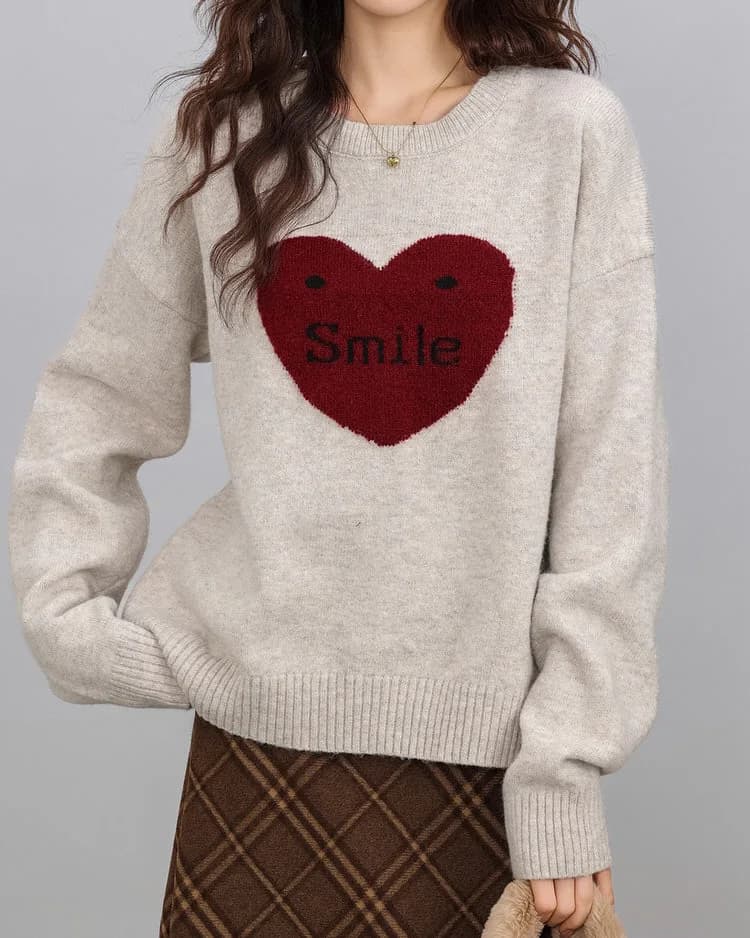
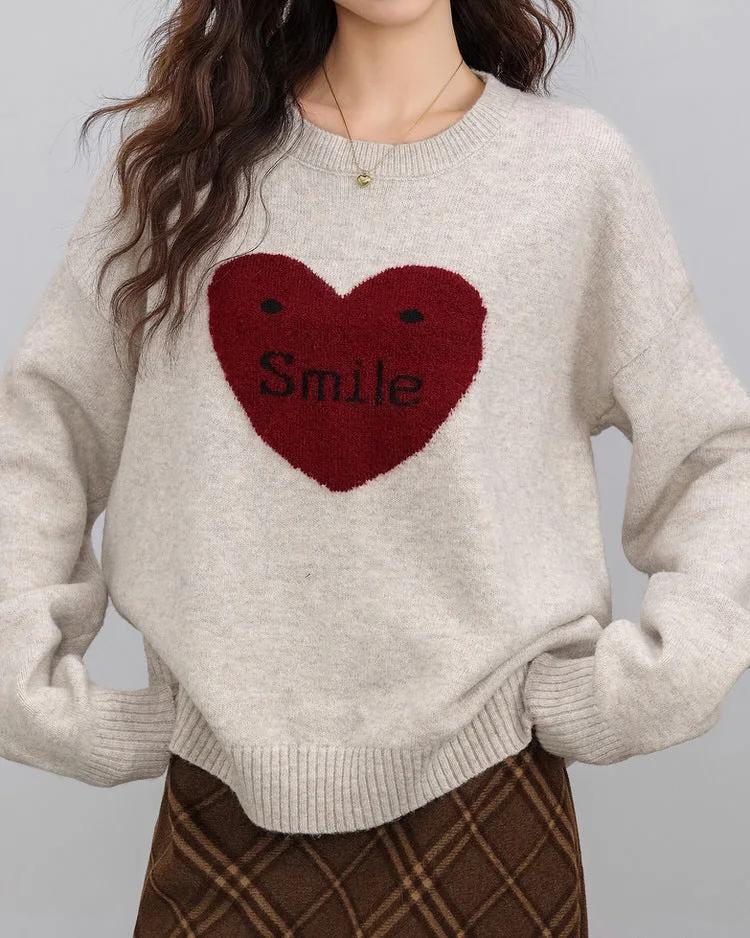
If you like a cute, soft look, the Soft Girl Warm Heart Sweater is listed in polyester in a grey and red colourway, in Free Size. Free Size means the fit will vary by body, so check the listing details and think about whether you want it as a relaxed top layer rather than something to fit under a snug jacket.
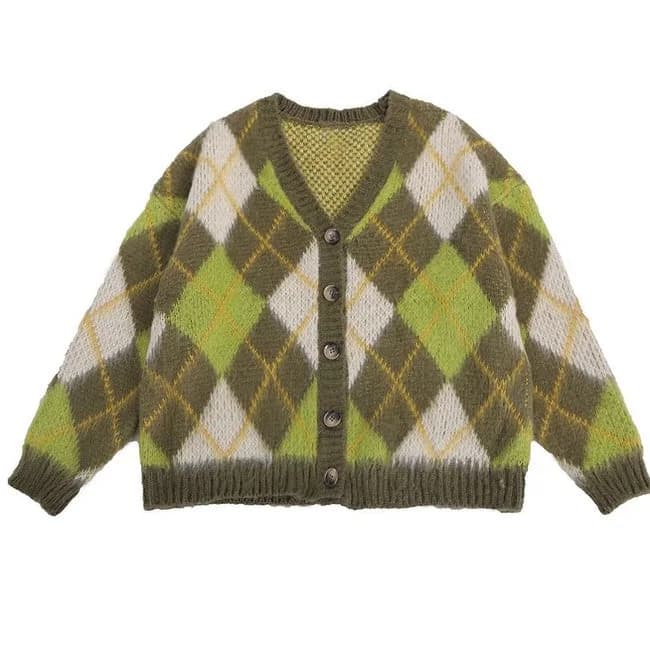
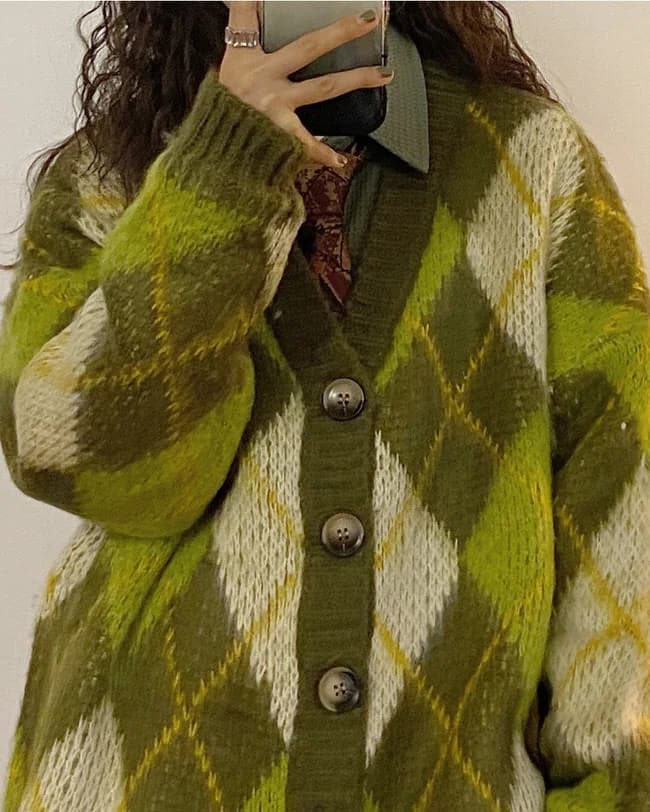
For a more structured option, the Warm Vibes Green Argyle Cardigan Sweater is listed in acrylic, green, in M, L and XL. A cardigan is handy for thin layeringWearing pieces over or under one another to add depth, warmth or contrast. because it opens at the front. You can wear it under an open jacket, or take it off in a warm room without disturbing your base.
Pair either with a slim base and straight or fitted bottoms. Let the sweater be the one piece with personality, and keep everything near it quiet. That keeps the silhouetteThe overall shape an outfit creates, from fitted to loose and layered. tidy even with three layers going on.


Tight-Weave Outer Layers and Wind
Wind is what makes thin layers feel cold. Loose, open knits let air pass through, which is why a sweater alone can feel icy on a breezy day. A tightly woven outer layer closes those gaps. When you shop outerwear, look for a smooth, dense-looking surface rather than a loose or fuzzy one.
Cut counts here too. A jacket that is trim through the body but has room in the sleeves lets you layer a fine knit without strain. Check the listing for sizing and think about your thickest likely middle layer, then try the jacket with that in mind.
Closures help as well. A zip or snaps that sit flat, plus a collar that can close around your neck, keep warmth in without adding thickness. Details like these cost nothing in bulk and make a real difference on a windy walk.
- Dense, smooth surface beats loose or fuzzy
- Trim body, workable sleeves
- Collar and closures that sit flat
- Size for your thickest middle layer
Two Jackets for a Slim Outer Layer
The Preppy Style Warm Checkered Jacket is listed in polyester, in a Brown/blue colorway, sizes S, M and L. The checked pattern is the focus, so keep the layers beneath plain: a solid base and a fine knit in one of the pattern's colours.
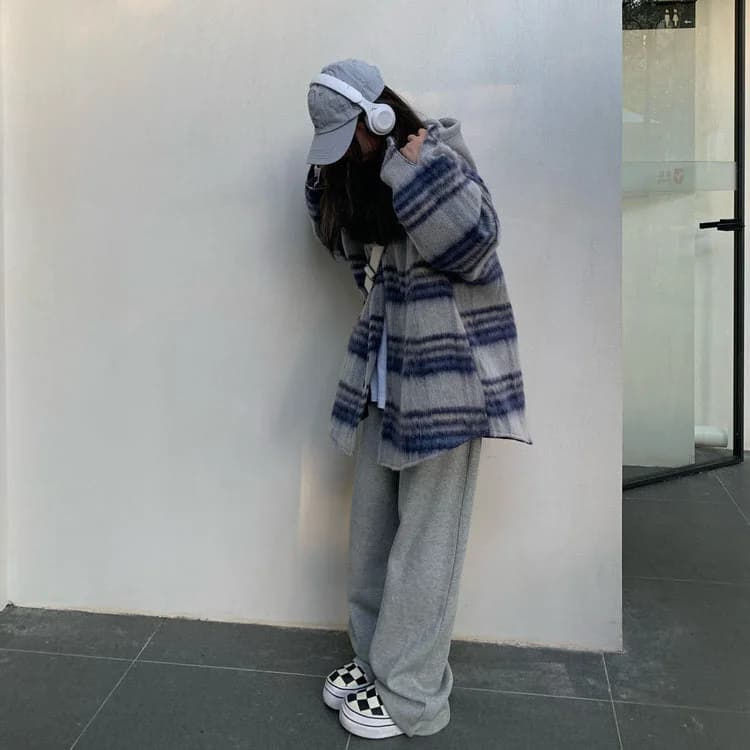
The Warm Vibes Plaid Jacket is listed in cotton and polyester, Blue/grey, in S, M and L. Plaid works well over solid knits and under nothing at all, as a light outer layer that adds a bit of structure.
With either, try your layers on together at home first. If you plan to wear a cardigan underneath, size with it in mind. If the jacket will mostly sit over a fitted top, your regular size may be enough. Always follow the sizing information on the product page.

Move Warmth to Legs and Feet
When your torso is wrapped in thin layers, legs and feet are where cold sneaks in. The nice thing is that warmth here adds almost no visible bulk. Socks sit inside shoes, and tights or leg warmers sit under or over bottoms, so your jacket and top half stay slim.
Start with socks that fit your shoes. Thick socks in tight shoes squeeze your feet and can actually make them colder, so choose a thickness that leaves space. Then look at aesthetic tights and stockings for a layer under skirts, shorts or ripped denim.
This is a good place to add personality too. A patterned sock or a textured tight gives you a style moment low on the body, away from the jacket and sleeves where fit is more delicate.
- Socks should leave toe room in your shoes
- Tights go under skirts and shorts
- Keep top layers slim, put texture low
Leg Warmers as Flexible Extra Warmth
Leg warmers are useful because you can add or remove them in seconds. They cover the gap between boots and hems, where wind often hits. They also work over tights, so you can build warmth in steps rather than committing to a heavy pair of trousers.
Several are listed: the Y2K Bows Leg Warmers in white acrylic, the Grunge Ripped Leg Warmers in cotton and polyester with grey, brown, green, beige and black options, the Grunge Zip Up Leg Warmers in polyester in grey, black or white, and the Warm Vibes Leg Warmers in brown polyester. All are listed as one size.
Choose by mood. The bows lean sweet, the ripped and zip styles lean grunge, and the plain brown pair is the easiest to pair with a checked or plaid jacket. Wear them over tights and tuck or pull them over boot tops, depending on your shoe height.
Outfit Formula: Skirt Day
Start with a fitted long sleeve base, then a fine or medium sweater. Add tights under a skirt, then leg warmers pulled up over the knee or scrunched at the calf, and a trim jacket on top. Your torso carries two thin layers, your legs carry two thin layers, and nothing is thick.
For a concrete version, try a plain top, the green argyle cardigan, a pleated skirt, dark tights, brown leg warmers and a plaid jacket left open. The colours stay in a warm, earthy range, so the pattern mix looks planned rather than random.
Proportion tip: if the skirt is short, let the leg warmers reach just below the hem so there is a clear stretch of covered leg. If the skirt is long, use warmers shorter and lower, as a detail at the boot.
Outfit Formula: Jeans and Boots
Trousers are simple. Wear a slim base, a fine knit, and a tight-weave jacket. Add warm socks sized to your boots. If you want extra leg warmth, wear tights or a thin pair of leggings under looser jeans, as long as the jeans still fit comfortably at the thigh and knee.
One version: a fitted long sleeve, the grey and red heart sweater worn loose, straight jeans, and the checkered jacket over the top, left open. The jacket needs enough sleeve room, so check how the sweater feels when you reach forward before committing.
Leg warmers can go over jeans too, scrunched at the ankle for a grunge shape. This works best with boots that have some height, and with jeans that taper or can be tucked, so the fabric does not bunch awkwardly.
How to Compare Options Before Buying
Product pages give you a few reliable facts: material, colour options and sizes. Use them. Check the material listed, then think about what job the piece will do. Something meant as a base should be thin and stretchy. Something meant as an outer layer should look dense and structured in the photos.
Next, look at sizing. Free Size and One Size listings mean the fit is general, so think about how much stretch or looseness you are comfortable with. For sized items, read the size information and decide whether you are layeringWearing pieces over or under one another to add depth, warmth or contrast. under or over before choosing.
Finally, ask what each piece replaces. If a new sweater just duplicates one you own, it adds bulk to your drawer, not warmth to your day. Aim for pieces that fill a gap: a base, a slim knit, a wind-blocking shell, or a leg and foot layer.
- Read material, colours and sizes on each page
- Decide whether the piece goes under or over
- Free Size means a general fit, so check details
- Buy to fill a gap, not repeat what you have
Common Pitfalls With Thin Layers
The most common mistake is making the middle layer too thick. It feels cosy in the mirror, then the jacket will not close. Second is a base layer that is too loose, which bunches and leaves gaps where cold air enters. Snug is the point.
Another trap is tight everything. Layers need a little room to trap air, and squeezing them together can feel restrictive. Aim for fitted at the base, comfortable in the middle, and just enough room in the outer layer.
Also watch the hands, neck and feet. A strong outfit can still feel cold if the gaps are open. Cuffs that cover your wrists, a collar that closes, and socks that fit your shoes are small fixes that matter more than adding another sweater.
Adjusting for Different Weather
Cold is not one thing. Dry cold, damp cold and windy cold each want slightly different choices. For wind, put your effort into the outer shell and a closed collar. For damp days, choose outer layers that look dense and keep an extra pair of socks handy. For dry, still cold, an added mid layer does most of the work.
Think in terms of adding and removing rather than a fixed outfit. A cardigan that opens, leg warmers that pull off, and a jacket you can unzip give you control as temperatures shift between outdoors, transport and indoor spaces.
Because this is about conditions rather than the calendar, use the same logic wherever you are. If it feels cold and windy, strengthen the outer layer. If it feels cold and calm, add loft in the middle. Check the weather and adjust one layer at a time.
Quick Checklist Before You Leave
Run through this list at the door. It takes a minute and saves you from being cold or cramped halfway through the day. It also helps you spot which piece to change if something feels off.
If one item fails the check, change only that one. Swap the thick sweater for a thinner one, or the loose base for a fitted one, and test again. Small adjustments usually fix the problem without a whole new outfit.
Over time you will notice which combinations you reach for. Keep those as your go-to formulas, and add new pieces from the sweaters, outerwear or socks pages only when they fill a real gap.
- Base is fitted and thin
- Middle layer is fine or medium weight
- Jacket zips and arms reach forward
- Collar and cuffs close gaps
- Socks fit your shoes with room to spare
- Legs have tights or warmers if needed
- One layer can come off indoors


