
70s
70s Boots
Ground vintage outfits with 70s boots built to anchor both flared silhouetteThe overall shape an outfit creates, from fitted to loose and layered.s and modern cuts. Featuring models crafted with structured TPR outsoles, smooth PU insole materials, and sizes spanning 5 to 10.5, our footwear selection balances platform hems, tailored trousers, and A-line skirts. Standard shipping is free on every order. Priority shipping is available at checkout.
5 pieces to exploreFree standard shipping on every order
5 pieces


Your guide to 70s Boots
How Should You Choose Your First Pair of 70s Boots?
Shaft height and hemline habits determine which retro footwear cut integrates best into your current rotation. Ankle silhouetteThe overall shape an outfit creates, from fitted to loose and layered.s provide dependable versatility because they slip beneath wide pant legs without bunching fabric, while keeping calves exposed beneath mini skirts. Look closely at outsole geometry and sole materials to ensure the foot profile harmonizes cleanly with your staple wardrobe garments.
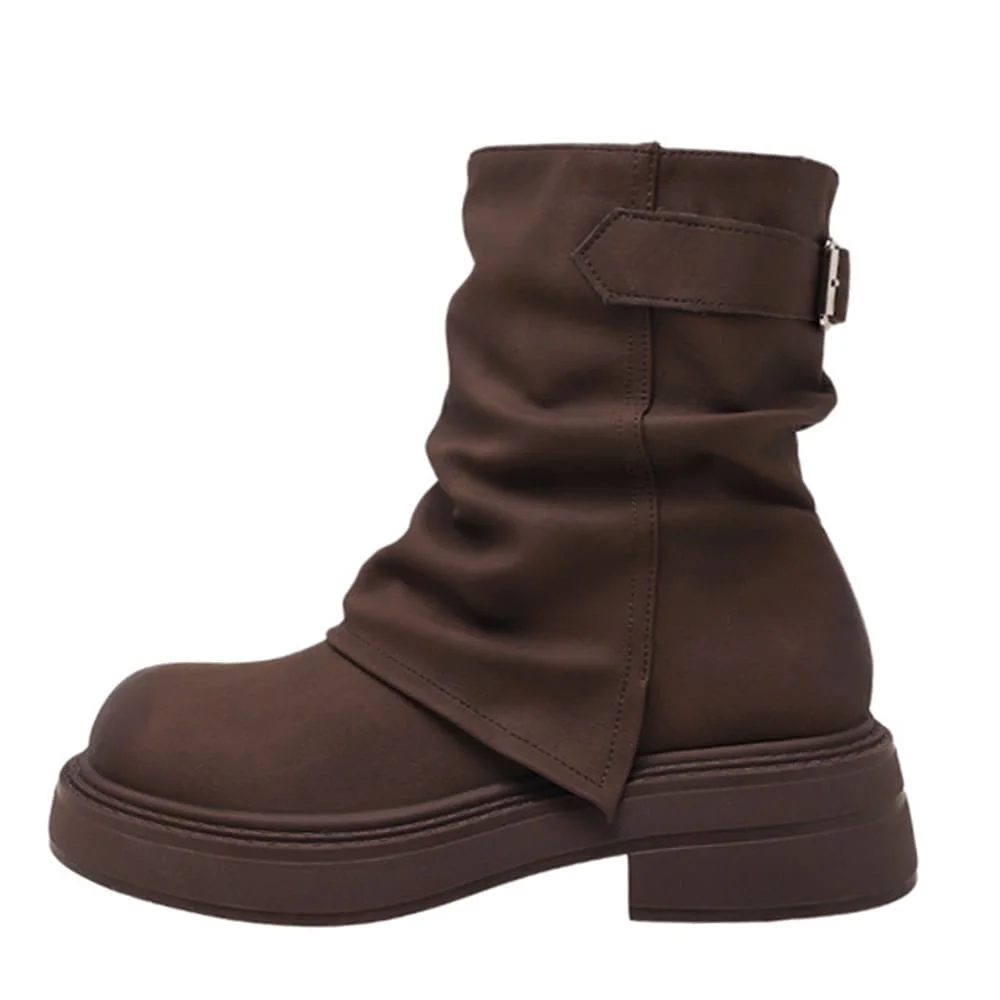
A practical starting point is the classic 70s Ankle Boots, constructed with a molded TPR outsole and an internal PU insole. When reviewing color options, consider your existing outerwear: rich brown and deep black serve as adaptable neutrals, whereas bright white or vivid blue introduces an intentional, high-contrast focal element across simple ensembles.
Examine your bottom hemlines before settling on a specific collar height. If you frequently wear tapered pants, low boot collars rest comfortably beneath cuffs without distorting tailored lines. For wide-leg hems, a firm ankle structure keeps sweeping fabric edges elevated away from dirty pavement and damp sidewalks.
Take a direct measurement of your foot length against a rigid ruler placed flat along a wall. Matching your foot measurements to retro silhouetteThe overall shape an outfit creates, from fitted to loose and layered.s prevents pressure points across the instep, ensuring your selected numerical size offers proper internal clearance from the very first wear.
Which Pants Hemlines Work Best Over 70s Boot Profiles?
The flare angle on your trouser cuffs dictates how vintage footwear interacts with the ground. Bell bottoms, flared jeans, and floor-skimming wide trousers require sufficient sole height and firm toe shapes to hold fabric off the floor while maintaining a smooth vertical drape down the leg.
Pairing structured ankle cuts with floor-length 70s pants prevents lower cuffs from dragging without creating an awkward fabric break above the shoe arch. Look for trouser lengths where the back hem rests along the mid-heel line, leaving the front toe profile cleanly visible.
Avoid trousers with ankle cuffs narrower than the boot shaft unless you deliberately plan to tuck them inside. Low ankle boot profiles rarely accommodate tucked denim folds neatly, as their collars are designed to fit close around the ankle joint rather than contain thick layers of fabric.
For cropped wide-leg cuts, choose boots with a collar that extends upward beneath the hem. Maintaining a continuous fabric-to-footwear line prevents random horizontal strips of bare skin, preserving the continuous, elongated visual proportions that define classic retro tailoring.
How Can You Style 70s Boots with Retro Dresses and Skirts?
A-line mini skirts and button-front skirts contrast sharply against structured ankle footwear. Because ankle designs finish just above the ankle bone, they leave the leg line completely visible, complementing flared skirt hems without overpowering the silhouetteThe overall shape an outfit creates, from fitted to loose and layered. or cluttering shorter hem proportions.
When assembling daytime outfits, balance smooth synthetic footwear finishes with textured 70s skirts made of corduroy, twill, or structured denim. The tactile contrast between matte woven clothing textures and smooth PU surfaces creates natural outfit depth without requiring fussy accessory layeringWearing pieces over or under one another to add depth, warmth or contrast..
For flowing printed garments, look toward 70s dresses cut to midi lengths. Ensure the dress hem sits at least two inches above the top of the boot collar, or extends past the ankle, preventing the fabrics from brushing awkwardly against the upper boot opening as you walk.
Pairing dark brown or black boots with matching opaque tights creates an unbroken vertical line that lengthens your legs. Conversely, styling bare legs with bright white or vivid blue boots draws eyes downward, emphasizing crisp, geometric lines drawn straight from mid-century mod fashion.
What Upper Garments Create Proper Proportions with Ankle Boots?
Managing visual weight across your upper torso prevents vintage footwear from appearing disproportionately heavy. Firm, structured ankle silhouetteThe overall shape an outfit creates, from fitted to loose and layered.s carry noticeable grounding presence, which pairs naturally with fitted knitwear or clean, tailored shoulder seams rather than loose, shapeless garments.
Pair your footwear with close-fitting knit tops from the 70s tops collection to anchor balanced proportions. When garments fit snugly through the torso, wide-leg trousers and angular boot soles combine to produce an intentional, balanced triangular or hourglass outline.
To accentuate high-waisted bottoms, introduce clean silhouetteThe overall shape an outfit creates, from fitted to loose and layered.s from 70s crop tops. A cropped upper hemline visually raises the waist, offsetting the heavier visual weight of TPR outsoles and firm heel blocks down near the ground.
LayeringWearing pieces over or under one another to add depth, warmth or contrast. ribbed cardigans, tailored vests, or fitted mock-neck tops reinforces authentic vintage aesthetics. Maintain crisp garment edges and smooth fabrics so the clean lines across your footwear echo the structured seams in your upper layers.
How Do You Choose Between Brown, Blue, White, and Black Boots?
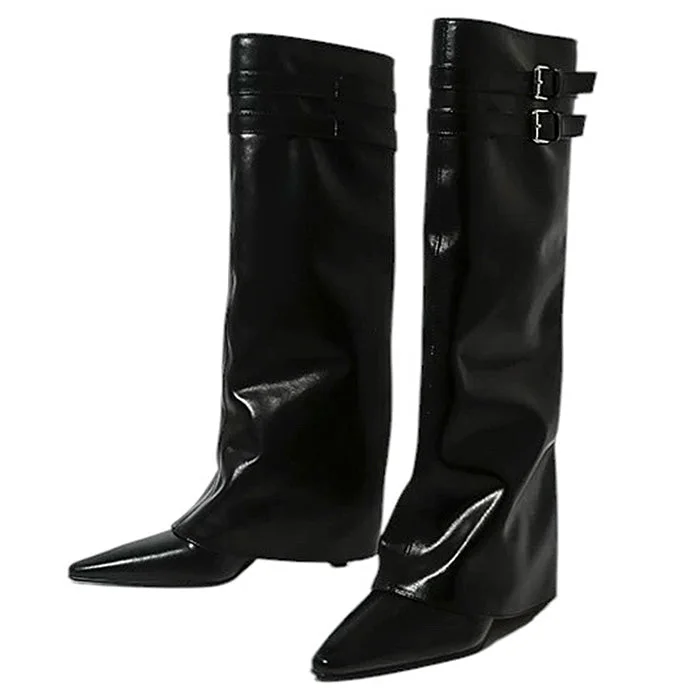
Footwear color determines how frequently you can circulate a single pair through your weekly wardrobe rotation. Black remains the most utilitarian shade for urban environments, resisting visible scuffs and salt stains encountered during daily pedestrian transit across city sidewalks.
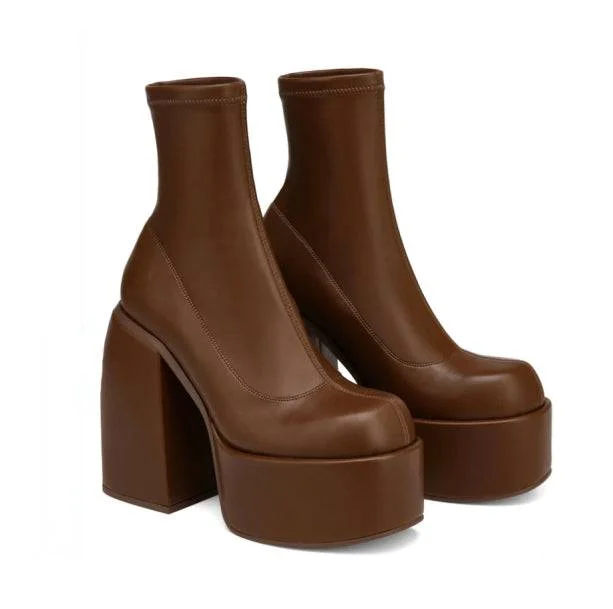
Warm brown tones ground earthy palettes composed of rust, mustard, olive, sage, and unbleached cream. Opting for brown leather-look finishes works exceptionally well when wearing heritage textured knits like 70s sweaters, establishing cozy, tonal harmony across cold-weather outfits.
Bright white boots deliver a clean, crisp mod statement that brightens deep indigo denim, navy tailoring, and soft pastel shades. While white surfaces require occasional wiping with a damp cloth to remove street dust, their distinctive contrast makes minimal outfits pop.
Vivid blue boots function as directional accent pieces for expressive styling. Utilize blue footwear to highlight monochrome denim outfits or inject bold saturation beneath neutral coats, transforming your shoes into the definitive centerpiece of an everyday look.
Which Retro Accessories Correctly Balance Boot Shapes?
Accessories serve as intentional counterweights to the substantial soles of retro footwear. Because structured boots draw immediate visual attention downward, repeating corresponding colors and shapes across upper accessories preserves outfit symmetry without introducing unnecessary clutter.
Incorporate tailored accents from our 70s accessories to harmonize materials across your look. A leather-look belt in a shade matching your shoes defines your waistline, providing a neat visual anchor above flared trousers or wide jeans.
Coordinate your everyday essentials by carrying structured silhouetteThe overall shape an outfit creates, from fitted to loose and layered.s found within 70s bags. Pairing a firm, geometric shoulder bag or boxy crossbody with angular ankle boots creates complementary upper and lower focal points that feel planned and cohesive.
Select sculptural, geometric jewelry like cast metal hoops or resin pendants. Clean lines in jewelry mirror the structured contours of TPR outsoles without competing against vibrant boot colors, maintaining a polished, cohesive aesthetic from head to toe.
How Should You Navigate Boot Sizing When Charts Are Unavailable?
When purchasing footwear like the ankle boot style, choosing your correct size requires attention to standard numeric sizing scales. The featured model spans sizes 5 through 10.5, offering half-step increments to help achieve proper toe-box depth and instep clearance.
Because specific millimeter footbed measurements are currently unavailable for this model, reach out to customer support to request inner sole dimensions before finalizing your order. Checking your exact foot length against verified shoe metrics ensures you pick the best-fitting numerical size.
Take sock thickness into account when planning your fit. Heavy wool socks or cushioned athletic ribs take up roughly half a size worth of internal shoe volume compared to sheer nylon hosiery or lightweight dress socks.
Do not anticipate that synthetic materials will stretch significantly; synthetic PU insoles and TPR outsoles maintain their structural shape over time. Select your true numerical size based on your wider foot's resting dimensions to prevent toe crowding.
How Do You Coordinate 70s Footwear for Different Occasions?
Adapting retro footwear across changing social environments relies on balancing casual and formal garments. For relaxed weekend wear, combine your boots with everyday vintage-wash denim and printed pieces from 70s t-shirts for a casual, effortless look.
For office or evening outings, replace graphic cottons with tailored button-downs and pressed wide trousers. Letting wide trouser cuffs drape over the boot shaft exposes only the neat toe box, maintaining professional lines suitable for business-casual settings.
Browsing through 70s aesthetic clothes provides further styling inspiration, including corduroy jackets, pinafores, and color-blocked knits that naturally flatter brown, black, white, and blue synthetic leather finishes.
Standard shipping is free on every order. Priority shipping is available at checkout.
What Outsole Materials Are Used in 70s Ankle Boots?
Material construction determines shoe stability, weight, and general ground feel underfoot. In the featured ankle design, the outsole is constructed from TPR, or Thermoplastic Rubber, an engineered synthetic polymer widely used in contemporary footwear production.
TPR provides a stable, molded base that maintains its shape across diverse ground surfaces. Unlike traditional hard leather soles from historical eras, TPR outsoles resist moisture penetration from wet pavement, keeping water away from the bottom seams of the shoe.
Inside the boot, a PU synthetic insole provides a smooth contact surface beneath your foot. This non-porous material wipes clean easily with a dry cloth and prevents the interior lining from deteriorating rapidly after repeated daily wear.
Understanding these specific materials helps you plan proper footwear care. Both TPR and synthetic PU can be cleaned using mild soap and water, avoiding the specialized conditioning oils required by genuine animal leathers.
How Should You Care for Synthetic Leather and TPR Soles?
Proper maintenance preserves the appearance of smooth synthetic uppers and molded outsoles over prolonged wear. Synthetic PU does not absorb standard wax-based leather conditioners, so basic cleaning requires only simple household methods to remove dust, street grit, and grime.
Wipe the exterior surface of your boots using a soft microfiber cloth lightly dampened with lukewarm water. For stubborn surface smudges on white or blue finishes, a tiny drop of gentle liquid soap lifted with a clean cloth removes scuffs easily.
Allow your footwear to air dry at room temperature away from direct heating vents, radiators, or hot sunbeams. Excessive heat exposure can dry out synthetic adhesives and degrade the flexibility of TPR rubber outsoles over time.
Clean out the tread grooves on the TPR bottom using a soft nylon bristle brush to remove dried mud and pebbles. Storing your boots with lightweight paper stuffing inside the toe box prevents creasing across the vamp when stored between seasons.