Created by the Kawaii Vibe editorial team. Our named style desks are editorial personas. Product details and availability can change.
Balancing 80s pants outfits comes down to managing contrasting shapes rather than piling on oversized garments everywhere at once. The hallmark of classic eighties casualwear is not simply excess; it is structural balance. When trousers carry high volume through the hips or thighs, tops need either distinct waist definition or a deliberate boxy crop to keep the entire frame from looking swallowed by fabric.
Whether you gravitate toward sharp tapers, wide legs, or bold patterned bottoms, understanding where horizontal lines cut across your body makes the difference between a messy silhouetteThe overall shape an outfit creates, from fitted to loose and layered. and an intentional retro profile. We look at exact cut variations, layeringWearing pieces over or under one another to add depth, warmth or contrast. lengths, footwear breaks, and waist management so you can assemble functional everyday outfits using pieces from our collections.
Every body shape handles volume differently, so treating historical shapes as flexible formulas helps you tailor retro style to your day-to-day comfort. By breaking down hem tapers, fabric drape, and jacket proportions, you can build sharp vintage-leaning looks that feel grounded, practical, and easy to move in.
The Baseline Silhouette: The Upside-Down Triangle Formula
The dominant silhouetteThe overall shape an outfit creates, from fitted to loose and layered. in 1980s casual styling relies on an inverted triangle or an exaggerated hourglass. To achieve this, trousers typically feature high rises that anchor directly at the natural waistline, accompanied by generous room through the hips and upper thighs. If you examine authentic period street looks, wide shoulders paired with voluminous hips narrow sharply toward the ankles. This structural tapering keeps baggy pants from pooling haphazardly around your shoes.
To assemble this baseline, pair roomier bottoms with fitted or tucked garments from our 80s Tops selection. Tucking a top firmly into a high waistband sets an immediate focal point, establishing the upper torso as a distinct unit before the leg fabric curves outward. Without that visual anchor, loose fabric from an untucked sweater or long tee collides with hip pleats, muddying the transition between upper and lower halves.
When selecting pieces from the 80s Pants category, identify whether a cut widens continuously downward or tapers toward the ankle bone. If the cut remains wide all the way to the floor, your top layer needs to be noticeably shorter or closely fitted. If the pant narrows down to a snug cuff, you have much more freedom to wear broader, looser outerwear on top without losing your frame.
- Anchor the waistband at your natural waist rather than the hips to lengthen the leg line.
- Pair wide-hip trousers with securely tucked t-shirts to define the midsection.
- Choose tapered ankle cuffs when you want to wear relaxed, loose-fitting jackets.
Tapered Pegs and High Rises: Managing Ankle Breaks
Tapered cuts, often referred to as peg trousers or carrot fits, are central to retro silhouetteThe overall shape an outfit creates, from fitted to loose and layered.s. These designs balloon slightly at the hip and thigh, then grip inward toward the shin. The critical mechanical issue with tapered pants is where the hem falls relative to your footwear. If a peg leg is too long, the excess fabric collapses over the top of the shoe in awkward accordion folds, ruining the sharp diagonal line of the cut.
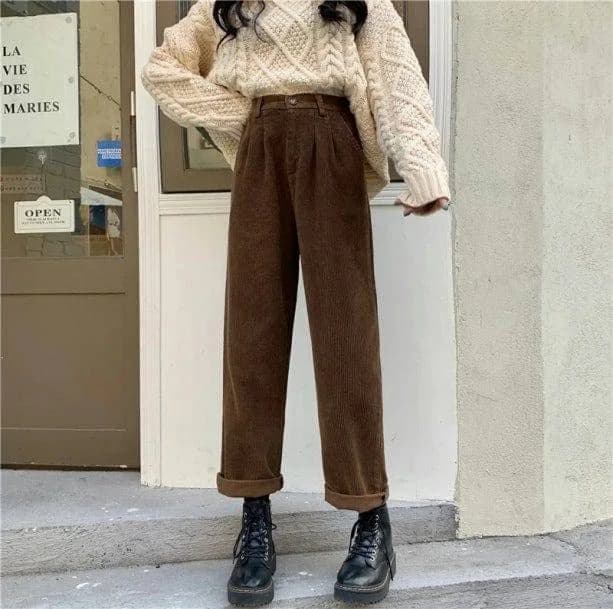
Ideally, a tapered hem should hover just at the top of the ankle bone or rest with a single clean break against low-profile sneakers. If you are working with straight or relaxed denim, rolling the cuff inward or outward—known as a pinroll—tightens the hem against your ankle. For an authentic denim structure, exploring 80s Jeans will give you the durable, non-stretch cotton feel necessary to hold crisp rolls in place throughout a full day of movement.
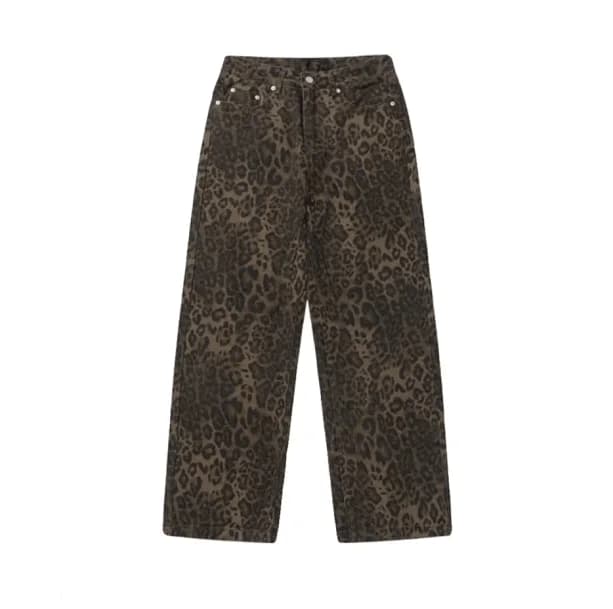
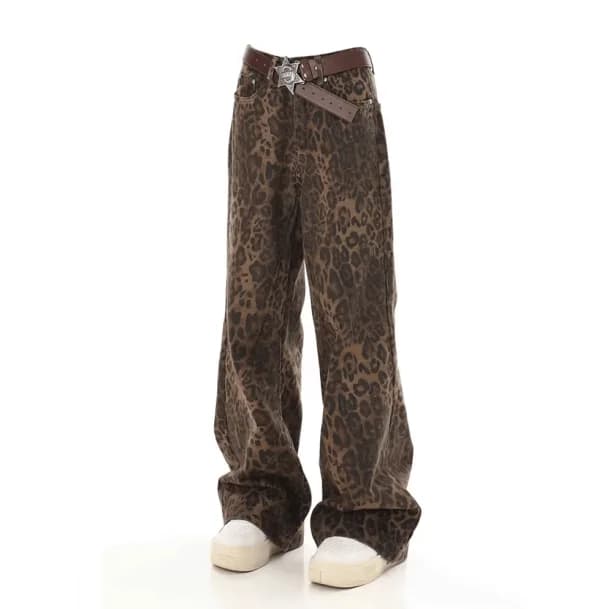
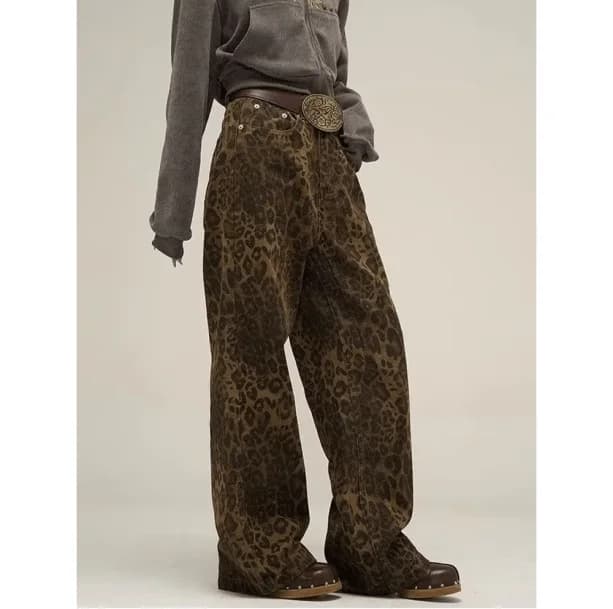
For an easy everyday option with pre-set relaxed proportions, the Leopard Print Loose Pants provide generous leg space in a cotton-polyester blend. These come in sizes Small to Extra Large. Because the fabric has a flowing quality, styling them with low-profile leather lace-ups or flat skate shoes prevents the hem from bunching, maintaining clean vertical movement from waist to floor.
Balancing Wide-Leg Trousers Without Overwhelming Your Frame
While tapered legs define casual streetwear of the decade, broad flowing trousers represent the era's sophisticated side. Wide trousers create an architectural statement, but they demand strict control over upper-body volume. If both your top and your trousers feature maximum width with no visible waistline, the overall look flattens out, hiding your body's natural proportions under a solid wall of fabric.
The solution is maintaining a clean vertical drop from hip to floor while keeping upper layers cropped or tucked. A wide leg requires enough length to brush the top of the shoe sole without dragging on the ground. When styled correctly, the trouser leg forms an unbroken column that elongates your lower half. Pairing these bottoms with cropped cuts from our 80s T-Shirts collection allows the high-rise waistband to remain completely visible.
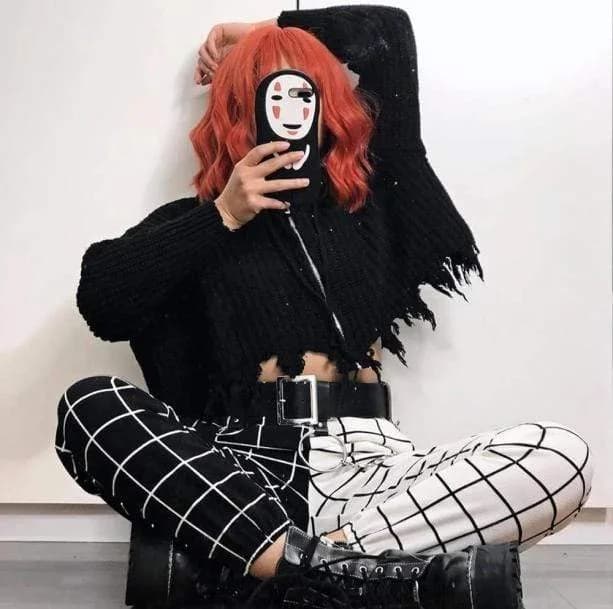
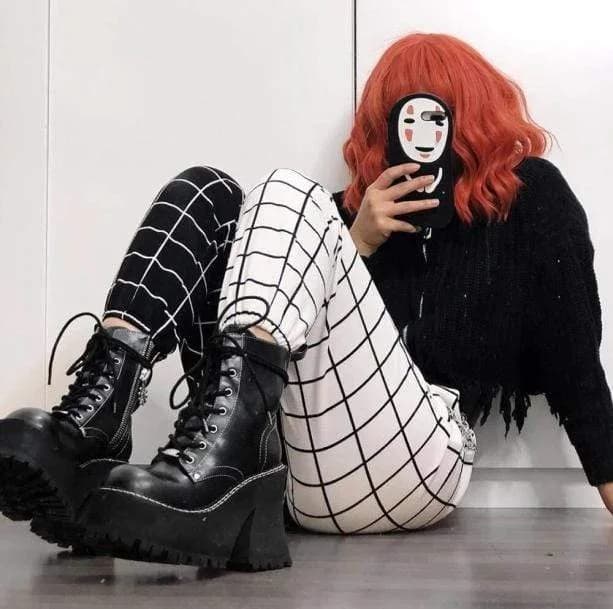
If you prefer a clean, minimal graphic base, the Black and White Pants offer a split, straight-to-wide visual line across sizes Small through Extra Large. Because the stark vertical color split already draws the eye up and down, keeping the top half neutral and fitted avoids visual competition. A fitted black crew neck tucked inside ensures the graphic panels read as deliberate geometry rather than chaotic clutter.
- Keep wide hems approximately half an inch above the ground to preserve clean movement.
- Avoid mid-hip jacket lengths; choose either a cropped hem or a long duster coat.
- Use fitted, untextured basic tops to balance loud graphic patterns on broad legs.
Texture Weight: Corduroy, Denim, and Lightweight Knits
Texture is often overlooked when calculating outfit proportions, yet fabric weight directly dictates how a garment hangs. Stiff, heavyweight textiles like raw denim or heavy twill project outward from the body, physically occupying more physical space. In contrast, softer cotton blends and fluid polyesters drape downward in gentle vertical folds, creating a narrower profile even when the cut contains plenty of fabric.
When layeringWearing pieces over or under one another to add depth, warmth or contrast. pieces from the broader 80s Aesthetic Clothes catalog, pairing like-weights together can make an outfit feel heavy or stiff. For example, pairing a dense denim jacket with heavy canvas trousers creates an armor-like block. Instead, mix fabric weights: balance a structured, rigid bottom with a softer, finely knit top, or pair fluid bottoms with a thick, stiff outer layer.
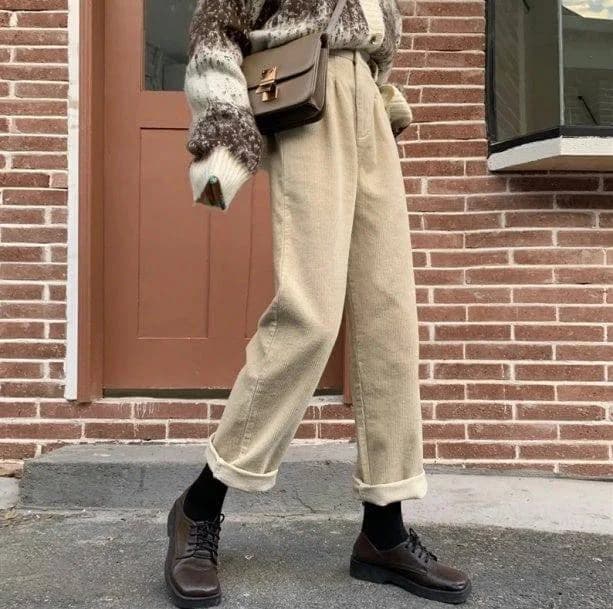
A practical example of rich seasonal texture is the Grandmacore Corduroy Pants, available in Brown, Beige, Black, and Purple in sizes Small to Large. The ribbed corduroy ridges generate physical depth and catch light across the leg width. Because corduroy holds its own shape along vertical seams, pair it with lightweight, smooth cotton jerseys to keep bulk around the waistband manageable.
Cropped Outerwear Versus Long Overcoats
Jacket length can instantly make or break 1980s proportions. The two most effective outer layers for retro trouser cuts sit at opposite extremes: the cropped bomber or track jacket, and the mid-calf overcoat. Garments that finish mid-hip—such as standard modern raincoats or standard-fit zip hoodies—frequently cut across the widest part of high-rise trousers, flattening the dynamic taper and creating an awkward square block.
A cropped jacket works by ending exactly at or slightly above your pant waistband. This preserves the full length of the trousers, allowing high-waisted designs to maximize the visual leg line. This pairing is ideal for shorter frames or anyone wanting to appear taller while wearing voluminous peg legs or deep front pleats. The crisp horizontal break at the natural waist acts as a hinge between the upper and lower halves.
Conversely, a long trench or duster coat hanging down to the mid-calf creates strong vertical outer framing lines. When worn unbuttoned, it exposes the high-waisted tuck down the center while the outer panels flutter around the pants. This pairing works exceptionally well with wide trousers, providing breezy motion while preventing side-to-side fabric flare from widening your silhouetteThe overall shape an outfit creates, from fitted to loose and layered. uncomfortably.
- Avoid jackets that terminate directly across the widest point of your hips.
- Use cropped jackets ending at the waist to emphasize high-rise structural cuts.
- Leave long coats unbuttoned to maintain an exposed vertical center column.
Tucking Strategies: Full Tuck, French Tuck, and Hem Bands
How you tuck your shirt directly alters the balance between your torso and your legs. In modern casual wear, an untucked shirt is the standard default, but with 1980s trouser shapes, leaving your shirt hem loose frequently covers the waistband, hip pockets, and pleating details that make the cut recognizable. Mastering a few deliberate tucking techniques allows you to regulate garment volume with precision.
The full tuck is the foundational technique for retro outfits. By gathering your shirt fabric evenly around your torso and feeding it completely into the waistband, you expose the entire rise of the trousers. For thicker tees, smooth the fabric flat against your stomach and sides before fastening your pants to eliminate lumpy bulges beneath the fly. A sturdy leather belt can then sit cleanly across the waistband to clearly mark your midsection.
The banded tuck offers an alternative if you dislike tucking fabric inside your waistband. You can gather the bottom hem of a loose sweatshirt or tee and fold it upward into an elastic waist stay or tie it slightly beneath the ribcage. This creates an authentic blouson effect, where excess fabric balloons softly above the waistband while leaving the high-rise silhouetteThe overall shape an outfit creates, from fitted to loose and layered. visible and uncluttered below.
Footwear Anchors: Chunk, Height, and Vamp Considerations
Trousers with substantial leg volume demand footwear with enough visual heft to anchor the look. If you wear an ultra-slim, low-profile canvas plimsoll beneath heavy denim or broad corduroy, the pant hem dwarfs the shoe, making your feet look undersized and causing the trouser cuffs to drag awkwardly on the pavement. Balancing the bottom hem requires choosing the right sole thickness and ankle height.
Mid-height retro basketball sneakers, chunky tennis shoes, and heavy lug-sole loafers all provide a firm foundation for wider cuts. When styling tapered peg pants, a slightly elevated sole or padded sneaker collar catches the tapered cuff, preventing it from sliding under your heel. The visible vamp—the upper front portion of the shoe—should remain partially clear so the foot maintains its structure beneath the pant leg.
If your outfit leans toward dramatic flares rather than straight or tapered legs, shoes with moderate platforms or solid block heels become functional essentials. The Aesthetic Bell Pants, made from a cotton-polyester blend in Light Blue, Dark Blue, and Black across sizes Small to Extra Large, feature wide bell cuffs that flare outward from the knee. Pairing these flared hems with a platform shoe ensures the fabric falls smoothly without bunching at the hem.

Pattern Distribution and Color Blocking
Color distribution plays an active role in how trouser width is perceived. Bright hues and high-contrast patterns naturally draw the eye and create the illusion of expanded surface area, while deep, matte shades recede. If you wear vibrant or heavily patterned trousers, the surrounding garments need to be positioned intentionally to keep the outfit unified rather than overwhelming.
To let patterned pants stand out without losing control of your silhouetteThe overall shape an outfit creates, from fitted to loose and layered., anchor the top half in a solid, grounding shade pulled directly from the trousers' design. For example, if your bottoms feature neon accents against a neutral base, selecting an upper layer in that same neutral keeps the eye moving vertically. Alternatively, color-blocking two bold solids—such as pairing purple bottoms with an emerald or mustard top—honors the vibrant aesthetic of the eighties without muddying the garment shapes.
Softer pastel choices can temper bold shapes. The Aesthetic Lavender Pants, offered in sizes Small, Medium, and Large, provide an accessible entry point to colorful retro dressing. The soft pastel lavender hue softens the visual impact of the leg cut, allowing you to pair them with simple white tees or neutral knitwear without having to manage high-contrast clashes.
- Pair high-contrast patterned trousers with solid tops to preserve upper-body clarity.
- Use dominant colors from patterned bottoms to guide outer layer choices.
- Choose softer pastel tones when trying roomier trouser cuts for a gentle profile.
Hardware, Belts, and Edge: Incorporating Alternative Accents
The 1980s encompassed multiple subcultural aesthetics, from polished pop prep to edgy alternative rock and post-punk styling. Subcultural looks heavily incorporated metallic hardware, utility loops, and layered chain accessories to break up wide expanses of plain fabric. Adding these accents gives structure to relaxed trousers, giving casual cuts a distinct, street-ready attitude.
When adding hardware, placement is everything. Draping wallet chains or utility clasps directly from the belt loops creates diagonal metallic lines that draw the eye inward across the hips. This diagonal emphasis breaks up the horizontal width of baggy pants, preventing them from appearing flat. A wide belt with a solid metal buckle also serves as an unyielding divider between upper and lower halves, grounding high-rise fits.
If you enjoy alternative, high-energy accents, the Red Pants With Chains come with integrated chain hardware in sizes Small, Medium, and Large. The deep red fabric makes an immediate visual statement, while the metallic accents define the upper hip line. Styling these with a fitted black top tucked securely beneath the hardware lets the waistline pop without clashing against your upper layers.
Pleated Fronts and Tailored Cues for Casual Days
Front pleats were standard tailoring details throughout the 1980s, designed to introduce practical room through the hips without widening the waistband. Single or double reverse pleats expand comfortably when you sit or walk, falling flat into neat vertical creases when you stand. Wearing pleated trousers in modern casual environments bridges the gap between classic tailoring and relaxed streetwear.
To keep pleated pants feeling casual rather than stiff, contrast them with relaxed, informal garments. A soft cotton graphic t-shirt or a relaxed polo shirt balances the structured formality of front pleats. Be sure to check the fit across your hips: if pleats pull open while you are standing still, the pants are too tight across the seat, which disrupts the vertical drape and forces the fabric to widen outward horizontally.
A versatile option combining structured lines with casual styling is the Dark Academia Pants, constructed from a cotton-polyester blend in sizes Small through 3XL. These trousers provide comfortable fullness through the thigh while holding a clean tailored line down the leg. Worn with casual knit tops or simple sneakers, they deliver retro tailoring without feeling overly formal.
- Ensure pleats lie flat when standing to keep vertical lines crisp and unbroken.
- Contrast structured pleated fronts with informal tees or relaxed casual shirts.
- Select pants with enough seat room to prevent hip pockets from flaring outward.
Seasonal Weather Adjustments: Hot Humidity to Cold Winds
Retro trouser silhouetteThe overall shape an outfit creates, from fitted to loose and layered.s adapt easily across changing climates, provided you adjust your material choices and layeringWearing pieces over or under one another to add depth, warmth or contrast. approach. In high heat and humidity, full-length denim or thick twills can feel stifling. Look for loose, breathable cottons with relaxed leg cuts that encourage airflow. A wide-leg silhouetteThe overall shape an outfit creates, from fitted to loose and layered. in a light fabric often feels significantly cooler than modern skinny cuts, as the fabric sits away from your skin.
During colder months, the generous volume of eighties cuts becomes a major practical benefit. Tapered peg trousers and roomy straight legs offer plenty of space to layer thermal leggings underneath without causing unsightly fabric tension or bunching at the knees. This built-in space lets you stay warm while maintaining an unconstricted, comfortable range of motion.
Outer layeringWearing pieces over or under one another to add depth, warmth or contrast. during cold weather requires close attention to coat lengths. When bundling up against icy winds, pair your wide trousers with either a heavy, cropped shearling jacket or a full-length wool overcoat. Avoid medium-length parkas that stop right at the hip, as they squeeze the volume of the trousers inward at an awkward point, distorting both your warmth and your proportions.
Curating Unique Retro Combinations: Playful and Romantic Takes
Not every 1980s look has to lean into athletic sportswear or moody alternative street style. The era also saw expressive, playful trends incorporating pastels, romantic graphics, and novelty cuts. Mixing whimsical design elements into structured trouser outfits lets you build customized, expressive daily looks while keeping foundational proportions in check.
When styling lighthearted or pastel bottoms, balance the cut by pairing them with streamlined basics. An oversized pastel trouser can easily look juvenile if paired with an equally chaotic or unshaped top. Ground the outfit by matching whimsical pants with classic ribbed tanks, clean monochrome basics, or minimalist jackets that add structural discipline to the overall outfit.
For an expressive retro-casual approach, the Y2K Lovecore Pants, available in a One Size cut, bring playful visual detailing to casual daywear. Because novelty graphic accents draw attention immediately to the legs, keep upper layers simple and understated. A solid, fitted tee balances the playful print below, keeping the complete look coordinated and intentional.
- Pair novelty or pastel prints with solid, structured tops to prevent visual overload.
- Keep accessories minimal when your trousers feature prominent graphic elements.
- Balance relaxed, playful cuts with neat footwear to maintain clear outfit boundaries.

Common Pitfalls: Sagging Rises, Mismatched Breaks, and Fabric Swallowing
When building retro-inspired outfits, small styling missteps can throw off your overall proportions. The most frequent pitfall is wearing high-rise trousers down around the hips. Eighties cuts are engineered with longer rises intended to sit at your natural waist. Letting them sag drops the crotch line unnaturally low, shortening the visual length of your legs and making the thighs look disproportionately bulky.
Another common problem is pairing wide, pooling pant hems with flimsy, ultra-flat shoes. When wide-leg hems pool haphazardly on the ground, the fabric folds inward, ruining the clean column shape you want to achieve. If your trousers are too long, either have them hemmed to clear the floor, roll them cleanly, or switch to footwear with a thicker sole to lift the cuffs off the ground.
Finally, avoid wearing oversized, heavyweight garments on both your top and bottom halves simultaneously without any waist definition. Pairing an oversized drop-shoulder sweater with unhemmed, baggy trousers creates an undifferentiated, shapeless silhouetteThe overall shape an outfit creates, from fitted to loose and layered.. If you prefer loose garments everywhere, use a French tuck, a narrow belt, or push up your sleeves to show your forearms, creating small visual breaks that keep your body frame legible.
- Always pull high-rise trousers up to your natural waistline to preserve intended proportions.
- Hem or roll overly long trousers to prevent hems from bunching over shoe tops.
- Introduce small skin breaks, like rolled sleeves or cuffed hems, when wearing loose layers.
The Outfit Proportion Checklist: Assembling Your Look
Before stepping out in an eighties-inspired trouser ensemble, run through a quick mental checklist to ensure your proportions work in harmony. Balancing cut width, hem length, and layeringWearing pieces over or under one another to add depth, warmth or contrast. volume does not require rigid formulas, but keeping these practical principles in mind helps you quickly spot why an outfit feels slightly off-balance.
Start with the waistband: is it sitting at your natural waist, and is your top either tucked, cropped, or structured enough to reveal your midsection? Next, examine the hem: does the trouser cuff fall cleanly against your footwear without uncontrolled puddling or dragging? Finally, look at your outer layers: does your jacket terminate either high at the waist or low past the knees, avoiding awkward hip-length interruptions?
• Rise Check: High-rise pants sit securely at the natural waist, avoiding dropped, sagging crotch lines. • Waist Visibility: Tops are tucked, banded, or cropped to define the transition between torso and trousers. • Break Balance: Tapered hems finish cleanly at the ankle; wide hems hover just above the shoe sole. • Footwear Mass: Shoes have sufficient visual weight and sole thickness to anchor the leg width. • Layer Length: Outerwear stops cleanly at the waistline or extends past mid-thigh to preserve clean lines. • Texture Mix: Heavy, rigid bottom fabrics are balanced with softer, fluid tops (or vice versa)
to avoid rigid bulk. • Hardware Placement: Belts and chain accents follow natural structural lines across the waist and hips.
Use this reference checklist before heading out to ensure your retro pants outfit looks sharp, intentional, and comfortable for all-day wear: