Created by the Kawaii Vibe editorial team. Our named style desks are editorial personas. Product details and availability can change.
Building balletcore skirt outfits usually comes down to solving one specific problem: volume control. Dance skirts bring softness, draping, and movement into an outfit, but pairing them with the wrong shirt or clunky footwear can throw off your overall silhouetteThe overall shape an outfit creates, from fitted to loose and layered. within seconds. When you assemble an outfit around airy tulle, chiffon wraps, or structured pleats, your top and shoes must actively balance the skirt rather than compete with it.
Instead of treating this style like an all-or-nothing stage costume, you can treat it as a modular approach to proportions. By looking at how waistbands hit, where hemlines fall, and how close-fitting your base layers are, you can assemble outfits that look intentional and comfortable for walking around your city, meeting friends, or studying at a café.
This guide breaks down the mechanics of pairing tops, adjusting waist placements, managing seasonal layers, and choosing footwear for different skirt cuts. Along the way, we link specific options from our balletcore clothes range so you can compare cuts, materials, and colors with complete clarity.
1. The Fundamental Balance Formula for Dance Silhouettes
The easiest way to make a ballet-inspired skirt work for daily life is following a strict rule of opposites. If your skirt has ruffle tiers, flared chiffon, or gathers that push outward, your top needs to sit relatively close to your torso. Conversely, when your skirt is slim, straight, or lightly draped, you have the freedom to layer a boxy knit or an oversized cardigan across your upper body without losing your frame entirely.
When an outfit features excess fabric on both the top and bottom halves simultaneously, the eye has nowhere to rest. A voluminous tiered skirt paired with an oversized boyfriend sweatshirt often swallows your frame completely, erasing the clean lines associated with dance wear. Keeping your base top snug against the ribs establishes a clear anchor, allowing the movement of the skirt to stand out cleanly.
If you want to keep things simple while getting dressed, start by scanning our catalog of balletcore skirts. Identify whether the piece you are styling falls into the voluminous category or the streamlined category before picking your shirt. Once you define the skirt's visual weight, selecting the correct top becomes a straightforward process of counterbalancing.

2. Working with Wrap Skirts and Adjustable Tie Waistbands
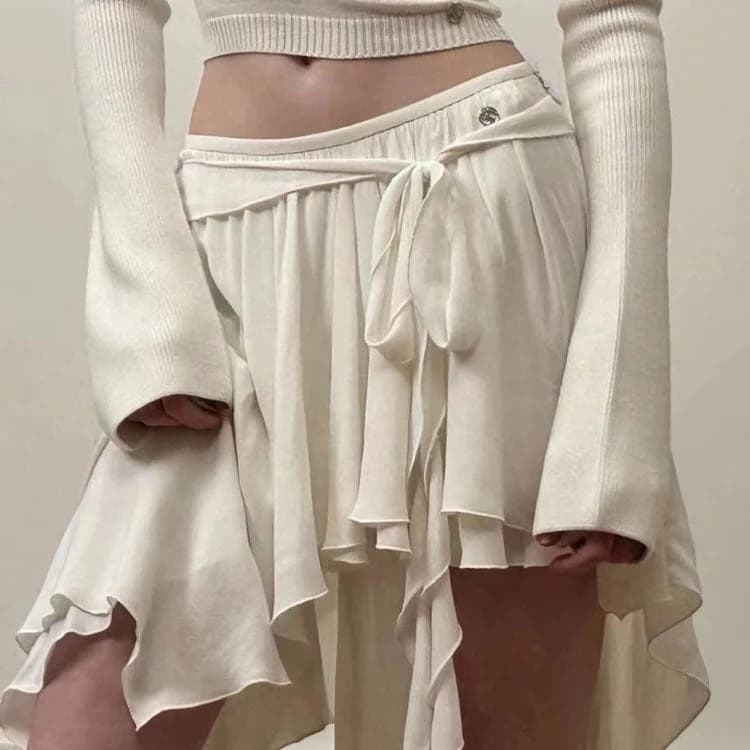
Wrap skirts are a foundational staple in studio practice, and they behave differently from standard elastic-waist garments. Because they secure with ties around your natural waist or high hip, they create diagonal crossover lines in front and dynamic folds along the hem. This means any shirt you wear must not disrupt the tie or add lumpy bulk beneath the thin fabric.
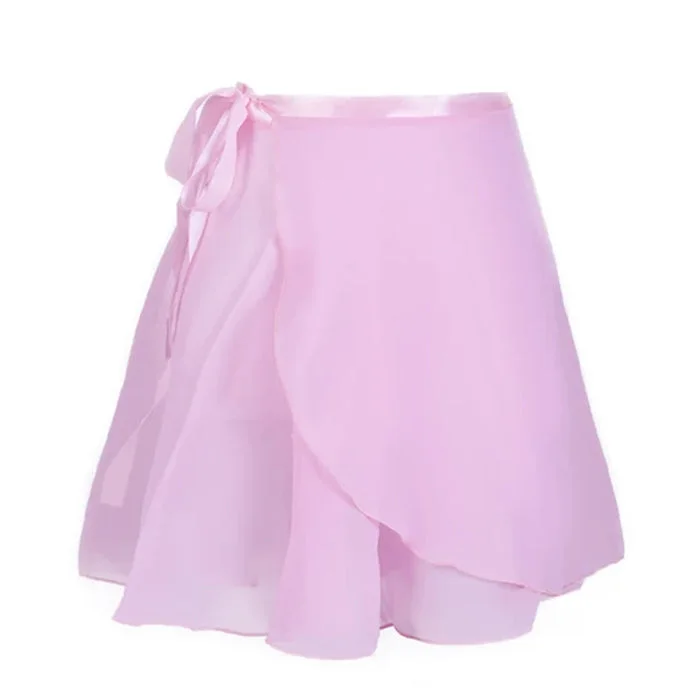
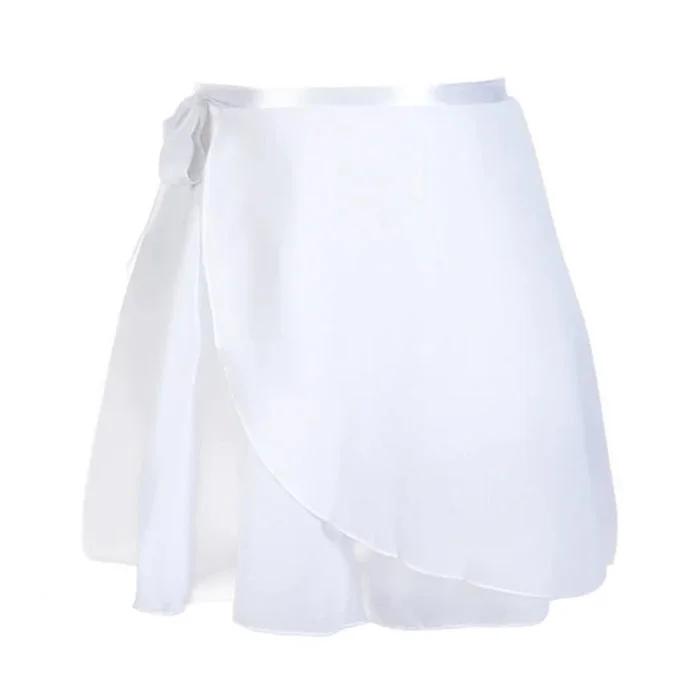
A practical piece for this outfit formula is the Balletcore Wrap Skirt, made from lightweight polyester and offered in shades like Pink, Black, Baby Blue, Navy Blue, White, Purple, Red, Green, and Brown across sizes S, L, and XL. Because it wraps smoothly around the body, styling it with a bodysuit or a finely ribbed camisole keeps the waistband flat and prevents bunched fabric from showing underneath.
When tying a wrap skirt, tie the ribbon firmly along the side or slightly toward your hip bone rather than directly in the middle of your stomach. A front knot can press uncomfortably into your abdomen while sitting down and visually interrupts the vertical line of your torso. Letting the tie rest flat against your hip creates a clean profile that works well under fitted jackets or unbuttoned cardigans.
- Choose bodysuits or fitted base layers to eliminate fabric bunching under the waistband.
- Secure ties on the side hip to maintain a smooth front profile.
- Pair sheer or light wrap skirts with color-matched safety shorts or seamless briefs.
3. Mini Skirt Proportions: Balancing Short Hemlines with Coverage
Short skirts require careful attention to visual weight. Because a mini skirt exposes a large expanse of leg, wearing a tiny, skin-baring top can sometimes make an outfit feel visually bottom-heavy or overly minimal. Balancing a mini skirt often involves introducing higher necklines, long sleeves, or layered hosiery to distribute coverage harmoniously across your entire body.
Our dedicated selection of balletcore mini skirts includes cuts ranging from flared micro-ruffles to structured pleats. To balance these shorter lengths on cool mornings, opt for boatneck long-sleeve tops, thin mock necks, or light knit boleros. The contrast between covered arms and bare or hosiery-clad legs creates the refined poise typical of classical dance wear.
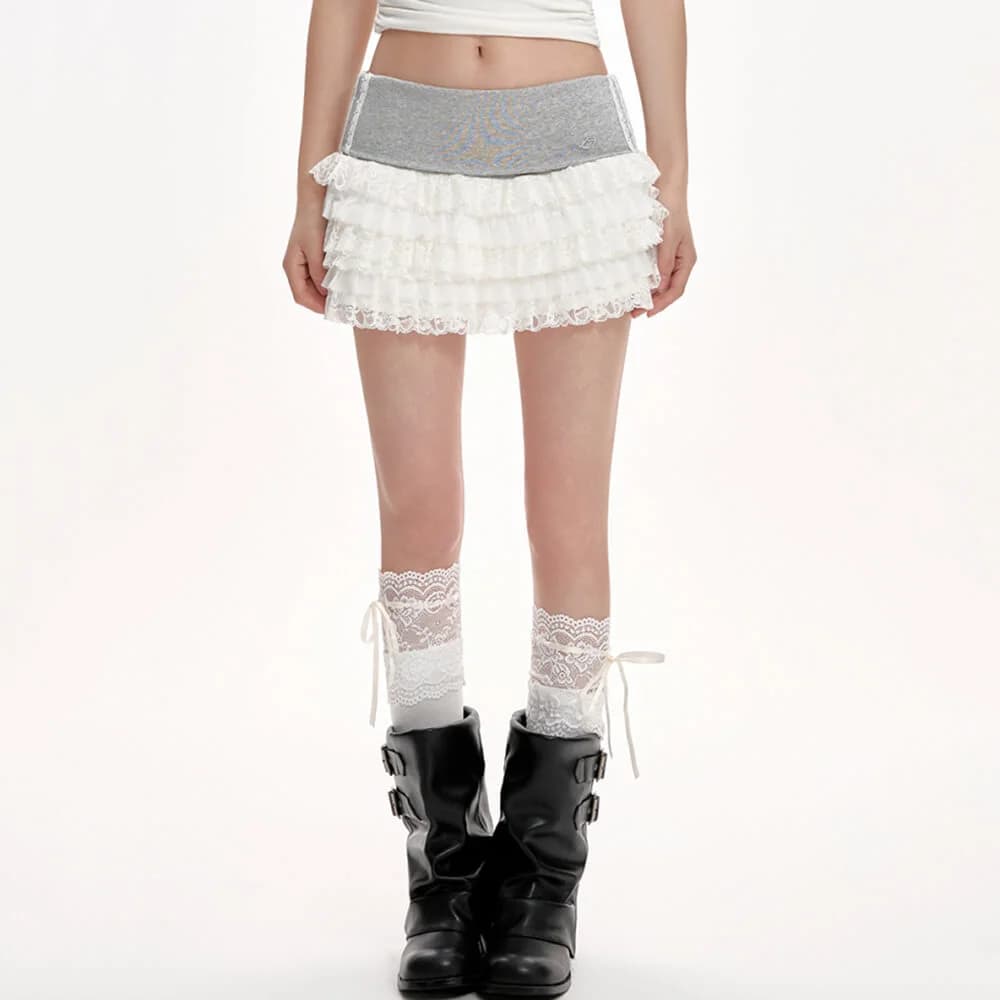
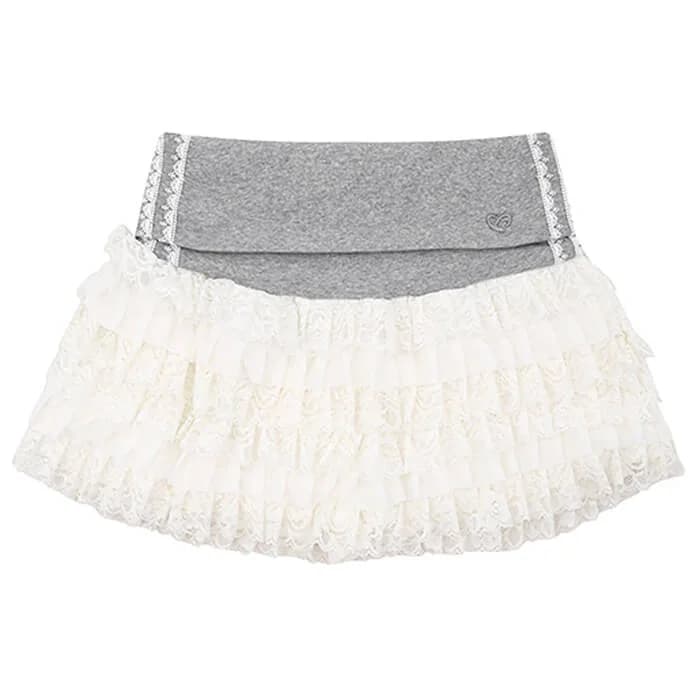
For an athletic spin that bridges cute details with casual streetwear, look at the Blokette Ruffle Lace Mini Skirt, crafted in grey cotton and polyester across sizes S, M, and L. The sporty heather grey backdrop mixed with white ruffle lace provides texture, meaning your top can remain simple. A plain white baby tee or a lightweight fitted zip jacket works effortlessly alongside it.

4. Pleated Skirts and Managing Mid-Section Bulk
Pleated designs bring sharp geometry and uniform folds to your lower half. Unlike soft tulle, pleats hold their shape firmly and fan outward with movement. This structural volume means you must pay close attention to the transition point between your ribs and your hips to avoid visual bulk where the fabric gathers.
Browsing through balletcore pleated skirts gives you an idea of how pleat widths influence your silhouetteThe overall shape an outfit creates, from fitted to loose and layered.. Wide box pleats sit flatter against the hip, while micro-accordion pleats add immediate texture and fluff. To keep the midsection smooth, tuck your shirts completely into the waistband or select cropped cuts that finish precisely where the pleats start.
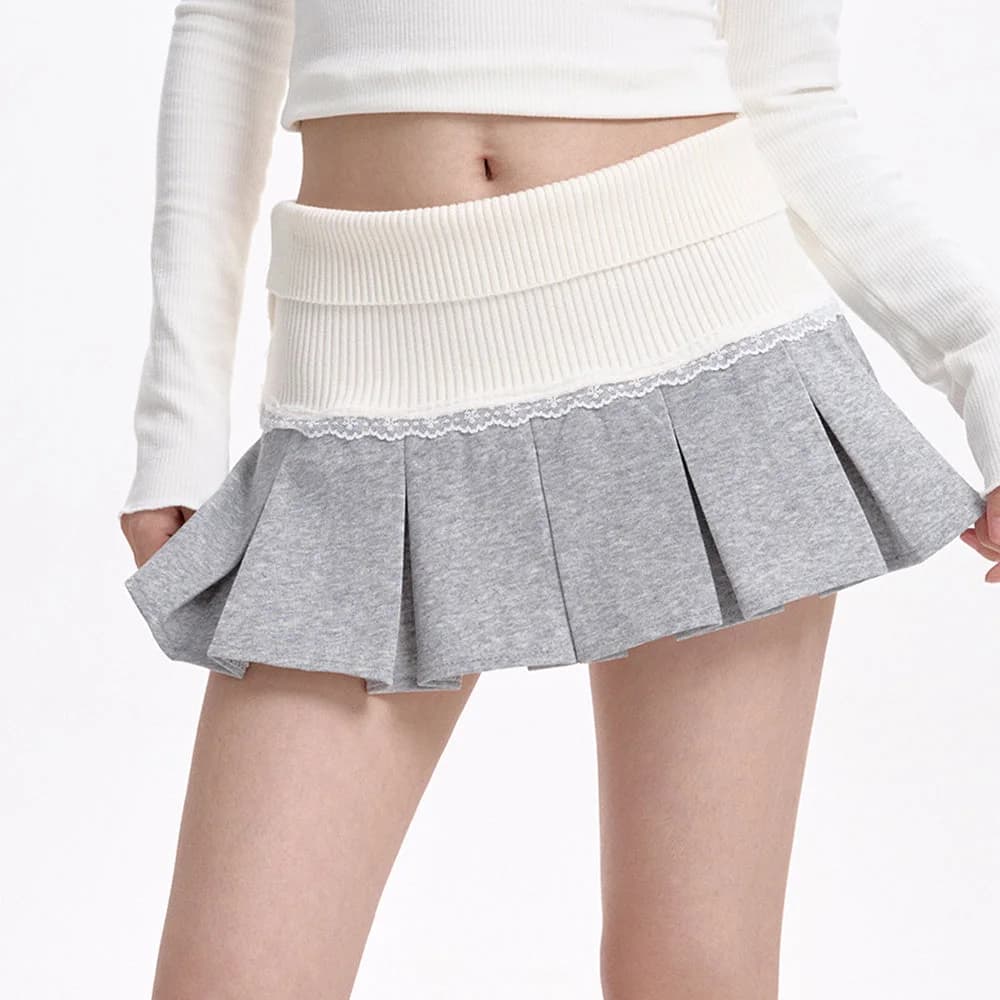
A reliable wardrobe option here is the Soft Girl Ribbed Waist Pleated Mini Skirt. Made from a polyester and cotton blend in a grey and white combination (sizes S, M, L), it features a wide ribbed band at the waist. This knit section sits flat against your midriff before opening into crisp pleats, which prevents the gathers from pushing outward across your lower stomach.
5. Tops That Define the Torso: Bodysuits, Sweethearts, and Lace
The upper half of a balletcore outfit should support the movement of your skirt without feeling stiff. Tops with sweetheart necklines, square collars, cap sleeves, and ruched fronts mimic classical leotards while remaining comfortable for daily errands. The primary objective is to maintain a crisp line from your shoulders down through your ribcage.
You can explore dedicated silhouetteThe overall shape an outfit creates, from fitted to loose and layered.s in our balletcore tops section, which emphasizes clean seamlines and dance-inspired details. If your skirt is solid and understated, your top can incorporate gathered hems, ribbons, or lace trims to draw focus upward toward your collarbone.
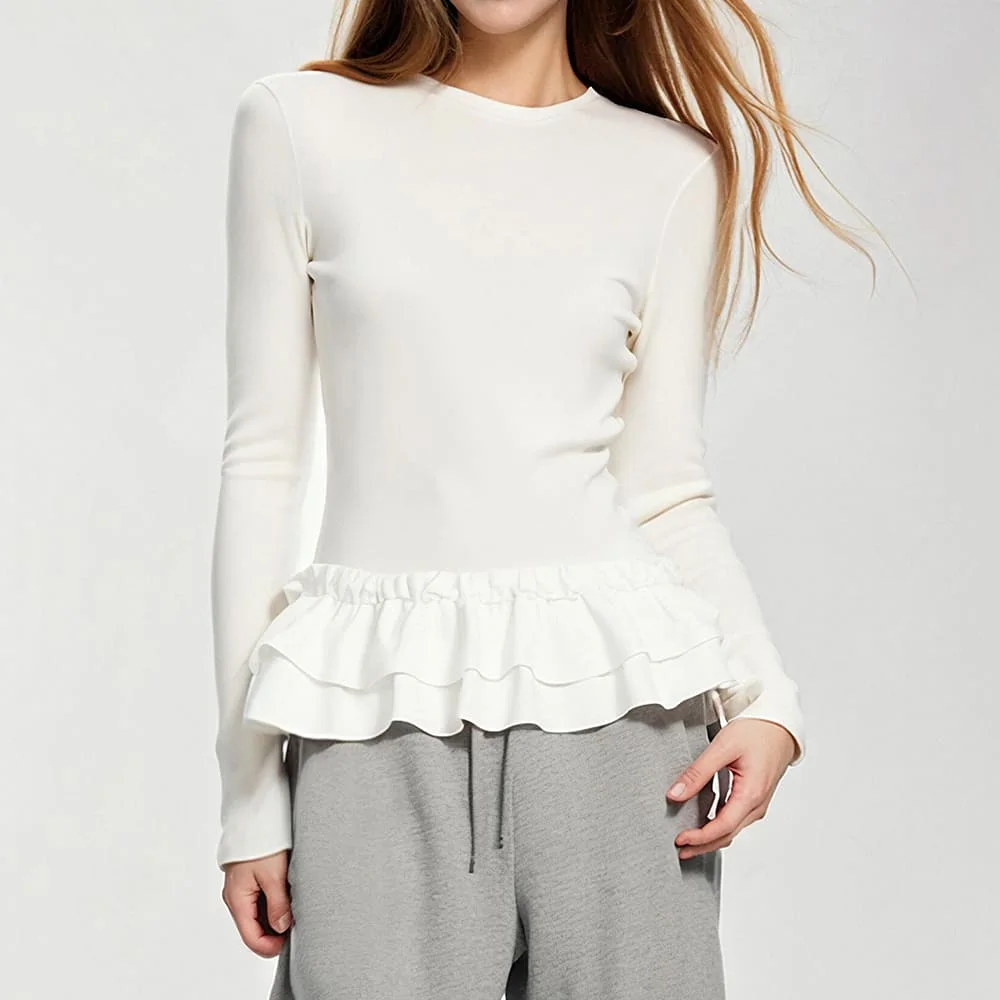
For a textured upper layer, the Balletcore Ruffle Long Sleeve Top in white (cotton and polyester, sizes S, M, L) provides romantic gathering along the neckline and cuffs. Alternatively, if you want an airy accent piece to layer over a neutral bralette or camisole, the Balletcore Aesthetic Bow Mesh Top in white and red polyester (sizes S, M, L) adds graphic contrast while keeping your upper frame light and defined.
6. Asymmetrical and Flowing Mid-Length Silhouettes
Mid-length and asymmetrical skirts introduce complex hemlines that move independently as you walk. An asymmetrical hem breaks up the horizontal line across your calves, which can visually lengthen your legs. However, because the bottom of the skirt has varied angles, the top half of your outfit should prioritize symmetry and clean geometric lines.
Consider the Balletcore Asymmetrical Mid Skirt, constructed from cotton and polyester in White and Black across sizes S, M, and L. The sweeping diagonal hem creates a dynamic cascading effect. To keep this piece grounded, choose a fitted halter top, a simple scooped tank, or a tucked-in jersey knit that doesn't compete with the skirt's shifting hemlines.
For a more uniform drape that still offers generous calf-length flow, look at the French Girl Ballet Skirt, made from a soft viscose and spandex blend in Grey and Black (sizes S, M, L). Viscose yields a liquid-like drape that falls close to the thighs before rippling outward. Pairing it with a tucked-in monochrome top creates an elongated vertical column that looks graceful and uncluttered.
7. Deciding on Waist Placement: High-Rise vs. Dropped Waists
Waistline placement alters the overall visual balance of your outfit more than almost any other variable. A high-rise skirt sits securely over your navel, shortening your apparent torso length while creating the impression of longer legs. This cut is forgiving, easy to style with cropped tops, and keeps you feeling supported throughout the day.
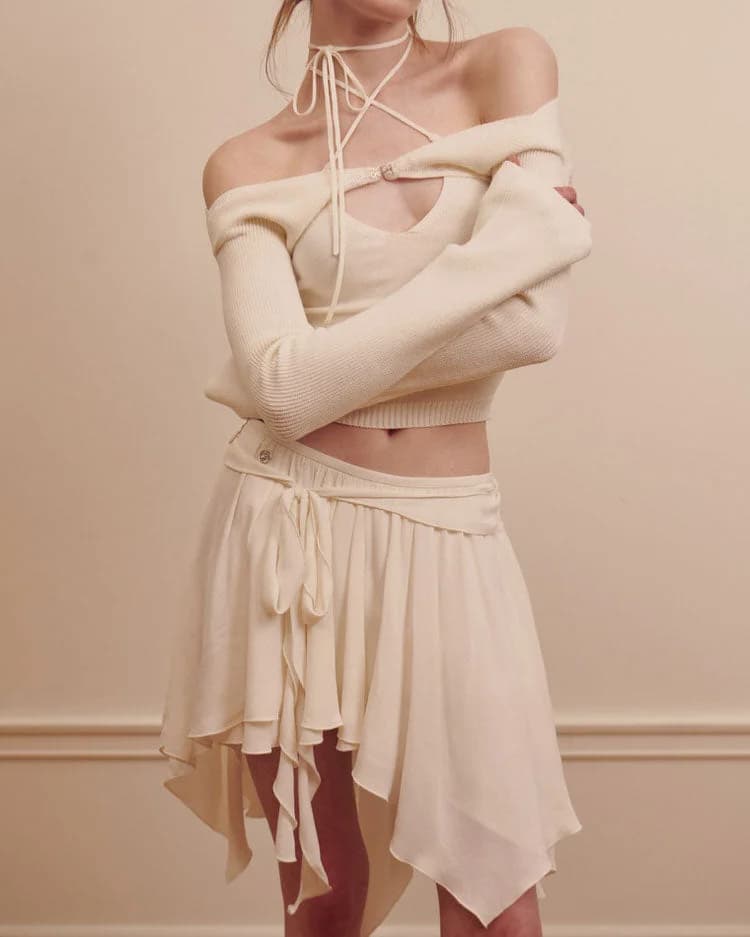
A dropped waist, or low-slung waistband, shifts the focus down toward your hip line. This cut evokes vintage rehearsal wear and looks particularly striking when paired with long, streamlined tank tops or boatneck tunics that drape straight down to the hips before the skirt flares out. It elongates your torso and lends a more casual, undone mood to the outfit.
When choosing your waist height, consider your daily activities. High-waisted bands tend to remain stable during prolonged walking, whereas low-slung skirts can shift as you sit and stand. If you want a one-and-done piece that handles waist placement for you, the Swan Balletcore Mini Dress in white polyester (sizes S, M, L) provides a pre-balanced bodice-to-skirt ratio without needing tucking or belt adjustments.
8. Footwear Styling: Traditional Flats vs. Chunky Contrast Shoes
Your choice of shoes dictates whether your outfit feels classically delicate or grounded and modern. The most literal shoe pairing is a traditional ballet flat: square-toed or round-toed slippers in satin, leather, or canvas. Adding an elastic foot strap or ribbon ankle ties reinforces the dance inspiration and works seamlessly with floaty chiffon skirts.
However, wearing delicate flats with a very delicate skirt can occasionally feel fragile or costume-like. Many people prefer balancing soft skirts against chunky footwear. Heavy Mary Janes with lug soles, creeper loafers, or vintage track sneakers inject streetwear contrast into the outfit, anchoring floaty hemlines and making them suitable for long days on city pavements.
When styling chunky shoes, ensure there is some visual transition between the heavy sole and the lightweight skirt. Thick socks, ribbed leg warmers, or opaque tights act as a visual buffer, preventing your feet from looking disjointed from the rest of your outfit.
- Classic flats: best for clean, streamlined skirts and delicate warm-weather outfits.
- Lug-sole Mary Janes: adds structural weight to balance out pleated or tiered mini skirts.
- Retro track sneakers: dresses down ruffles and lace for casual daytime wear.
9. Leg Wear Essentials: Tights, Leg Warmers, and Socks
Hosiery is both a functional necessity in cooler climates and a key styling tool for balletcore outfits. A pair of semi-sheer white, cream, or pastel tights creates an immediate studio aesthetic, smoothing the visual line from hem to shoe. If light tights feel too bold, standard sheer black tights (15 to 30 denier) offer a sophisticated, moody alternative that pairs beautifully with dark skirts.
Knit leg warmers are another versatile tool for adjusting proportions. When worn pushed down over the ankles, they add weight to your lower legs, which helps balance out the puff of a mini skirt. If you wear them pulled up straight over the calf, they elongate your legs and add warmth during transitional spring and autumn days.
Do not overlook simple ribbed crew socks. A pair of white cotton crew socks with a subtle lettuce hem or small bow detail, worn with loafers or sneakers, provides an effortless everyday look without the commitment of full tights. Make sure the elastic sits comfortably above the ankle bone without pinching your skin.
10. Weather Adaptation: Styling Skirts for Warm and Cool Climates
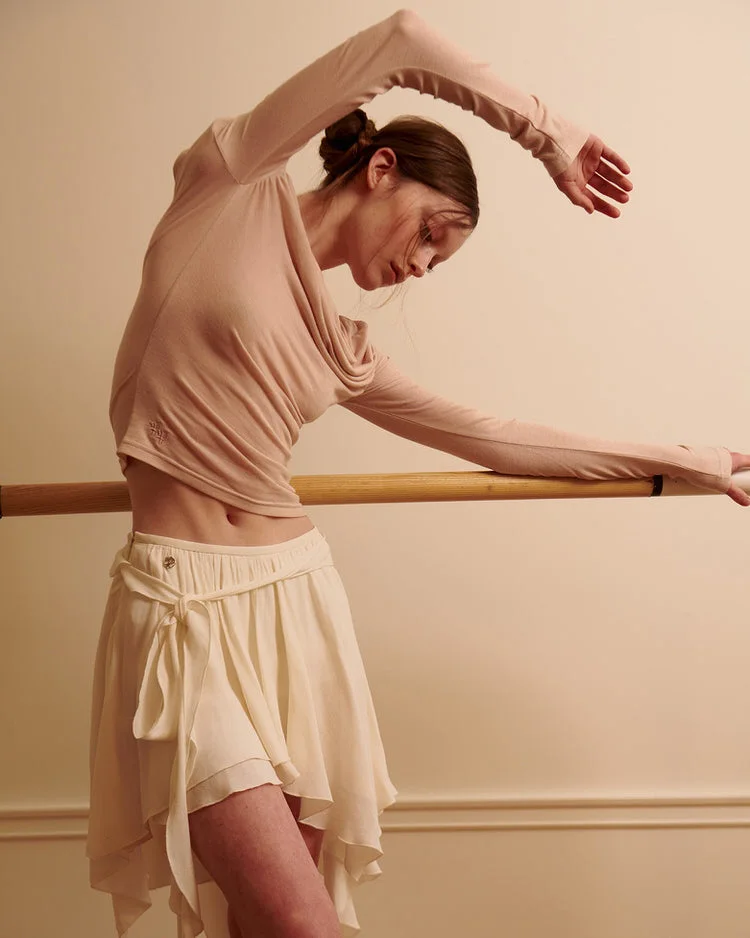
Ballet skirts are naturally breathable, making them pleasant to wear during hot summer months. In warm weather, style your skirts with lightweight cotton camisoles, open-back halter tops, or breathable linen shirts left unbuttoned over a bralette. Stick to bare legs with thin no-show socks and leather flats or canvas sneakers to stay cool while retaining the aesthetic.
When temperatures drop, staying warm requires strategic layeringWearing pieces over or under one another to add depth, warmth or contrast. that does not add messy bulk around the waist. Start with thermal tights or fleece-lined sheer hosiery as your base layer. Over your skirt, layer a close-fitting turtleneck knit, and top the entire outfit with a cropped wrap cardigan or a tailored wool coat that hits past the hem of your skirt.
A common cold-weather mistake is wearing an outer coat that cuts off awkwardly at the exact same level as a flared mini skirt, creating a wide, bell-shaped silhouetteThe overall shape an outfit creates, from fitted to loose and layered.. Instead, choose a jacket that is either noticeably cropped (hitting the high waistband) or significantly longer than the skirt (such as a knee-length or midi tailored overcoat).
11. Color Coordination: Monochromatic Softs vs. Dark Accents
Color paletteA small group of colors you repeat to make an outfit feel connected. plays a major role in how your outfit reads. A tonal, monochromatic palette of pale pink, ivory, oatmeal, and soft grey feels gentle, cohesive, and directly reminiscent of classical dancewear. When dressing tonally, mix your fabric textures—combine knit ribbing, sheer mesh, and smooth cotton—to keep the outfit visually engaging despite the narrow color range.
Alternatively, introducing dark or saturated contrast creates a striking visual punch. Pairing a baby pink wrap skirt with a black mock-neck top and black leather boots instantly prevents the look from appearing overly youthful. Similarly, deep navy, forest green, and wine red add depth to ballet pieces, grounding light fabrics in sophisticated color schemes.
If you are experimenting with color contrast, try the 'sandwiching' method. Match the color of your top to the color of your shoes (for example, a black top and black Mary Janes), while keeping your skirt and socks in a contrasting pale shade. This sandwiches the lighter garment in the middle, creating a balanced and intentional frame.
A small floral print adds interest to a soft palette without requiring several contrasting colors. Pair a light floral skirt with a plain cream top, then choose one bow detail that picks up a color from the print. This keeps the outfit coordinated without making every piece match. For an everyday direction built around florals, bows, and light layers, see the Himekaji Clothes collection.
12. How to Compare Fabric Weights and Movement
Different fabrics behave completely differently in motion, and understanding this helps you choose the right skirt for your everyday routine. Lightweight polyester and nylon mesh offer high volume with almost no physical weight, creating bouncy gathers that stay puffed throughout the day. However, synthetic mesh can create static, so wearing anti-static shorts underneath is often helpful.
Cotton blends provide structured folds and crisp edges. A cotton-blend pleated or tiered skirt feels more like casual daytime apparel, holding sharp lines and offering breathability against your skin. Cotton is also easy to wash at home, making it a reliable choice for weekly rotation.
Viscose and modal blends offer a heavier, liquid drape that clings gently before falling downward. They move fluidly as you walk rather than flaring out like a tutu. When buying a viscose skirt, inspect the garment weight; a slightly heavier knit ensures the skirt hangs smoothly without blowing around aggressively in light outdoor breezes.
13. Common Styling Pitfalls and Practical Fixes
One frequent styling mistake is wearing thick, untreated tops tucked into sheer or unlined skirts. The lower hem of your shirt can create a visible dark outline against your hips beneath light-colored fabrics. The fix is straightforward: either choose a cropped top that finishes above the waistband, or wear an all-in-one seamless bodysuit that eliminates hemline seams entirely.
Another common misstep is underestimating wind and transparency. Dance-inspired skirts are made to move freely, which can lead to unexpected wardrobe malfunctions on breezy days. Always wear color-matched safety shorts, seamless bike shorts, or dense boy-short briefs underneath lightweight tulle, chiffon, and pleated mini cuts for complete peace of mind.
Lastly, watch out for accessory overload. Ribbon chokers, lace socks, hair bows, and leg warmers look charming individually, but wearing all of them at once alongside a ruffled skirt can make your outfit look cluttered. Pick one or two dance-inspired accents per outfit and let clean, tailored pieces handle the rest.
- Avoid visible tuck-in lines by wearing bodysuits or naturally cropped tops.
- Always layer seamless safety shorts under sheer, floaty, or high-hem skirts.
- Limit accessories to two ballet-themed pieces per outfit to keep the look clean.
14. Your Complete Balletcore Skirt Styling Checklist
Before heading out the door, running through a quick mental checklist ensures that your outfit feels comfortable, secure, and visually harmonious. Checking your silhouetteThe overall shape an outfit creates, from fitted to loose and layered. from both the front and side profiles helps you catch unwanted bunching, unbalanced proportions, or footwear mismatches before you leave home.
Start at the top and confirm that your shirt neckline complements your skirt's volume. Next, verify that your waistband sits securely without shifting as you walk. Finally, inspect your leg wear and shoes to ensure the colors and visual weights feel grounded.
By applying these modular principles—balancing close fits against airy gathers, smoothing midriff transitions, and pairing appropriate footwear—you can comfortably integrate dance-inspired skirts into your everyday wardrobe throughout the entire year.
- Top fit: Is the shirt close-fitting if the skirt has volume, or relaxed if the skirt is sleek?
- Waistband: Are all ties secured on the hip, and are shirt hem lines smooth beneath the fabric?
- Undergarments: Are seamless safety shorts in place for movement in windy conditions?
- Leg transition: Do tights, leg warmers, or socks smoothly connect your hemline to your shoes?
- Footwear: Does your shoe choice match the overall visual weight of your outfit?