Created by the Kawaii Vibe editorial team. Our named style desks are editorial personas. Product details and availability can change.
“Kawaii desu” means “it’s cute.” Kawaii is the word for cute, and desu is the polite way of saying “it is.” Put them together and you get a soft, polite compliment you can aim at a bag, a puppy, a sweater or a stranger’s phone case.
This guide covers the meaning, the pronunciation, the near-miss phrase that means something totally different, and when to use each version. Then we do what we do best and turn the word into things you can wear. You’ll get outfit combinations for cold days, warm days and lazy days, plus fit tips so you order with a bit more confidence.
One note on voice. This is written from an accessories, gifts and cozy-spaces point of view. That means we care about the small details that make an outfit feel finished, and about the things that make a room or a gift feel warm. It isn’t a language class, so for anything deep, a proper Japanese learning resource is the right next step.
The quick answer: what kawaii desu means
Kawaii means cute, lovable or adorable. It can also stretch toward pretty or charming, depending on what you’re talking about. Desu is a polite ending that works a bit like “is” or “it is.” So “kawaii desu” lands as “it’s cute” in a gentle, courteous tone.
The word covers a lot of ground. People use it for animals, babies, snacks, stationery, outfits, rooms and even a funny little drawing in the margin of a notebook. It isn’t reserved for one style or one kind of person. If something makes you soften and smile, kawaii is probably the word.
That’s also why it shows up so often in fashion. It’s less a strict look and more a reaction. Something is kawaii when it makes you want to pick it up, hold it or wear it out of the house.
You can say the plain word, “kawaii,” to friends. Adding desu makes it a little more polite. Think of the difference between “cute!” and “that’s really cute.” Neither is wrong. One is just a touch more careful.

How to pronounce it so it sounds natural
Say kawaii as “ka-wa-ee.” Keep each beat even and light. In English we tend to stress one syllable hard, so try to resist that. All three parts get about the same weight.
Desu is usually said close to “dess,” with the final u very quiet. Many English speakers over-pronounce it as “day-soo,” which sounds stiff. Let the last sound almost disappear and you’ll be closer to how it’s commonly spoken.
Put together, it’s “ka-wa-ee dess.” Say it a few times at a relaxed pace. You don’t need to rush it or do an accent. A calm, friendly delivery sounds better than a performed one.
If you’re unsure, listen to a native speaker saying it in a short video or a language app and copy the rhythm. That does more than any spelling guide can. And if you’re talking to a Japanese speaker, a slight bow of the head or a smile will do more for your tone than perfect vowels.
Kawaii desu ne and the other versions you’ll hear
Add ne to the end and you get “kawaii desu ne.” That means “it’s cute, isn’t it?” The ne works like a little invitation. You’re not just stating an opinion. You’re checking that the other person feels it too.
That makes it a nice phrase for shared moments. You’re both looking at a keychain in a shop window, and one of you says it. It turns a compliment into a tiny conversation.
A few other shapes are worth knowing. Plain “kawaii!” is the quick, friendly burst. “Kawaii desu yo” adds a sense of “I’m telling you, it really is.” “Sugoku kawaii” leans toward “so cute” or “really cute.” Treat these as flavors rather than rules, since tone and context matter a lot in real conversation.
Keep it simple at first. If you only ever use kawaii, kawaii desu and kawaii desu ne, you’ll cover most everyday moments and you’ll sound sincere doing it.

Polite or casual? Picking the right one
Here’s a simple way to choose. With friends, use plain “kawaii.” With someone you don’t know well, a shop assistant, an older relative or a coworker, “kawaii desu” is the safer pick. It sounds respectful without being heavy.
“Kawaii desu ne” works in both settings. It’s warm, a little soft, and invites a reply. It can feel slightly more formal than the plain form, so match it to the mood around you.
You can still use desu with close friends. People do it for humor, or just because it sounds cute. But if you’re only learning, you don’t need to overthink it. A polite default is a good default.
A small practical tip: compliments land best when they’re specific. Instead of just pointing and saying the phrase, say what you’re admiring in English, then use the Japanese as the finishing touch. “I love the little ears on that hood. Kawaii desu ne.” It sounds more genuine than a lone foreign phrase dropped into a sentence.
Mistakes to avoid
The biggest slip is mixing it up with a similar-sounding word. “Kawaisou” comes from the same root, but it means something like “poor thing” or “what a pity.” You’d say “kawaisou desu ne” to show sympathy. If you say it about someone’s new bag, you’ll get a confused look.
So check the ending before you speak. Kawaii has the “ii” at the end and is a compliment. Kawaisou has “sou” and is sympathy.
Another trap is overuse. If every sentence has a Japanese phrase in it, the compliment loses weight and can start to feel like a performance. Save it for when you mean it.
Last, don’t use words you’ve only half learned in serious situations. Practice in low-stakes moments first, like chatting with a friend who’s also learning. Being a beginner is fine. Pretending to be fluent is what feels awkward. If you’re corrected, say thanks and move on.
- Kawaii with “ii” is a compliment.
- Kawaisou with “sou” means “poor thing.”
- Use specific praise first, then the phrase.
- Practice with friends before using it with strangers.
From word to wardrobe: what “kawaii” looks like when you’re dressing
Kawaii isn’t one uniform. It’s a mood you can add in different amounts. For some people that’s a single playful detail on an otherwise plain outfit. For others it’s a full head-to-toe mix of color and character.
A useful rule is to pick one star and let everything else support it. The star could be a hoodie with a face on it, a bag in a sweet shape, or a pair of socks you plan to show off. Then keep the rest simple so the cute piece reads clearly.
Balance helps too. If your top is loud, make the bottom calm. If your skirt has a busy pattern, wear a plain tee. This keeps you looking put together, not like a pile of themes.
If you want more ideas for the street-style side of this, the Harajuku & Kawaii collection is a good place to browse for different directions. And remember, you can dial it down. A small pin or a pastel hat is just as valid as a bold look.
Mild-weather outfits that feel easy
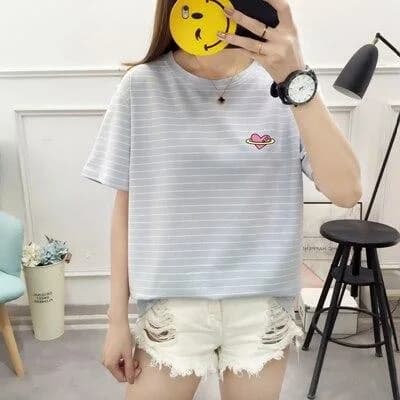
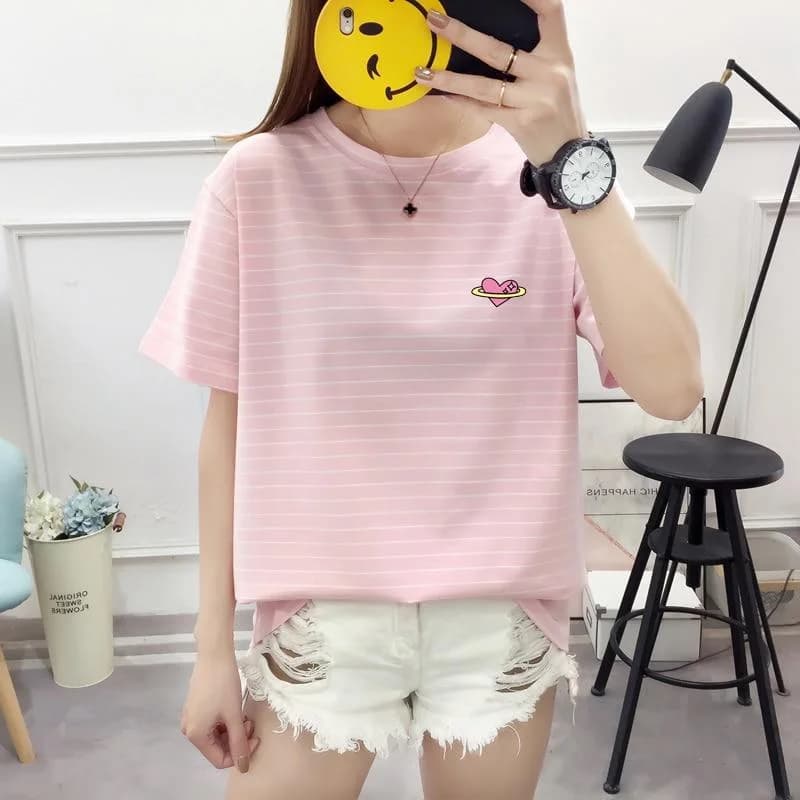
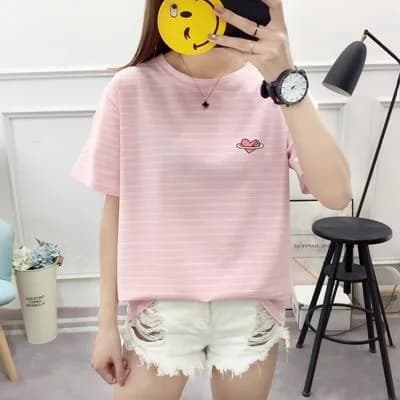
Start with a spring or fall day when you want comfort and a bit of charm. Wear the Kawaii Heart Striped T-Shirt with straight, plain jeans and clean white sneakers. The stripes give you pattern without overwhelming, and the hearts add the sweet part. Because the jeans are quiet, the tee does all the talking.
Want a skirt day? Try the Kawaii Loose Plaid Skirt with a fitted plain top in a color pulled from the plaid. A loose skirt gives you room to move, and a snug top keeps the shape from getting boxy. Finish with ankle socks and a pair of cute kawaii sneakers for a walkable, all-day look.
If you prefer pants, keep the idea the same. One fun piece, one calm piece. A graphic tee with relaxed trousers and a small crossbody does the job without trying too hard.
Check the size chart on any product page before you buy, since cuts vary. The heart tee is listed in M to XXL and the plaid skirt in S, M and L, so look at the measurements rather than guessing from your usual label.
Cold-weather and cozy-day outfits
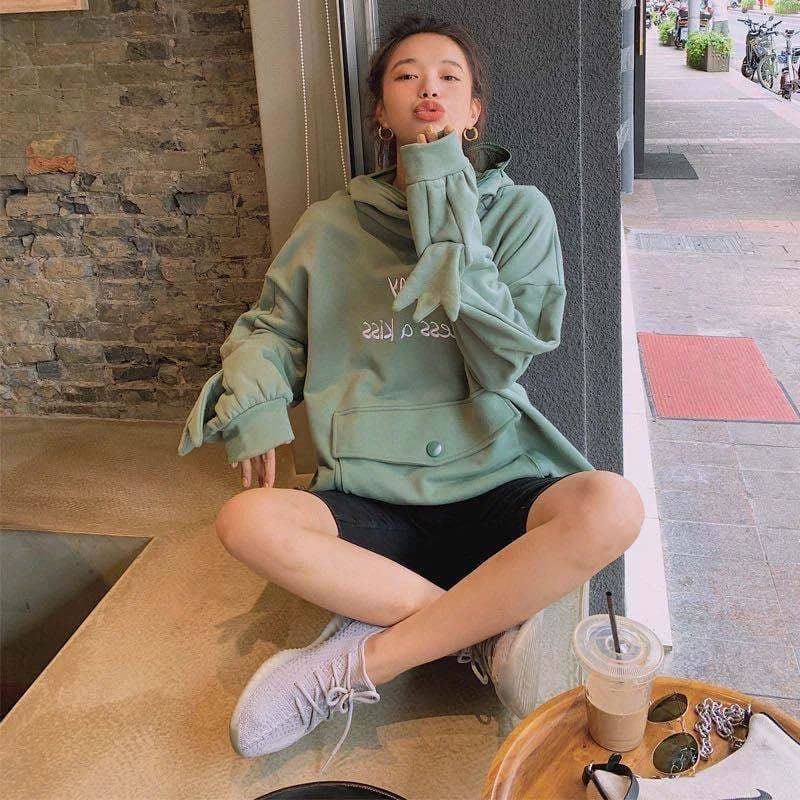
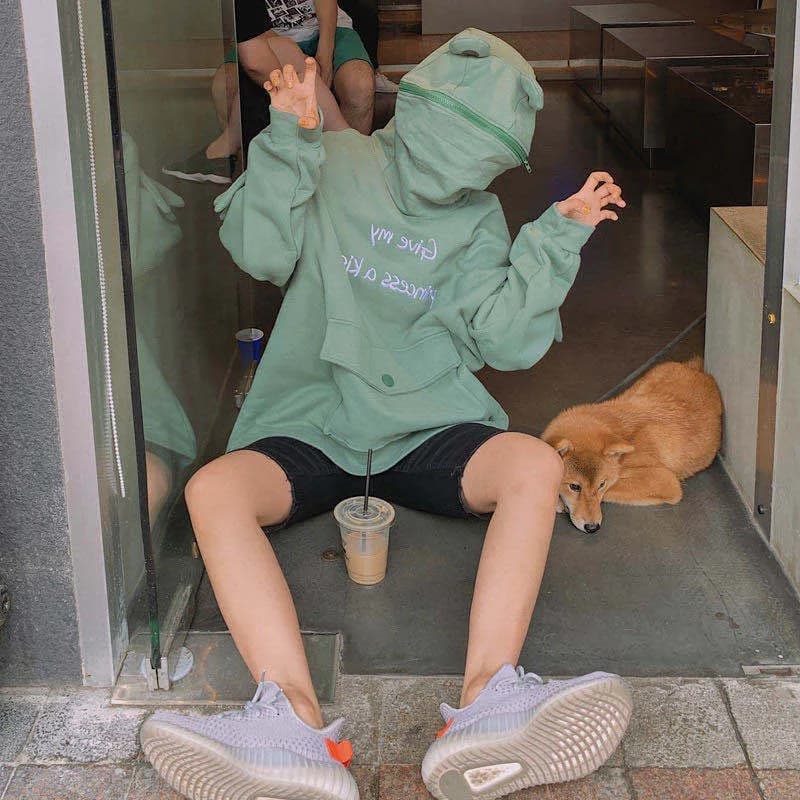
Cozy is where kawaii feels most natural. Take the Kawaii Frog Hoodie, which comes in S to XL, and wear it over a plain long-sleeve tee with soft, dark joggers or relaxed jeans. The hoodie is the star. Everything under and around it stays quiet so it doesn’t look cluttered.
Add a kawaii beanie in a calm shade if your hoodie is bright. If your hoodie is muted, let the hat bring a little color. Either way, avoid matching the pattern in both places, because it tends to read as too much.
For the lower half, thick socks and sneakers are enough. If your hood sits high, a simple scarf keeps the neckline from bunching. A small backpack finishes the look and keeps your hands free for a hot drink.
Think about layeringWearing pieces over or under one another to add depth, warmth or contrast. for comfort, not for show. A thin base, a hoodie, and a coat you can open or close gives you control as you move between cold streets and warm shops. That’s practical, and it still looks cute.
Warm-weather and minimal looks
Heat doesn’t cancel the mood. It just means the cute part gets smaller and lighter. Try a plain tank or tee with a simple skirt or shorts, and let the socks carry the personality. The Kawaii Flower Socks come in one size, and they work well folded over low sneakers with a neutral outfit.
If you want something more playful, choose one bold item and keep the rest in light, single colors. White, cream and soft denim are easy partners for almost anything cute. They let a patterned piece stand out without clashing.
For bags, think small and easy to carry. A compact kawaii bag in a cheerful shape sits well against a plain outfit, and you can switch it between days without rethinking your clothes.
Keep your comfort first. Choose pieces that feel good for the temperature and your day, and check care labels on whatever you buy. A cute outfit you’re too hot to wear isn’t doing its job.
Accessories and gifts that say “kawaii desu ne”
If clothing feels like a big step, start with accessories. They’re the easiest way to add the mood without changing your wardrobe. Browse the kawaii accessories for small touches you can clip, pin or carry, and pick one that suits your daily routine.
Tech is a simple place to play. A kawaii AirPod case makes something you use every day feel a bit softer, and it’s easy to spot in a bag. Just double-check the model it’s made for before you order, since cases are specific.
Bags are another easy win. A kawaii backpack can carry a laptop or a cozy-day kit while adding a bit of character. Look at the listed dimensions on the product page and compare them to what you carry.
For gifts, think about the person’s habits. Someone who’s always cold might like a hat or socks. Someone who lives at their desk might like a little pouch or a phone case. A gift works best when it fits real life, not just a theme.
Fit and measurement guidance
Cute clothes still need to fit well. Before ordering, measure yourself with a soft tape: chest or bust at the fullest part, waist at your natural narrowest point, and hips at the widest. Write the numbers down and compare them to the size chart on the product page.
If you’re between sizes, think about how you want to wear the piece. Hoodies and tees are often worn loose, so you may want more room. Skirts usually sit best when the waist is comfortable, so prioritize that number. Fit can vary between items, and we can’t promise a perfect match, so use the chart rather than assuming.
Check the available sizes too. The frog hoodie is listed in S to XL, the heart tee in M to XXL, and the plaid skirt in S, M and L. If your size isn’t listed, skip it rather than forcing it.
Finally, think about what goes under the piece. If you plan to layer a long-sleeve under a tee or a thick top under a hoodie, give yourself more room. If you’re unsure, check the return policy before you buy so you know your options.
Quick FAQs
Is “kawaii desu” the same as “kawaii”? Close, but not identical. Desu makes it more polite, so it suits people you don’t know well. With friends, plain kawaii is fine.
Can I say it to a stranger? Yes, if it’s a sincere, friendly compliment about something like a bag or a pet. Keep it short and smile. Don’t push if they don’t want to chat.
What does “kawaii desu ne” mean? It means “it’s cute, isn’t it?” You’re inviting the other person to agree.
What’s the difference between kawaii and kawaisou? Kawaii is a compliment. Kawaisou means “poor thing” and expresses sympathy. They sound close, so listen to the ending.
Do I have to dress a certain way to use the word? No. It’s a word for anything you find cute, whatever you’re wearing.
How much cute is too much? There’s no fixed answer. A good test is whether you feel comfortable and like yourself. If you do, it works.
Where should I start if I’m new to this style? Pick one small item, like socks, a hat or a bag, and build the rest of the outfit around your usual clothes. You can add more later if you want.